This Week in Petroleum History, October 26 – Nov. 1
October 26, 1970 – Joe Roughneck Statue dedicated in Texas –
Texas Governor Preston Smith dedicated a “Joe Roughneck” memorial in Boonsville to mark the 20th anniversary of a giant natural gas field discovery in East Texas. In 1950, the Lone Star Gas Company’s Vaught No. 1 well discovered the Boonsville oilfield, which produced 2.5 billion cubic feet of natural gas over the next 20 years. By 2001 the Boonsville field reached production of 3.1 trillion cubic feet of gas from more than 3,500 wells.
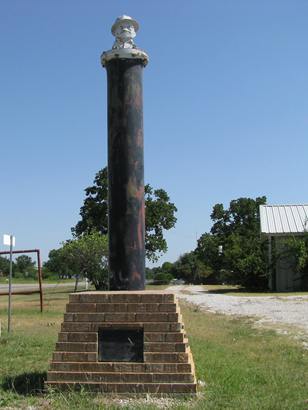
A Joe Roughneck monument in Boonsville, Texas, where an oilfield was discovered by Lone Star Gas Company in 1945.
Joe Roughneck began as a character in Lone Star Steel Company advertising in the 1950s. Temporarily discontinued between 2019 and 2024, the bronze bust by Texas artist Torg Thompson (1905-1998) has been presented during the Chief Roughneck Award ceremony of the Independent Petroleum Association of America (IPAA). Joe Busts of Joe Roughneck can also be found at three more Texas oilfield monuments: Joinerville and Conroe, both dedicated in 1957, and Kilgore, dedicated in 1986.
Learn more in Meet Joe Roughneck.
October 27, 1763 – Birth of Pioneer American Geologist
William Maclure, who would become a renowned American geologist and “stratigrapher,” was born in Ayr, Scotland. He created the earliest geological maps of North America in 1809 and later earned the title “Father of American Geology.”
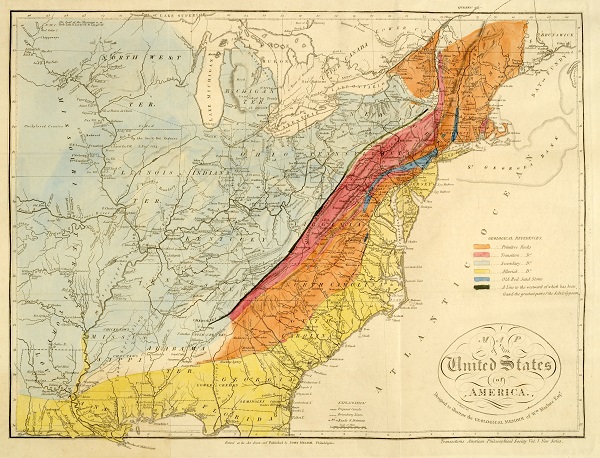
“Map of the United States of America, Designed to Illustrate the Geological Memoir of Wm. Maclure, Esq.” — a more detailed 1818 version than his first map published in 1809. Image courtesy the Historic Maps Collection, Princeton Library.
After settling in Philadelphia in 1796, Maclure explored the eastern part of North America to prepare the first geological map of the United States. His travels from Maine to Georgia in 1808 resulted in the map’s sequence of rock layers. “Here, in broad strokes, he identifies six different geological classes,” a Princeton geologist reported. “Note that the chain of the Appalachian Mountains is correctly labeled as containing the most primitive, or oldest, rock.”
In the 1850s, a chemist at Yale analyzed samples of Pennsylvania “rock oil” for refining into kerosene. Prof. Benjamin Silliman’s report led to the drilling of the first U.S. oil well in 1859. By 1875, geologist John F. Carll published logs from several Pennsylvania wells, becoming a pioneer of petroleum engineering.
Learn more in Rocky Beginnings of Petroleum Geology.
October 27, 1923 – Refining Company founded in Arkansas
Lion Oil Company was founded as a refining venture in El Dorado, Arkansas, by Texan Thomas Harry Barton. He earlier had organized the El Dorado Natural Gas Company and acquired a 2,000-barrel-a-day refinery in 1922, soon after oilfield giant discoveries at El Dorado and Smackover (see First Arkansas Oil Wells).
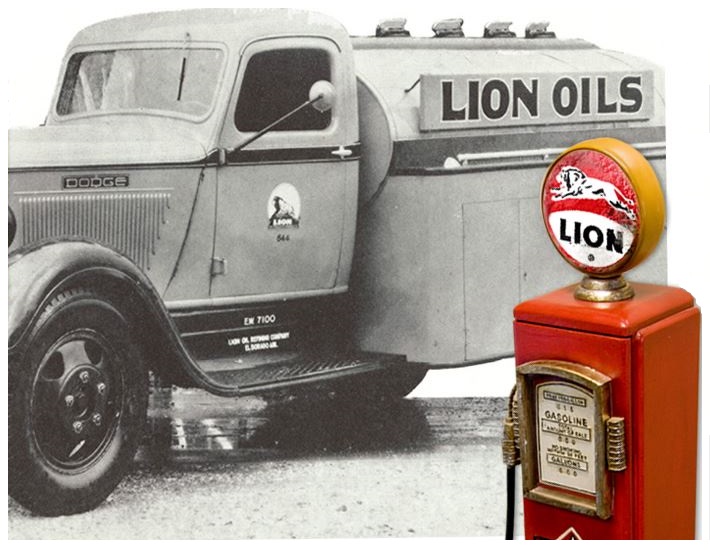
Arkansas oilfield discoveries led to the 1923 founding of Lion Oil Company in El Dorado. By the 1950s, Lion Oil operated about 2,000 service stations throughout the South. Photo courtesy Lion Oil Company.
Production from the nearby Smackover oilfield helped the Lion Oil Refining Company’s refining capacity to reach 10,000 barrels a day. By 1925, the company acquired oil wells producing 1.4 million barrels of oil. A merger with Monsanto Chemical in 1955 brought the gradual disappearance of the once familiar “Beauregard Lion” logo.
October 27, 1938 – DuPont names Petroleum Product Nylon
DuPont chemical company announced that Nylon would be the name of its newly invented synthetic fiber yarn made from petroleum. Discovered in 1935 by Wallace Carothers at a DuPont research facility, nylon is considered the first commercially successful synthetic polymer. Carothers would become known as the father of man-made polymers.

October 28, 1868 – Newspaper praises Explosive Technology
The Titusville Morning Herald praised the results of an explosive oilfield production technology — Civil War veteran Colonel E.A.L. Roberts’ patented nitroglycerin torpedo. “It would be superfluous, at this late day, to speak of the merits of the Roberts Torpedo,” explained the first daily newspaper of the Pennsylvania oil region.
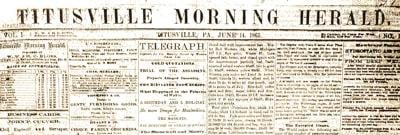
Front page of the first issue of the Titusville Morning Herald, which ceased publication in 2022 after 157 years. Photo courtesy TheDerrick.com.
“For the past three years, it has been a most successful operation and has increased the production of oil in hundreds upon hundreds of oil wells to an extent which could hardly be overestimated.”
October 28, 1926 – Giant Yates Field discovered West of the Pecos
The 26,400-acre Yates oilfield was discovered in a remote area of Pecos County, Texas, in the Permian Basin. Drilled in 1926 with a $15,000 cable-tool rig, the Ira Yates 1-A produced 450 barrels of oil a day from almost 1,000 feet deep. Before the giant oilfield discovery, Ira Yates had struggled to keep his ranch on the northern border of the Chihuahua Desert.
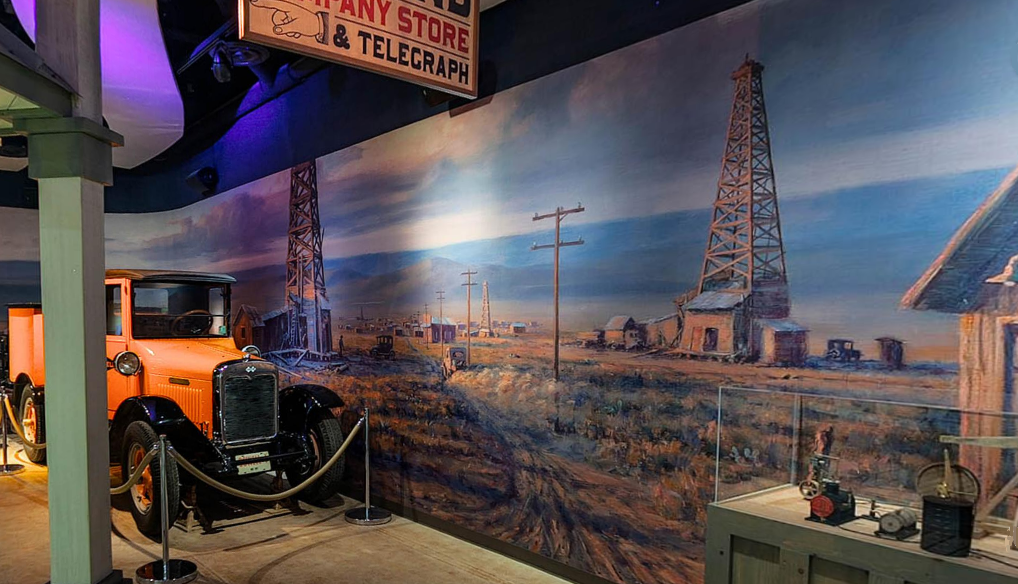
The Permian Basin’s 1926 Yates oilfield discovery followed a 1923 gusher at Big Lake (Santa Rita No. 1) and giant oilfield discoveries at Hendrick and Hobbs, N.M. “Midland Comes of Age” exhibit photo courtesy the Petroleum Museum.
“Drought and predators nearly did him in,” noted one historian, until Yates convinced a San Angelo company to explore for oil west of the Pecos River. With the Pecos County well 30 miles from the nearest oil pipeline and a storage tank under construction, four more Yates wells yielded another 12,000 barrels of oil a day. On his 67th birthday, Yates received an $18 million royalty check (also see Santa Rita taps Permian Basin).
October 30, 1894 – “Golden Rule” Jones invents a Better Sucker Rod
Samuel M. Jones patented a sucker rod design for his Acme Sucker Rod Company, which he had founded in 1892 in Toledo, Ohio. With his “Coupling for Pipes or Rods,” Jones applied his oilfield experience in mechanics to solve the frequent and time-consuming problem of broken sucker rods. His innovation would soon make him a millionaire.
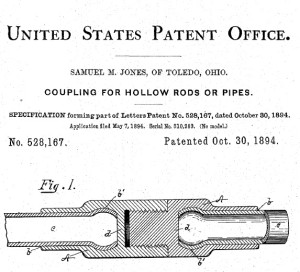
Samuel Jones, future mayor of Toledo, worked as a potboiler, pumper, tool dresser, blacksmith, and pipe layer before starting his oilfield service company.
Jones had worked in Pennsylvania’s oil region as a potboiler, pumper, tool dresser, blacksmith, and pipe layer. He became known as “Golden Rule” Jones by establishing a better workplace for employees at his factory, where he shortened the workday and started a revenue-sharing program.
Jones ran for Toledo mayor as a progressive Republican in 1887 and was elected. He was reelected three times and served until dying on the job in 1904.
Learn more in “Golden Rule” Jones of Ohio.
October 31, 1871 – Modern Refinery Method patented
Petroleum refining would become more efficient thanks to an invention by Henry Rogers of Brooklyn, New York, who patented an “apparatus for separating volatile hydrocarbons by repeated vaporization and condensation.”

Henry Rogers patented his “improvement to distilling naphtha and other hydrocarbon liquids,” including kerosene.
Rogers introduced many elements of modern refineries, including “fractionating” towers that improved earlier processes of extracting kerosene by simple distillation in kettle stills.
“The apparatus which I use is, in many respects, similar to what is known as the column-still for distilling alcoholic spirits, but modified in all the details, so as to make it available for distilling oils,” Rogers noted in his 1871 patent application. More technological advancements would lead to giant refining operations like the Standard Oil of Indiana Whiting Refinery, which opened in 1889.
October 31, 1903 – Salt-Dome Oilfield discovered in Texas
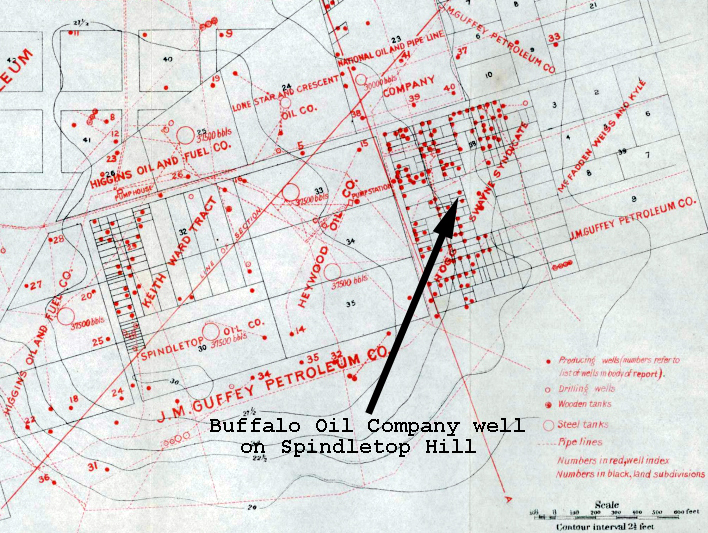
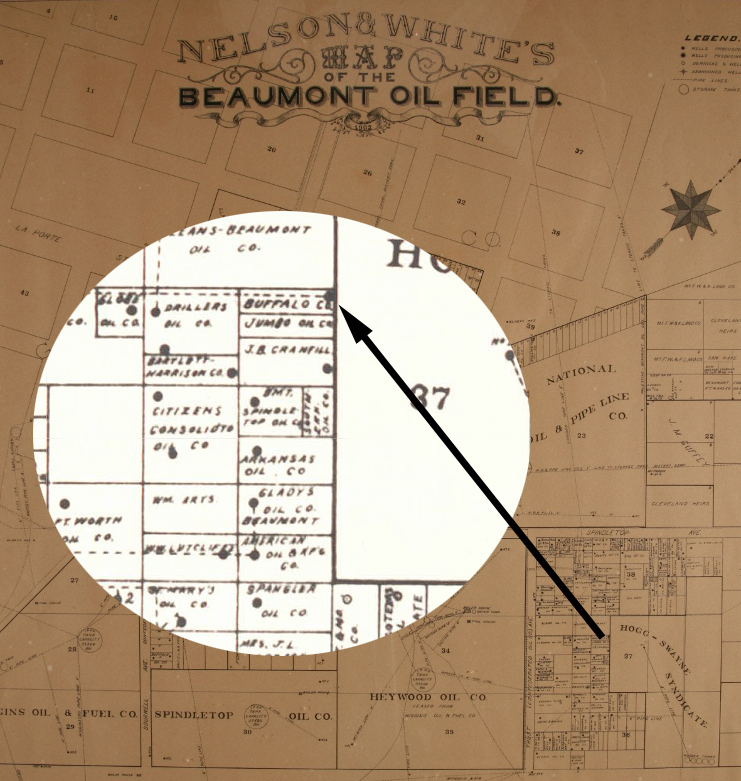
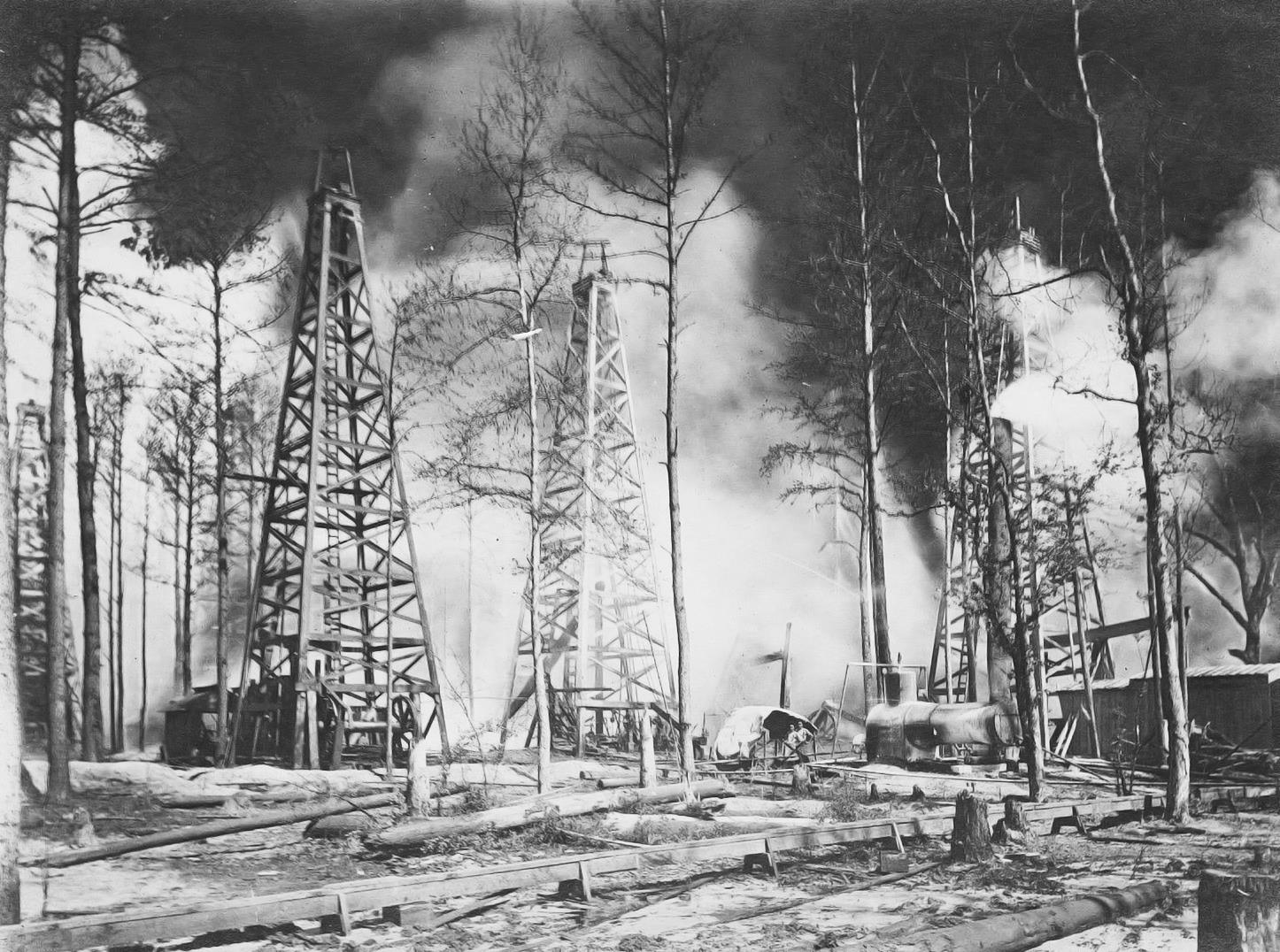
One mile north of Batson, Texas, a discovery well drilled by W.L. Douglas’ Paraffine Oil Company produced 600 barrels of oil a day from a depth of 790 feet. A second well drilled two months later in the Batson field produced 4,000 barrels of oil a day from 1,000 feet deep. Many new ventures joined the drilling boom (see Buffalo Oil Company).
When combined with other newly discovered prolific salt-dome fields, Spindletop (1901), Sour Lake (1903), and Humble (1904), “Batson helped to establish the basis of the Texas oil industry when these shallow fields gave up the first Texas Gulf Coast oil,” noted the Texas State Historical Association in 2010.

October 31, 1913 – Transcontinental Highway dedicated
The first automobile road across America, the Lincoln Highway, was dedicated with celebrations from New York City to San Francisco. Supported by donations from automobile-related businesses, the Lincoln Highway Association promoted construction of the paved, transcontinental roadway. The 3,389-mile “Main Street Across America” was the first national memorial to President Abraham Lincoln, predating dedication of the Lincoln Memorial in Washington, D.C., by nine years. With a slight realignment through the northern tip of West Virginia in 1928, the Lincoln Highway crossed 14 states, 128 counties, and more than 700 cities and towns.
October 31, 1924 – Olinda Oil Wells Pitcher plays Exhibition Game
Former California oilfield worker Walter “Big Train” Johnson returned to his oil patch roots in Brea for an exhibition game with famed slugger Babe Ruth, who swatted two home runs off the future Hall of Fame pitcher. Three decades earlier, Johnson began his baseball career as a 16-year-old pitcher for the Olinda Oil Wells.
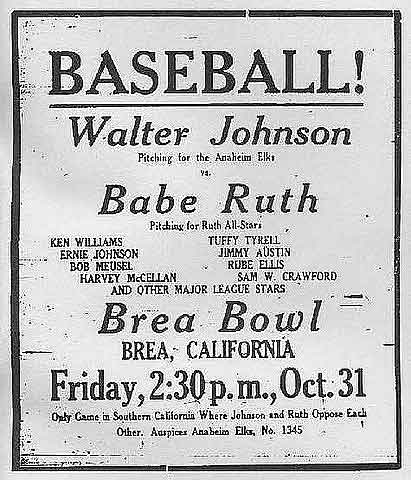
The former star of the “Olinda Oil Wells” pitched against Babe Ruth in a 1924 exhibition game in Brea.
Playing for the Washington Senators years later, the former oilfield roustabout became Major League Baseball’s all-time career leader in shutouts with 110. Many oilfield towns like Brea fielded teams with names reflecting their communities’ livelihood.
Learn more in Oilfields of Dreams – Gassers, Oilers, and Drillers Baseball Teams.
October 31, 1930 – “Dad” Joiner’s Properties placed into Receivership
After it was learned that 70-year-old wildcatter Columbus Marion “Dad” Joiner had oversold his East Texas oilfield leases in Rusk County, District Judge R.T. Brown placed the properties into receivership.
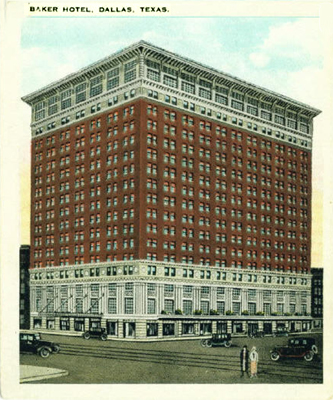
The Baker Hotel in Dallas was where Columbus “Dad” Joiner met with H.L. Hunt and sold Hunt 5,580 acres for $1.34 million. Built in 1925, the hotel was torn down in 1980.
With the field’s Daisy Bradford No. 3 and other wells tied up in conflicting claims, Joiner took refuge from creditors in the Baker Hotel in Dallas, where Haroldson Lafayette (H.L.) Hunt negotiated a $1.34 million deal with him for the discovery well and 5,580 acres of leases. In the 300 lawsuits and 10 years of litigation that followed, Hunt sustained every title.
October 31, 1958 – Gas Station designed by Frank Lloyd Wright
The only gas service station designed by architect Frank Lloyd Wright opened in Cloquet, Minnesota. The station was built for Ray Lindholm, owner of Best Oil Company. Its gas pumps were originally designed to hang overhead but were ultimately changed to meet safety regulations, according to the Frank Lloyd Wright Foundation.

The Cloquet, Minnesota, gas station design was part of a utopian city concept of Frank Lloyd Wright. Photo courtesy Frank Lloyd Wright Foundation.
Listed on the Historic Registry in 1984 and still in business today, the station has similarities to Wright’s only skyscraper, the 1956 Price Tower, a Bartlesville, Oklahoma, pipeline company headquarters built for Harold Price and today the Price Tower Arts Center.
November 1, 1865 – First Railroad Oil Tank Car
The first of James and Amos Densmore’s innovative oil tank cars arrived at the Miller Farm, four miles south of Titusville, Pennsylvania. The inventors would be awarded a U.S. patent on April 10, 1866, for their dual tank design.
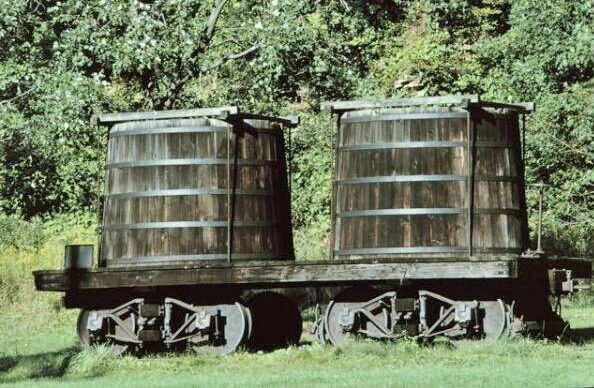
Brothers Amos and James Densmore designed and built the first successful railroad tank cars used in the Pennsylvania oilfields in 1865. Photo courtesy Drake Well Museum and Park.
The crude oil for the iron-banded wooden tanks on a flatcar was delivered by Samuel Van Syckle’s two-inch iron pipeline (another oil industry first) from the oilfield boom town at Pithole Creek. Oil from large storage tanks on the farm filled the Densmore tanks for the Oil Creek Railroad, which connected to lines reaching Pittsburgh, New York City, and other markets.
Learn more in Densmore Brothers Oil Tank Car.
_______________________
Recommended Reading: Trek of the Oil Finders: A History of Exploration for Petroleum (1975), Maclure of New Harmony: Scientist, Progressive Educator, Radical Philanthropist


_______________________
The American Oil & Gas Historical Society (AOGHS) preserves U.S. petroleum history. Please support this energy education website, subscribe to the free monthly newsletter, This Week in Oil and Gas History News, and help expand historical research. Contact bawells@aoghs.org. Copyright © 2026 Bruce A. Wells. All rights reserved.
.