June 29, 1956 – Interstate Highway System enacted –
The Federal-Aid Highway Act of 1956, also known as the National Interstate and Defense Highways Act, became law. Passed at the urging of President Dwight D. Eisenhower, the act provided 90 percent federal funding for a “system of interstate and defense highways,” and authorized spending $25 billion through 1969 for construction of about 41,000 miles of interstates.
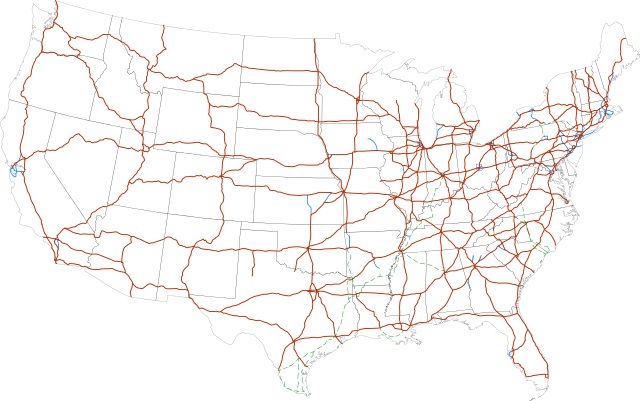
The interstate system reached 48,191 miles in 2016. Federal regulations banned collecting tolls but that would change.
“Of all his domestic programs, Eisenhower’s favorite by far was the Interstate System,” noted historian Stephen Ambrose. The thirty-fourth president urged passage of the act for national defense; interstates would be needed for evacuating major cities during a nuclear war. In 2025, the 46,876-mile system included an estimated 2,900 miles with tolls (6.2 percent).
June 30, 1864 – Oil Tax funds Civil War
The federal government taxed oil for the first time when it levied a $1 per barrel tax on production from Pennsylvania oilfields.
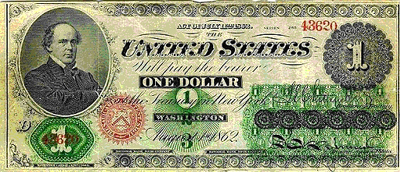
Seeking ways to pay for the Civil War, Treasury Secretary Salmon Chase advocated an oil tax of $6.30 per barrel.
Desperate for revenue to fund the Civil War as early as 1862, Treasury Secretary Salmon Chase advocated a $6.30 tax per barrel of oil and $10.50 per barrel on refined products. Angry oil producers rallied against the tax in Oil City, Pennsylvania, and sent delegates to Washington, D.C., where they negotiated a tax of $1 per 42-gallon barrel of oil.
July 1, 1914 – Petroleum Technology Office established
Four years after the United States Bureau of Mines was organized under the Department of Interior, a petroleum and natural gas division was established with a Petroleum Experiment Station in Bartlesville, Oklahoma. In 1977, under the newly created U.S. Department of Energy (DOE), the Bartlesville Energy Technology Center joined the Morgantown Energy Technology Center (1946) in West Virginia and the Pittsburgh Energy Technology Center (1910) in Pennsylvania.
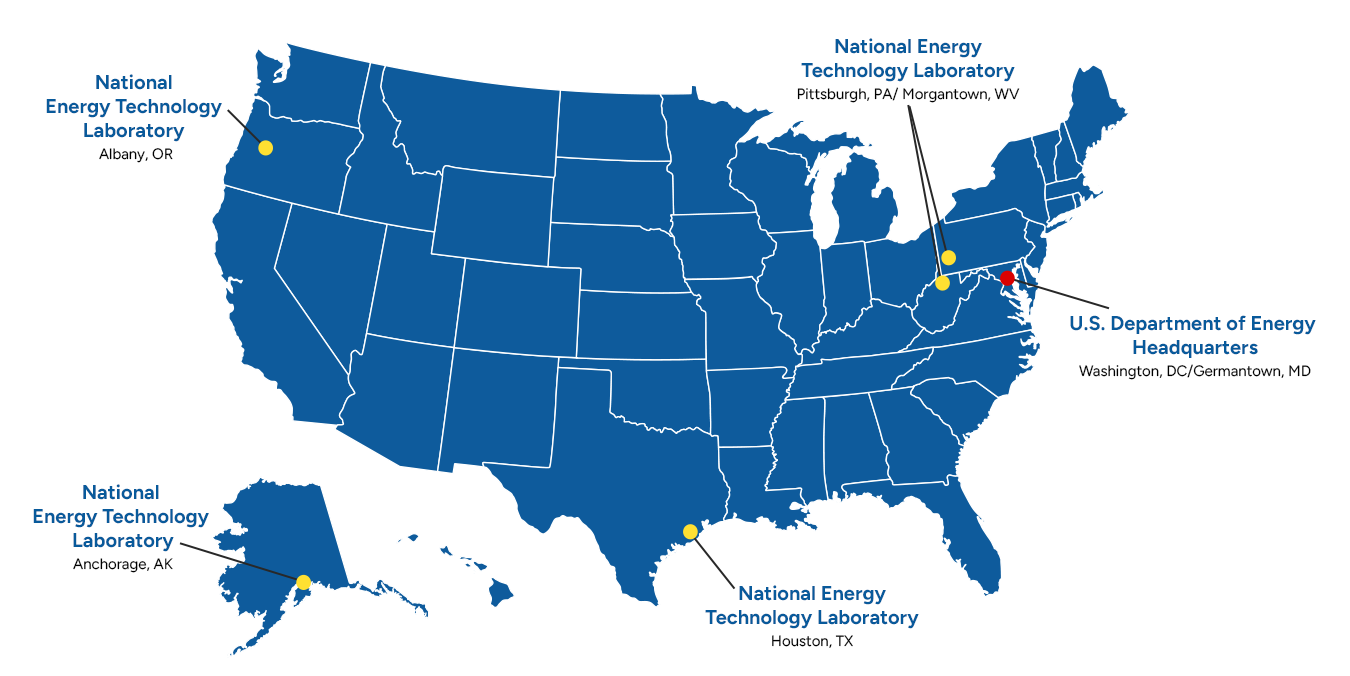
The National Energy Technology Laboratory (NETL) is the lead field center for the Hydrocarbons and Geothermal Energy Office’s research and development program. Map courtesy NETL
DOE in 1998 relocated the Bartlesville center to Tulsa and then to Sugar Land, Texas, in 2009. The National Energy Technology Laboratory (NETL) the research and development program for the DOE Hydrocarbons and Geothermal Energy Office (HGEO), which replaced the Office of Fossil Energy in November 2025 as part of a restructuring.
July 1, 1919 – Top Independent Producers associate in Tulsa
The two-year-old Mid-Continent Oil & Gas Association established its Kansas-Oklahoma Division in boom town Tulsa. Members were a “who’s who” of top independent oil and natural gas producers.
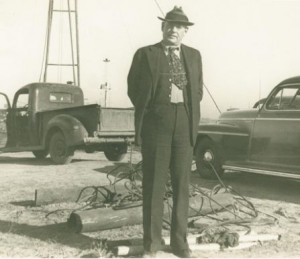
Independent petroleum producer Al Landon served as Kansas governor and was the 1936 Republican presidential candidate.
Now the U.S. Oil & Gas Association, membership in 1919 included Frank Phillips of Phillips Petroleum; E.W. Marland, whose company became Conoco; W.G. Skelly, founder of Skelly Oil; H.H. Champlin, founder of Champlin Oil; and Alf Landon, the 1936 Republican presidential candidate. Robert Kerr of Kerr-McGee Oil Company presided as president of the Mid-Continent Division from 1935 through 1941.
July 1, 1922 – Smackover Field brings Arkansas Drilling Boom
First settled by French fur trappers in 1844, Smackover, Arkansas, had a population of just 90 people in 1922 when a wildcat well erupted oil. The well, drilled to 2,066 feet by sawmill owner Sidney Umsted, discovered the 25,000-acre Smackover field. Within six months, 1,000 wells were drilled with a success rate of 92 percent.
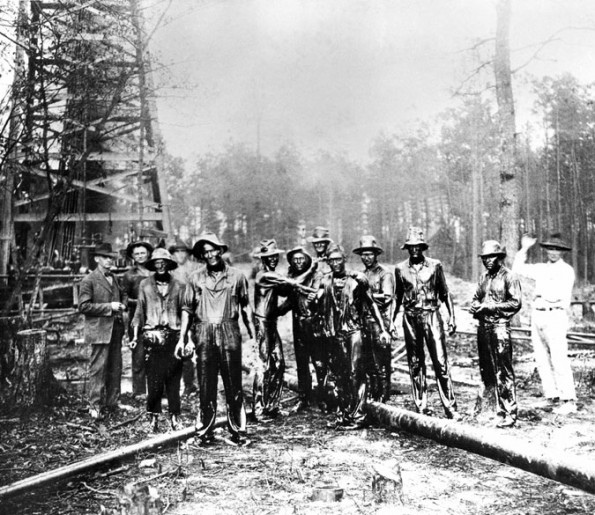
Roughnecks photographed following the July 1, 1922, discovery of the Smackover (Richardson) field in Union County. Photo courtesy of the Southwest Arkansas Regional Archives.
Smackover’s population grew to 25,000 and its uncommon name quickly attained national attention. Nearby less than two years earlier, the first commercial oil well in Arkansas, the Busey-Armstrong No. 1, had revealed the giant El Dorado field and launched the career of a young H.L. Hunt.
Learn more in First Arkansas Oil Wells.
July 1, 1938 – The Texas Company discovers Illinois Oilfield
Using a newly introduced technology of seismic exploration, petroleum geologists found hidden anticlines with commercial quantities of oil in Marion County, Illinois. By January 1939 the Salem field was ranked seventh in U.S. daily production. In one year the field produced more than 20 million barrels of oil.
Natural gas production in Illinois began as early as 1853 when marsh or “drift gas” was produced from two water wells drilled near Champaign. The state’s first drilling boom arrived in 1906, thanks to the John Shore No. 1 oil well in Crawford County, according to the Illinois Oilfield Museum.
July 2, 1910 – President Taft establishes Naval Petroleum Reserves
As the Navy converted from coal to oil-burning ships, President William Howard Taft established three Naval Petroleum Reserves. “As a prospective large consumer of oil by reason of the increasing use of fuel oil by the Navy, the federal government is directly concerned both in encouraging rational development and at the same time ensuring the longest possible life to the oil supply,” the president declared in a message to Congress.
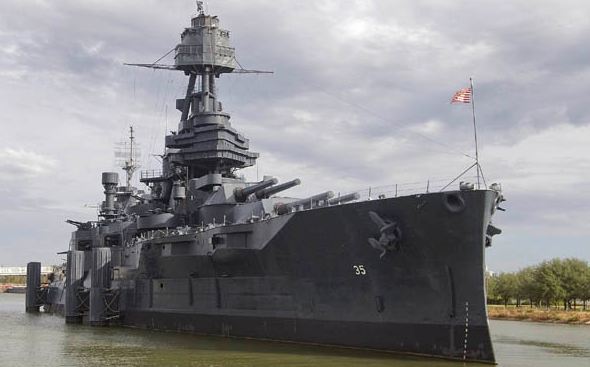
Commissioned in 1914 with coal-powered boilers that were converted to use fuel oil in 1925, the U.S.S. Texas “was the most powerful weapon in the world.”
The last U.S. battleship to be built with coal-fired boilers, the U.S.S. Texas, was launched in 1912 and converted to oil-fired boilers in 1926. Learn more in Petroleum and Sea Power.
July 2, 1913 – First Gasoline-Electric Hybrid Locomotive
While most U.S. trains were still steam-powered, General Electric built the first commercially successful gasoline-powered engine locomotive. Two General Motors 175-horsepower V-8s powered two 600-volt, direct current generators to propel the 57-ton locomotive to a top speed of 51 miles per hour.
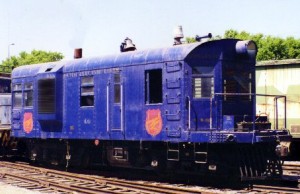
Many consider the locomotive “Dan Patch” the first successful internal combustion engine locomotive in the United States.
The Electric Line of Minnesota Company purchased the new gasoline-powered electric hybrid for $34,500, naming it “Dan Patch” in honor of the world’s champion harness horse of the time. By 1930, diesel engines with G.E. generators launched the modern train industry with “Streamliners.” Learn more in Adding Wings to the Iron Horse.
July 2, 1920 – West Columbia Oilfield discovered in Texas
The Abrams No. 1 well erupted oil in Brazoria County, Texas, revealing the West Columbia oilfield southwest of Houston. Drilled by the Texas Company (the future Texaco), the well initially produced up to 30,000 barrels of oil a day. The well was completed on a 1,650-acre tract owned by railroad official William H. Abrams (1843–1926), who administered millions of acres for the Texas Pacific Land Trust.
Abrams also invested in Mitchell County leases in West Texas, where another 1920 wildcat well discovered the first oil production of the Permian Basin. Three years later, drillers from El Paso completed the Santa Rita No. 1 well.
July 4, 1906 – Louisiana adopts Natural Gas Conservation
Learning conservation lessons from the Indiana Natural Gas Booma, Louisiana enacted measures to prevent waste. Lawmakers joined a growing number of natural gas-producing states and passed legislation “to protect the natural gas fields of this state.” The Louisiana conservation law imposed penalties for “failure to cap out of control wells, doing injury to pipe lines, or wastefully burning natural gas from any well into the air.”
July 5, 1900 – Edison films New Jersey Refinery Fire
An early morning lightning strike at the Standard Oil Company refinery at Bayonne, New Jersey, set off explosions in three storage tanks, each with a capacity of 40,000 barrels of oil. Within minutes, the company’s fire department and tugboats rushed to fight the blaze.
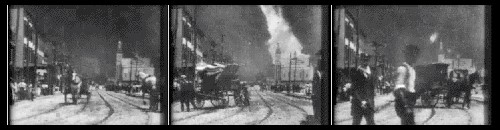
Screenshots from Thomas Edison’s film of the destruction of Standard Oil Company’s refinery at Bayonne, New Jersey, on July 5, 1900, courtesy Library of Congress.
“The tugboats moved the company ships and oil-filled barges away from its burning docks to safe waters,” noted the Jersey Journal in 2017. The Bayonne refinery fire was one of the first newsreels produced by the Thomas A. Edison Company (it can be viewed here). As bad as the conflagration was, there were no fatalities.
_______________________
Recommended Reading: Eisenhower: Soldier and President


_______________________
The American Oil & Gas Historical Society (AOGHS) preserves U.S. petroleum history. Support this energy education website, our monthly email newsletter, This Week in Oil and Gas History News, and help expand historical research. Contact bawells@aoghs.org. Copyright © 2026 Bruce A. Wells. All rights reserved.