Petroleum history articles, research and education resources, oil museum news, exhibits and events.
The American Oil & Gas Historical Society (AOGHS) is dedicated to preserving U.S. petroleum history, which provides a context for understanding the modern exploration and production industry. This history began with an 1859 oil well in Pennsylvania and represents an important but often neglected aspect of energy education. Membership in the historical society is free, but AOGHS depends on individual support for adding articles, maintaining research resources and forums, producing a monthly email newsletter, and operating this website.
Frequently Asked Questions
What is American Oil & Gas Historical Society?
The historical society provides historical content about the U.S. petroleum industry. The American Oil & Gas Historical Society (AOGHS) website includes articles examining the industry’s social, economic, environmental, and technological milestones, good and bad. AOGHS is dedicated to providing unbiased, updated research forums and educational links for students, teachers, researchers, journalists, and others interested in the history of fossil fuels.
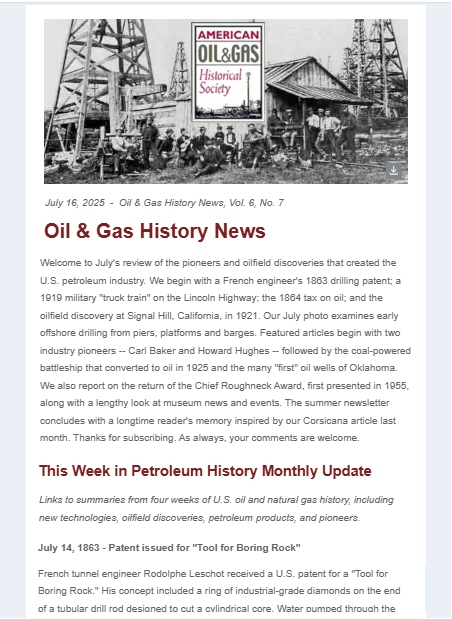
Subscribe to the monthly “Oil & Gas History News.”
AOGHS is not affiliated with any petroleum company, advocacy groups, or industry lobbying organizations; it depends on individual financial support. The historical society’s website serves as a resource for researching U.S. petroleum history.
Bruce A. Wells founded AOGHS in 2003. He is a former energy reporter and editor who lives in Washington, D.C. The historical society, an unincorporated sole proprietorship business, maintains a website and publishes a monthly email newsletter. Wells is assisted by his brother Col. (retired, USAF) Kristin L. Wells, volunteer senior contributing editor.
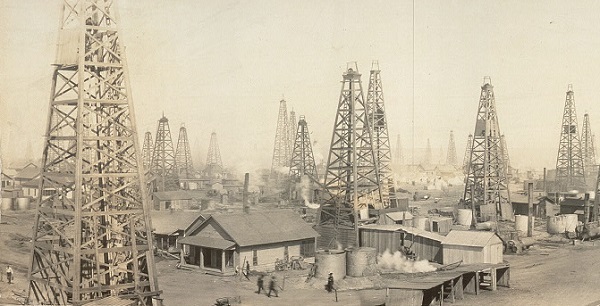
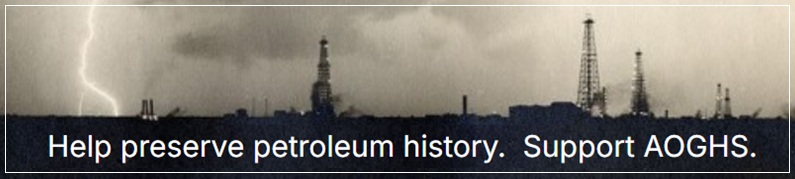
Circa 1919 view of Burkburnett oilfield, near Wichita Falls, Texas. Detail from a panoramic photo courtesy Library of Congress.
What is the American Oil & Gas Historical Society’s mission?
The American Oil & Gas Historical Society provides advocacy and service to community oil and natural gas museums and other organizations committed to energy education, exhibition, and material preservation. Community museum staff and volunteers are credible and too often overlooked energy education resources. AOGHS builds partnerships among these museums.

The historical society encourages museum directors and energy education workshop practitioners to share experiences and teaching resources.
There are many individuals, including volunteers at community museums, historical societies and professionals from the industry who not only help preserve a remarkable history but also serve as ambassadors to the public. The industry’s often neglected history of social, economic, and technological advances provides an important context for teaching the modern energy business, especially to young people.
How much does it cost to join the American Oil & Gas Historical Society?
Membership is free, but annual financial contributions of any amount are encouraged to help maintain the AOGHS website, emailed newsletters, and public outreach efforts. Energy education is important; comments and suggestions are welcomed. Please support this energy education effort.
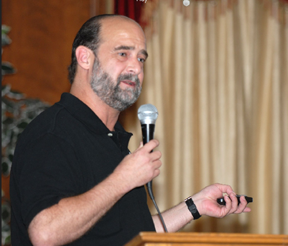
AOGHS founder Bruce A. Wells.
How do I contact the American Oil & Gas Historical Society?
Email Bruce Wells (bawells@aoghs.org). The founder of AOGHS has spoken at museums, archives, libraries, and before many professional organizations; he also has organized teacher-museum conferences to add history to energy education. The conferences have included field trips to petroleum museums in Pennsylvania, West Virginia, Ohio, Kansas, Oklahoma, and Texas.
Oil History and Energy Education
Prior to establishing historical society in 2003, Bruce Wells served as a senior associate for Technology & Management Services, a U.S. Department of Energy contractor, resulting in the publishing of regional histories with photo essays about multigeneration independent operators and oilfield service company families.
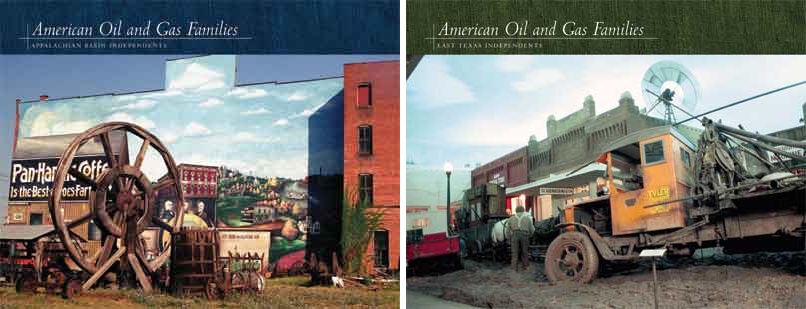
In 2004, AOGHS worked with petroleum museum curators and the U.S. Department of Energy Office of Fossil Fuels to develop regional histories, resulting in two publications, American Oil and Gas Families: Appalachian Basin Independents and American Oil and Gas Families: East Texas Independents.
Wells previously served as associate editor and later managing editor of Petroleum Independent, an industry trade magazine first published in 1930 (as Independent Monthly) by the Independent Petroleum Association of America (IPAA). He also served as the first communications manager for the Petroleum Technology Transfer Council (PTTC), where he designed and edited PTTC Network News. Working with universities and local advisory groups, he documented programs connecting independent exploration and production companies with emerging technologies.
Wells began reporting on the petroleum industry as a staff writer for The American Oil & Gas Reporter after receiving a Bachelor of Science degree from the William Allen White School of Journalism at the University of Kansas. A USAF veteran, he has worked as a journalist in Washington, D.C., since 1981, including as an internal communications editor at the Federal Home Loan Mortgage Corporation (Freddie Mac). He is an award-winning photographer.
After the founding of AOGHS, Wells hosted a series of energy education conferences and served as co-chair for the 2009 national “Oil 150” committee, which coordinated sesquicentennial events celebrating the first U.S. oil well in Titusville, Pennsylvania. He received the “Keeper of the Flame Award” from the Petroleum History Institute (PHI) in August 2009 — and was a Drake Well Museum VIP in the Titusville Oil Sesquicentennial Parade.
Wells also served as an honorary co-chairman of the 75th Anniversary of the East Texas Oil Field Discovery Committee, Kilgore, Texas, in 2005, and an honored guest at the 35th Annual Sistersville Oil and Gas Festival in West Virginia in 2003. As AOGHS president, he has written syndicated columns, photographed historic oilfields, and hosted numerous energy-education conferences and field trips. More about AOGHS.
Exploring popular AOGHS articles
John Wilkes Booth and Dr. Seuss were once in the oil business; Maybelline cosmetics, Hula-Hoops, nylons, and Wax Lips were all petroleum product offspring; Harry Houdini patented a deep sea diving suit adopted by offshore drillers; “fracking” was the profitable brainstorm of a cashiered Union veteran; Florida’s first oil well was drilled after the state offered a reward; and countless thousands of obsolete stock certificates fascinate collectors – each has a tale of its own.
2006 Oil History Journalism Award
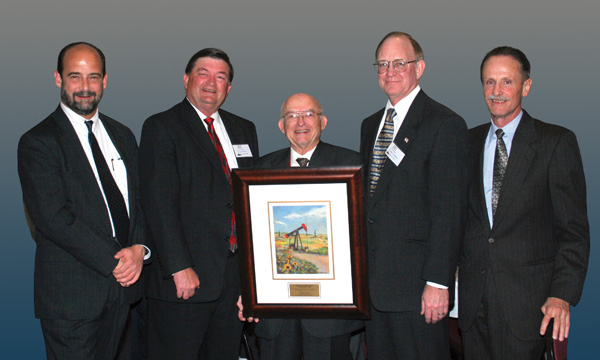
Among those who served on the editorial staff of The American Oil & Gas Reporter, established in 1958 by Charles W. “Cookie” Cookson (1922-2015), center, are Bruce Wells, Alex Mills, Bill Campbell, and A.D. Koen. Cookson holds a limited edition print, “Donkey in a Kansas Field,” by California artist JoAnn Cowans, an AOGHS journalism award presented to him in 2006. Mills and Campbell served as managing editors at Cookson’s magazine; Koen and Wells were staff writers. Photo courtesy The American Oil & Gas Reporter.
_______________________________________________
The American Oil & Gas Historical Society (AOGHS) preserves U.S. petroleum history. Please become an AOGHS supporter and help maintain this energy education website and expand historical research. For more information, contact bawells@aoghs.org. © 2026 Bruce A. Wells. All rights reserved.