April 27, 1966 – Ariel Corporation founded –
After receiving a degree in mechanical engineering in 1954, former eighth-grade teacher Jim Buchwald founded Ariel Corporation in Mount Vernon, Ohio. “With little money to pay for a facility to house the tools, a room in the basement of the Buchwald family home is cleaned up,” according to the Ariel website.
Buchwald bought a lathe, a small hand-cranked rotary table, and a vertical drill for manufacturing valves. “This room becomes the first Ariel machine shop, with an adjoining room functioning as Ariel’s first official engineering department.”
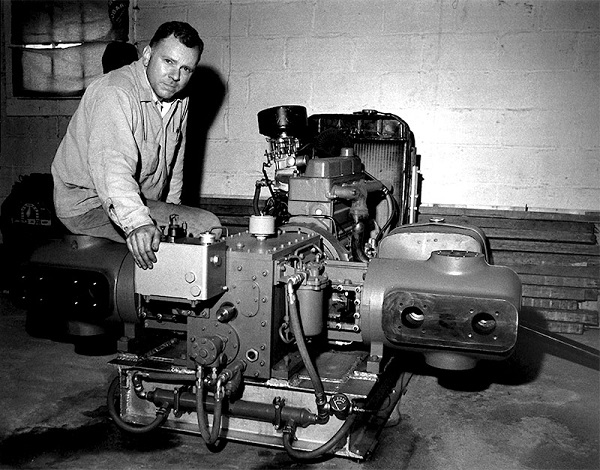
Jim Buchwald’s prototype compressor could run for 10 hours at the unprecedented speed of 1,800 RPM. Photo courtesy Ariel.
By 1968, Buchwald had built a prototype gas compressor that ran at the unprecedented speed of 1,800 RPM. His Ohio machine shop soon transitioned into a manufacturing facility, and Buchwald named the company after his favorite 1948 Ariel motorcycle. His company has become one of the world’s largest manufacturers of reciprocating gas compressors.
April 29, 1942 – Tanker SS Mobiloil torpedoed in Atlantic
A German U-boat torpedoed the unescorted steam tanker SS Mobiloil (spelled in some reports as Mobil Oil) in the Atlantic northeast of the Bahamas. During multiple torpedo attacks, U-108 surfaced and shelled the 10,000-ton tanker owned by the Socony-Vacuum Oil Company of New York.
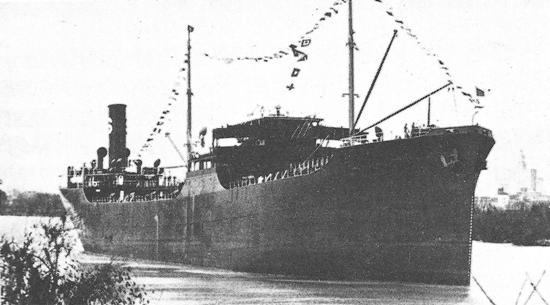
The 1937 launching of the Socony-Vacuum Oil Company tanker SS Mobiloil, five years before being torpedoed by U-108 while waiting to join an Atlantic convoy. Photo courtesy ExxonMobil.
After a valiant defense, the tanker broke in half and sank, according to Ericwiberg.com. All 52 crew and passengers were rescued after about 86 hours in lifeboats. When 98 Allied ships were sunk in March 1943, “the pressure of the convoys reached a peak,” according to the National Museums Liverpool. “Once again, the Allies appeared to be on the brink of defeat in the Atlantic.”
The same month, a team of Oklahoma drillers secretly departed America on the converted troopship HMS Queen Elizabeth to drill in an obscure English oilfield. They would produce more than one million barrels of oil and become known as the Roughnecks of Sherwood Forest.
April 29, 2004 – Last Oldsmobile rolls off Assembly Line
The last Oldsmobile ever built (a four-door Alero GLS) left the company’s production line in Lansing, Michigan. Founded by Ransom E. Olds in 1897 as “Olds Motor Vehicle Company,” Olds sold America’s first mass-produced car, the Model R “Curved Dash,” from 1902 to 1907, according to Robert Domm in this 2009 book Michigan Yesterday & Today. In 1908, Oldsmobile joined Buick to become part of the newly established General Motors eight years after the first U.S. auto show.
April 30, 1929 – Marland Oil and Continental Oil become Conoco
After discovering several Oklahoma oil and gas fields, Marland Oil Company acquired Continental Oil Company to create a network of service stations in 30 states. Future Oklahoma Governor Ernest W. Marland founded Marland Oil in 1921; Continental Oil Company had been founded in 1875 in Utah, where it refined oil into kerosene.
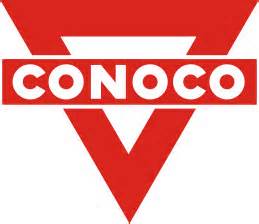
After Continental Oil and Marland Oil combined in 1929, the new company used this logo until 1970.
Headquartered in Ponca City, the new company retained the name Continental Oil, but adopted the well-known Marland red triangle trademark, replacing the “Marland Oils” text with “Conoco.” The company in 2002 merged with Phillips Petroleum, incorporated in 1917, to become ConocoPhillips (see ConocoPhillips Petroleum Museums).
April 30, 1955 – Landmen form Trade Association
The American Association of Professional Landmen (AAPL) organized in Fort Worth, Texas, as an association of petroleum lease negotiators. AAPL members research records to determine well ownership, locate mineral and land owners, and negotiate oil and natural gas leases, trades, and contracts. With 12,000 members, AAPL assists in compliance with state and federal regulations, according to the association, which will host its 72nd annual meeting June 24-26, 2026, in Salt Lake City.
May 1, 1860 – First West Virginia Oil Well
As the Civil War approached, Virginia’s petroleum industry began when John Castelli ”Cass” Rathbone completed an oil well near Burning Springs Run in what today is West Virginia. His well — drilled using a spring pole — reached 300 feet and began producing 100 barrels of oil a day.
Rathbone drilled more wells in the valley of the Little Kanawha River southwest of Parkersburg. It was the first petroleum boom to take place outside the Pennsylvania oilfields, revealed by the first U.S. well at Titusville a year earlier.
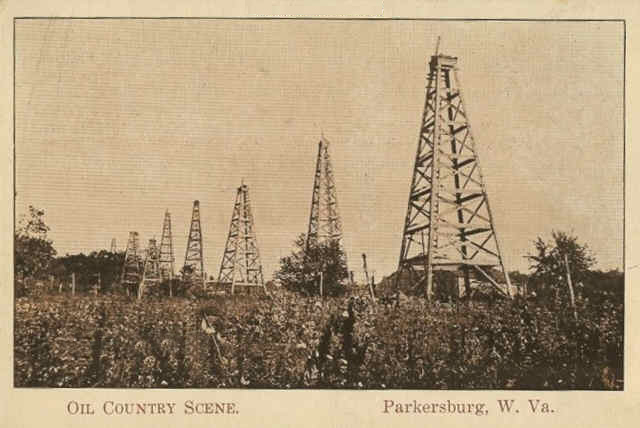
Following the 1860 oil discovery at Burning Springs, Appalachian drillers applied cable-tool technologies to drill deeper. 1869 postcard courtesy West Virginia Humanities Council.
By the end of 1860, the “Burning Springs Oil Rush” resulted in more than 600 oil leases registered in the Wirt County courthouse. Warehouses were built along the Little Kanawha River, which reached the Ohio River at Parkersburg.
“These events truly mark the beginnings of the oil and gas industry in the United States,” proclaimed West Virginia historian David McKain in 1994, adding that the region’s oil wealth helped bring about statehood in June 1863. Many of the new state’s politicians were “oil men — governor, senator and congressman — who had made their fortunes at Burning Springs.”
Visit West Virginia’s oil and gas museum in downtown Parkersburg.
May 1, 1916 – Harry Sinclair founds Sinclair Oil & Refining
Harry Ford Sinclair combined several depressed oil properties, five small refineries, and many untested leases — all acquired at bargain prices. He began with $50 million in assets and borrowed another $20 million to form Sinclair Oil & Refining Corporation.
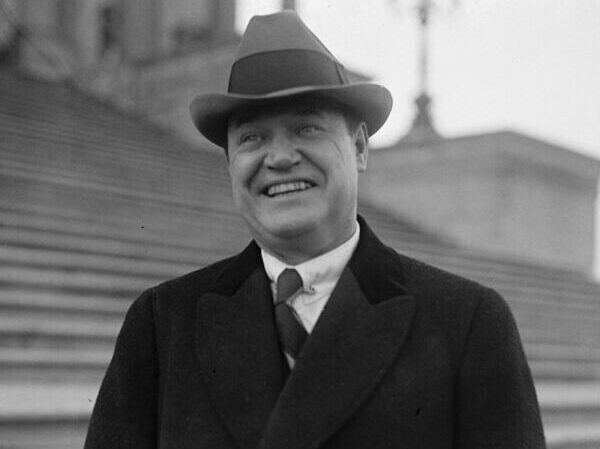
Sinclair Oil & Refining founder Harry Sinclair visiting the U.S. Capitol in January 1923. Photo Courtesy Library of Congress.
In its first 14 months, Sinclair’s New York-based company produced six million barrels of oil for a net income of almost $9 million ($258 million in 2024 dollars). The company’s petroleum refining capacity grew to 150,000 barrels of oil a day in 1932.
Although Sinclair was implicated in the 1920s Teapot Dome Scandal, his oil and refining company became one of the oldest continuous names in the petroleum industry. The “Dino” marketing icon Sinclair Oil dinosaur was exhibited at the 1933-1934 World’s Fair in Chicago. Sinclair died in 1956 at age 80.

May 1, 1931 – Railroad Commission limits East Texas Oil Production
The first proration order for the East Texas oilfield from the Texas Railroad Commission (RRC) took effect less than one year after the Daisy Bradford No. 3 well discovered the “Black Giant” of the Great Depression. With hundreds of wells producing almost one million barrels a day, oil prices had collapsed to as low as 10 cents per barrel. The commission’s order — unpopular with independent producers but enforced by Texas Rangers — limited production and stabilized prices.
May 1, 2001 – Oklahoma Plaza honors Oil Pioneers
The Sam Noble Museum at the University of Oklahoma in Norman dedicated a memorial to the state’s petroleum pioneers. “The individuals identified here are true Oklahoma Oil Pioneers whose work laid the groundwork for the oil and gas industry in a young state,” notes the Conoco Oil Pioneers of Oklahoma Plaza. “Their stories are not only inspirational, but serve as testaments to the extraordinary opportunities the early oil industry provided for individual achievements and public good.”
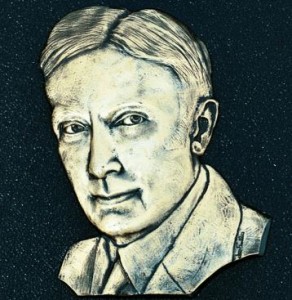
Wildcatter Tom Slick’s portrait in bronze bas-relief at the oil pioneers plaza of the Sam Noble Museum, University of Oklahoma, Norman.
Among the 60 honored are Tom Slick (1883-1930), Lloyd Noble (1896-1950), Robert S. Kerr (1896-1963), and service company pioneers George E. Failing (1889-1976), Erle P. Halliburton (1892-1957), and geophysicist John C. Karcher (1894-1978). “The history of the state of Oklahoma is inextricably linked with the remarkable history of the oil industry,” proclaimed Conoco Chairman Archie Dunham at the dedication.
May 2, 1921 – Oil discovered in Texas Panhandle
Following a series of discoveries revealing the giant Hugoton natural gas field in the Texas Panhandle, a well drilled in Carson County found an oilfield instead. Gulf Oil Company completed its wildcat well on the 6666 (the “Four Sixes”) Ranch of S.B. Burnett several miles east of the natural gas wells. The discovery attracted independent producers and oilfield service companies to Amarillo. A giant oilfield was discovered in 1926 by A.P. “Ace” Borger, who founded the boom town of Borger in Hutchinson County.
May 3, 1870 – Lantern with Two Spouts patented
Jonathan Dillen of Petroleum Centre, Pennsylvania, received a patent for his “safety derrick lamp,” a two-wicked lantern that became known as the “Yellow Dog” in America’s earliest oilfields. Dillen designed his lamp “for illuminating places out of doors, especially in and about derricks and machinery in the oil regions, whereby explosions are more dangerous and destructive to life and property than in most other places.”
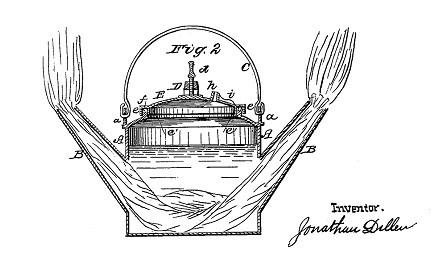
Patented in 1870, a popular two-wicked derrick lantern became known as the “Yellow Dog.”
“My improved lamp is intended to burn crude petroleum as it comes from the wells fresh and gassy,” he added. How the once widely used lamp got its name has remained a mystery, but some say the two burning wicks resembled a dog’s glowing eyes at night.
Learn more in Yellow Dog – Oilfield Lantern.
_______________
Recommended Reading: Oil and Gas Pipeline Fundamentals


_______________
The American Oil & Gas Historical Society (AOGHS) preserves U.S. petroleum history. Please support this energy education website, our monthly email newsletter, This Week in Oil and Gas History News, and help expand historical research. Contact bawells@aoghs.org. Copyright © 2026 Bruce A. Wells. All rights reserved.