Oil & Gas Families – Albert Jeffreys Family Collection
The importance of preserving petroleum history, one story at a time.
Millions of Americans have worked in the petroleum industry and many have left family records and photographs of their “oil patch” careers. The AOGHS American Oil & Gas Families project and museums listing offer help in locating suitable homes for preserving the histories of America’s oil families.
Adding Family Petroleum Heritage to Museum Collections
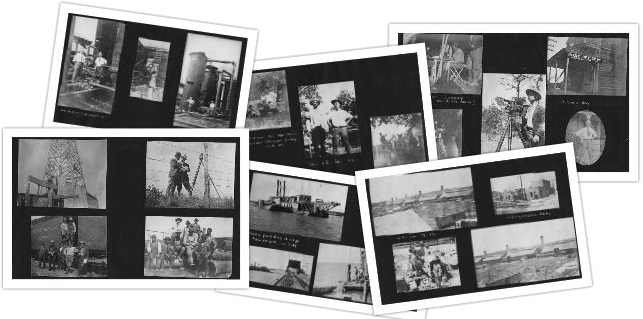
Albert Jeffreys in Texas, Louisiana, Romania, Pennsylvania and England, 1904-1913. Family photography preserved by his granddaughter, Sheila Morshead.
Finding the Right Oil and Gas Museum
In 2016, California resident Sheila Morshead contacted the American Oil & Gas Historical Society about preserving her family’s photo albums — a significant photo collection of petroleum-related images documenting her grandfather’s early 20th century career.
After finishing scanning circa 1910 images, Sheila said she hoped to find a good home for preserving her increasingly fragile originals. Many of her grandfather’s images came from the Beaumont, Texas, region (with others from Louisiana and as far away as England and Romania). She hoped someone would want to preserve the original album pages.

Thanks to Troy Gray, director of the Spindletop-Gladys City Boomtown Museum at Lamar University in Beaumont, Texas, Sheila accomplished her preservation mission.
Some of Sheila’s photos depict early refineries at Beaumont. Others show oil terminals in Galveston Bay, a 1909 pumping station under construction near Moores, Louisiana, and even the apparently good fishing at Port Bolivar in the Gulf of Mexico (a few examples out of more than 120 pages are below).
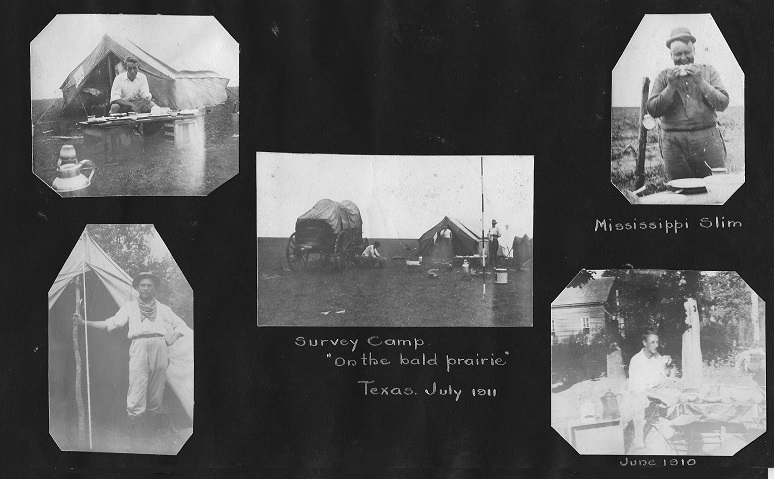
One of the more than 120 family album pages of the petroleum-related career of Albert Jeffreys to be part of the permanent collection of the Spindletop-Gladys City Boomtown Museum thanks to his granddaughter.
One page from the album depicts photos from a survey camp with tents and an equipment wagon on “the bald prairie” of Texas in July 1911. It includes a photo of “Mississippi Slim,” her grandfather’s co-worker.
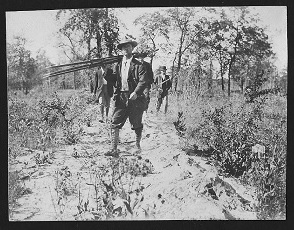
Sheila Morshead continues to research details about her grandfather’s career. She believes this is a 1912 photo of Albert Jeffreys with his surveying tripod.
“My Grandfather was Albert Jeffreys from Great Britain,” Sheila explains about the family images, adding that Albert “Jeff” Jeffreys first arrived in the United States in 1908. The next year he got married in Shreveport, Louisiana. Albert’s wife Florence – “Flo” – also was from Great Britain, Sheila adds. “Their daughter Dorothy Kathleen Jeffreys – my mother – was born in Fort Worth, Texas, in January 1912.”
After a few busy years in Texas, Albert’s oil patch career took him to the Caucasus region of southwestern Russia in 1914. “He was sent there by the British government to work in the oilfields for his service to the country during World War I,” explains Sheila, who studied early chapters of Dan Yergin’s The Prize, to learn petroleum industry history.
“Albert eventually escaped during the Bolshevik revolution by way of Norway and returned to England,” adds his granddaughter. “I am trying to decipher the many stamps on his old passport. Needless to say, I am getting pleasantly lost in looking up British oil companies.”
After talking with Troy about his museum’s collections at the Lamar University, she removed a few original images to keep for siblings. She plans on donating all the rest as she continues to research dates and other family documents.
Albert Jeffreys Family Collection
“Here are some annotations about the scanned pictures,” Shelia noted when she emailed AOGHS seeking help in locating an appropriate oil museum or library to preserve them. “There are lots more pictures, and I can do more exact research on dates, but as you can see most have locations written on them and some dates.”
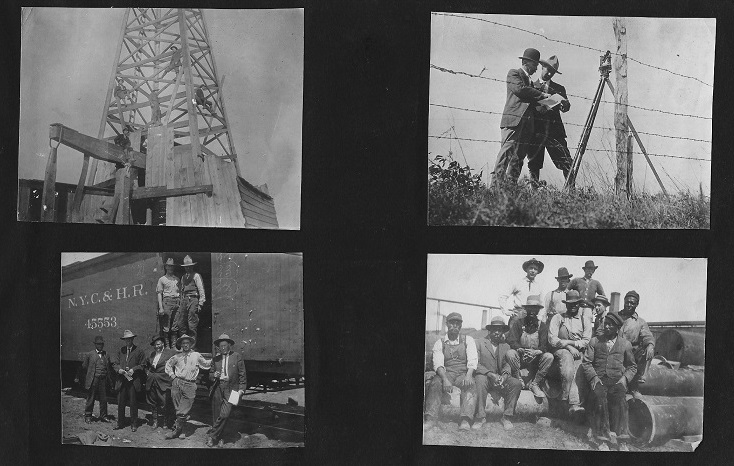
The family album includes a cable-tool oil well (with walking beam). Next to it is a photo of two unidentified men with surveying equipment. A third photo shows men standing in front of a New York Central and Hudson River Railroad car; another depicts a pipeline laying work crew.
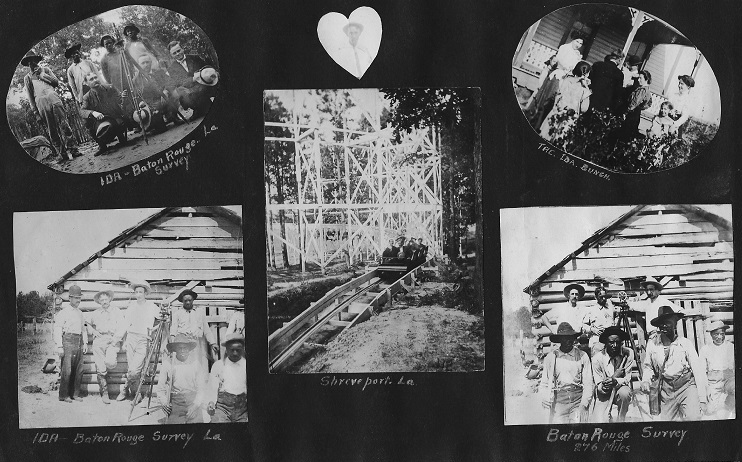
Undated images from Baton Rouge, Louisiana, include Albert Jeffreys (in heart) and his surveying co-workers along with an “Ida Bunch” family photo and riding a roller coaster in Shreveport.
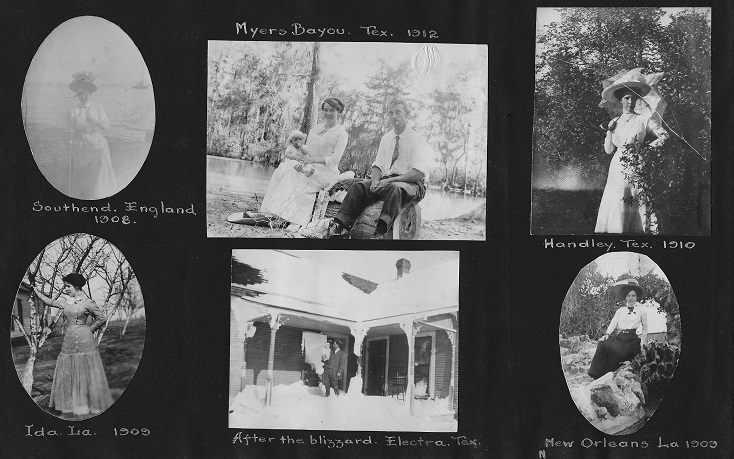
After returning from England to Louisiana oilfields in 1909, the family made stops in Handley and Electra, Texas, which included a rare blizzard, before moving on to New Orleans.
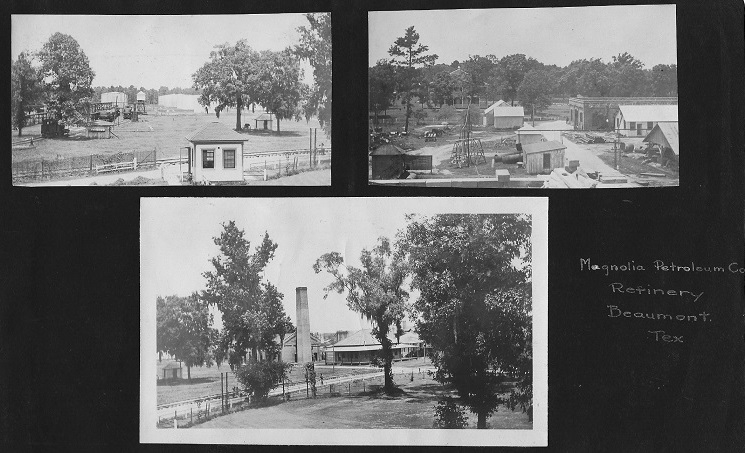
Three of Albert Jeffreys’ images documenting the Magnolia Company refinery in Beaumont, Texas, circa 1912.
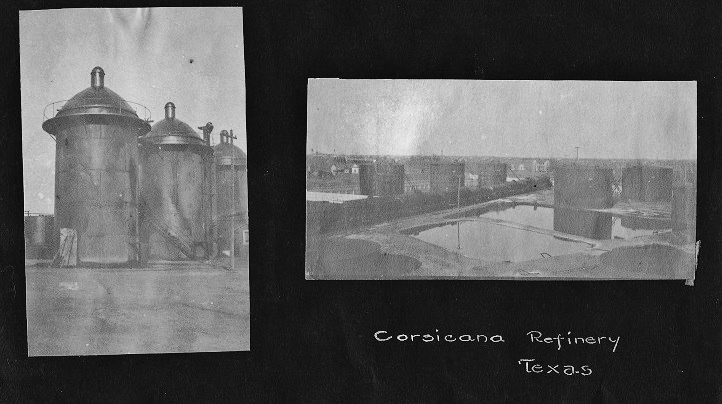
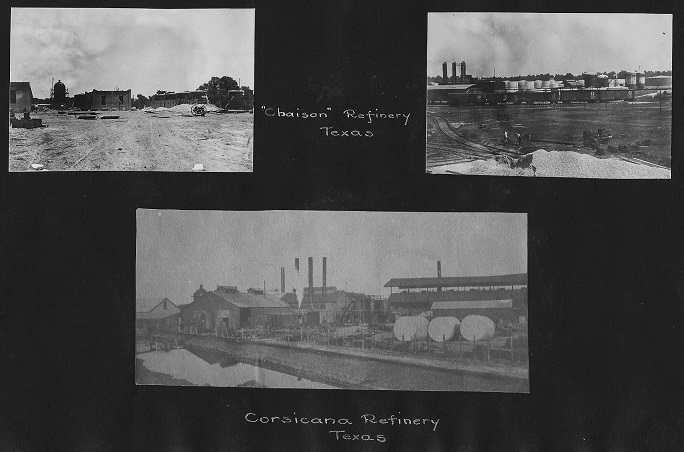
In addition to images of the Magnolia oil refinery, Albert Jeffreys photographed other circa 1910 refineries, including one near Corsicana and the “Chaison Refinery” below.
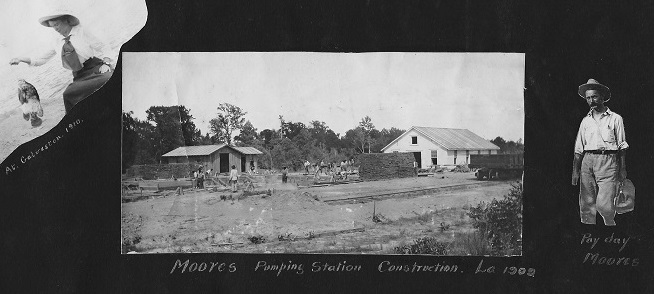
Both Albert and wife Florence enjoyed fishing in Galveston Bay between his frequent surveying trips in Texas in 1910 – and a visit to the pipeline pumping station in Moores, Louisiana.
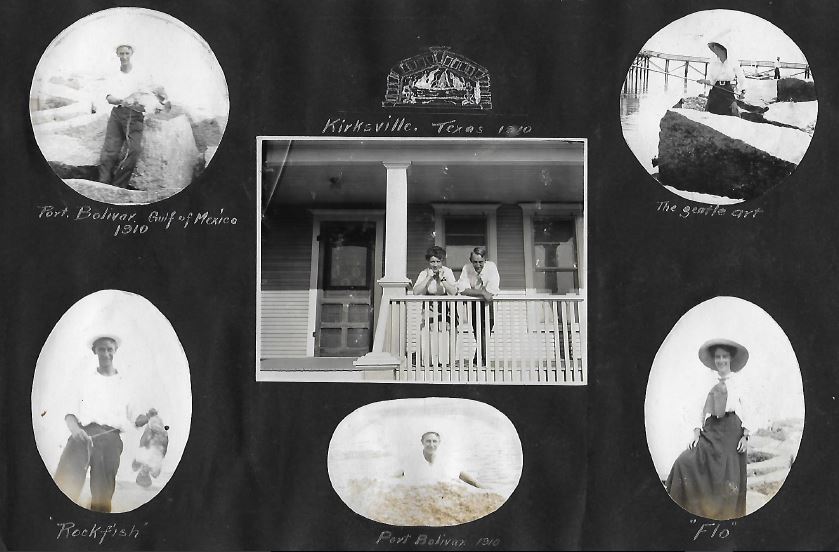
Albert “Jeff” and “Flo” Jeffreys lived in Kirksville, Texas, and enjoyed fishing out of Port Bolivar around 1911.
With many family photos in the process of being preserved for posterity, Albert “Jeff” Jeffery’s petroleum career continues to fascinate his granddaughter. “I still intend to do more looking as it is a puzzle full of interesting pieces,” says Sheila.
“For example, my grandfather’s father worked for a British oil company and my grandfather’s son Stanley Rex Jeffreys was a geologist with the landmark geology survey of California, which I believe was completed sometime in the 1950s and was part of the concerted effort to identify oil producing areas in California,” Shelia explains. “So, there were three generations of Jeffreys oil men.”
Geologic mapping in California began in 1826 when the first geologic survey in the state was done by a British naval officer, according to History of Geologic Maps of California of the California Geological Survey.
1901 Gusher at Spindletop
Albert Jeffreys worked in Texas oilfields just a few years after a famous oil discovery about three miles south of Beaumont. The January 10, 1901, “Lucas Gusher” at Spindletop Hill would soon lead to southeastern Texas producing more oil in one day than the rest of the world’s oilfields combined. Major petroleum companies like Texaco got started there.
Both the Spindletop-Gladys City Boomtown Museum and the Texas Energy Museum in Beaumont tell the story of the Spindletop well, a “wildcat” discovery that created the greatest petroleum boom in America – far exceeding the first U.S. oil discovery well in 1859 in Pennsylvania.
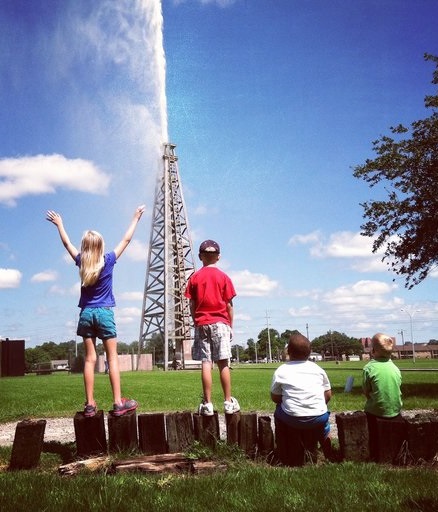
A replica wooden derrick recreates the excitement of a major oil discovery of January 10, 1901. Photo courtesy Spindletop-Gladys City Boomtown Museum at Lamar University in Beaumont, Texas.
Gladys City, now partially recreated on the museum’s grounds, was originally envisioned by Patillo Higgins of the Gladys City Oil, Gas and Manufacturing Company. Known as the Prophet of Spindletop, he predicted oil would be found near the city he designed in 1892. Spindletop launched the modern petroleum industry a few years later.
Learn more about finding a museum to preserve family photos at Oil Families.
_______________________
The American Oil & Gas Historical Society preserves U.S. petroleum history. Become an AOGHS supporting member and help maintain this energy education website and expand historical research. For more information, contact bawells@aoghs.org. Copyright © 2026 Bruce A. Wells. All rights reserved.
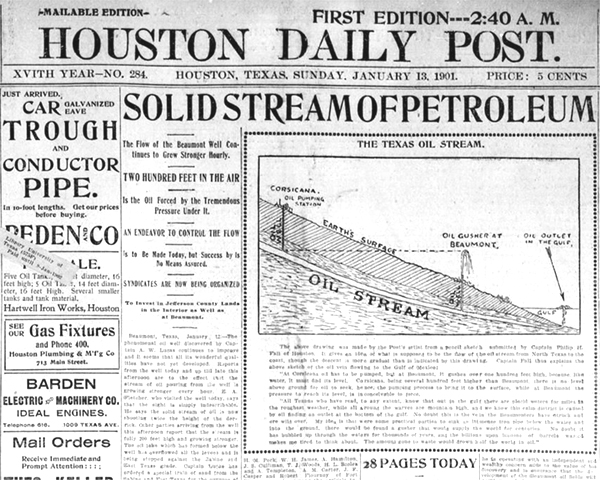
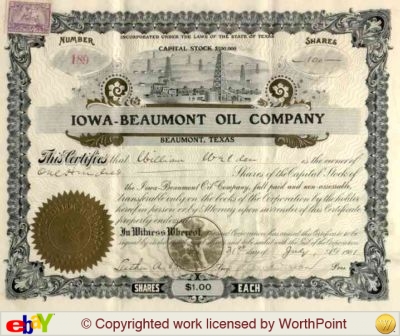 Just six months after a gusher on Spindletop Hill launched the modern petroleum industry in 1901, the Iowa-Beaumont Oil Company formed to join the boom.