by Bruce Wells | Apr 2, 2026 | Petroleum Pioneers
As drillers and speculators rushed to Spindletop Hill, the Texas Company was organized in 1902.
A series of oil and natural gas discoveries at Sour Lake, Texas — near the famous 1901 gusher at Beaumont — helped launch the major oil company Texaco.
Originally known as Sour Lake Springs because of sulfurous spring water popular for its healing properties, a series of oil discoveries brought wealth and new petroleum companies to Hardin County in southeastern Texas.

“A forest of oil well derricks at Sour Lake, Texas,” circa early1900s, courtesy the W.D. Hornaday Collection, Texas State Library and Archives Commission, Austin. Oil discoveries at the resort town northwest of the world-famous 1901 Spindletop gusher transformed the Texas Company into Texaco.
As the science of petroleum exploration and production evolved, some geologists predicted oil was trapped at a salt dome at Sour Lake, similar to that of Beaumont’s Spindletop Hill formation, which was producing massive amounts of oil.
According to Charles Warner in Texas Oil & Gas Since 1543, in November 1901 an exploratory well found “hot salt water impregnated with sulfur between 800 and 850 feet…and four oil sands about 10 feet thick at a depth of approximately 1,040 feet.”
Warner noted that the Sour Lake Springs field’s discovery well came four months later when a second attempt by the Great Western Company drilled “north of the old hotel building” in the vicinity of earlier shallow wells.

“This monument marks the site of the Texas Company’s first producing oil well.” The Fee No. 3 well flowed at 5,000 barrels of oil a day in 1903, launching the Texas Company into becoming Texaco.
“This well secured gusher production at a depth of approximately 683 feet on March 7, 1902,” Warner reported. “The well penetrated 40 feet of oil sand. The flow of oil was accompanied by a considerable amount of loose sand, and it was necessary to close the well in from time to time and bail out the sand, after which the well would respond with excellent flows.”
As more discoveries followed, Joseph “Buckskin Joe” Cullinan and Arnold Schlaet were among those who rushed to the area from their offices in Beaumont.
“Buckskin Joe” Cullinan
The most significant company that started during the Spindletop oil boom was The Texas Company, according to historian Elton Gish.

“Cullinan worked in the Pennsylvania oil industry and later went to Corsicana, Texas, about 1898 when oil was first discovered in that district, where he became the most prosperous operator in the field,” reported Gish in his “History of the Texas Company and Port Arthur Works Refinery.”
Cullinan formed the Petroleum Iron Works, building oil storage tanks in the Beaumont area — where he was introduced to Schlaet. “When the Spindletop boom came in January 1901, Mr. Cullinan decided to visit Beaumont,” Gish noted. Schlaet managed the oil business of two brothers, New York leather merchants.

Named after its New York City telegraph address, the Texaco brand became official in 1959. Postcard of a Texaco service station next to a cafe in Kingman, Arizona.
“Schlaet’s field superintendent, Charles Miller, traveled to Beaumont in 1901 to witness the Spindletop activity and met with Cullinan, whom he knew from the oil business in Pennsylvania. He liked Cullinan’s plans and asked Schlaet to join them in Beaumont.”
According to Texaco, Cullinan and Schlaet formed the Texas Company on April 7, 1902, by absorbing the Texas Fuel Company and inheriting its office in Beaumont. Texas Fuel had organized just one year earlier to purchase Spindletop oil, develop storage and transportation networks, and sell the oil to northern refineries.

By November 1902, the new Texas Company was establishing a new refinery in Port Arthur as well as 20 storage tanks, building its first marine vessel, and equipping an oil terminal to serve sugar plantations along the Mississippi River.
Fee No. 3 Discovery
The Texas Company struck oil at Sour Lake Springs in January 1903, “after gambling its future on the site’s drilling rights,” the company explained. “The discovery, during a heavy downpour near Sour Lake’s mineral springs, turned the company into a major oil producer overnight, validating the risk-taking insight of company co-founder J.S. Cullinan and the ability of driller Walter Sharp.”

A Texaco station was among the 2012 indoor exhibits featured at the National Route 66 Museum in Elk City, Oklahoma. Photo by Bruce Wells.
Their 1903 Hardin County discovery at Sour Lake Springs — the Fee No. 3 well — flowed at 5,000 barrels a day, securing the Texas Company’s success in petroleum exploration, production, transportation, and refining. Sharp founded the Sharp-Hughes Tool Company in 1908 with Howard Hughes Sr.
High oil production levels from the Sour Lake field and other successful wells in the Humble oilfield (1905) secured the company’s financial base, according to L. W. Kemp and Cherie Voris in the Handbook of Texas Online.
“In 1905 the Texas Company linked these two fields by pipelines to Port Arthur, ninety miles away, and built its first refinery there. That same year the company acquired an asphalt refinery at nearby Port Neches,” the authors noted.

“In 1908 the company completed the ambitious venture of a pipeline from the Glenn Pool, in the Indian Territory (now Oklahoma), to its Southeast Texas refineries,” added Kemp and Voris.
Telegraph Address: Texaco
As early as 1905, the Texas Company had established marketing facilities not only throughout the United States but also in Belgium, Luxembourg, and Panama.

The Texas Company registered “Texaco” as a trademark in 1909.
The telegraph address for the company’s New York office is “Texaco” — a name soon applied to its products. The company registered its first trademark, the original red star with a green capital letter “T” superimposed on it in 1909. The letter remained an essential component of the logo for decades.
In August 1926, the Texas Corporation incorporated in Delaware (from Texas) and by an exchange of shares acquired outstanding stock of The Texas Company, which was dissolved the next year.
The new corporation became the parent company of numerous “Texas Company” — Texaco — entities and other subsidiaries, according to Jim Hinds of Columbus, Indiana (see Histories of Indian Refining, Havoline, and Texaco). By 1928, Texaco operated more than 4,000 gasoline stations in 48 states. It already was a major oil company when it officially renamed itself Texaco in 1959.
1987 Bankruptcy
Texaco lost a 1985 court battle following its purchase of Getty Oil Company. In February 1987 a Texas court upheld the decision against Texaco for having initiated an illegal takeover of Getty Oil after Pennzoil had made a bid for the company. Texaco filed for bankruptcy in April 1987.
The companies settled their historic $10.3 billion legal battle for $3 billion when Pennzoil agreed to drop its demand for interest. The Los Angeles Times reported the compromise was vital for Texaco emerging from bankruptcy, a haven sought to stop Pennzoil from enforcing the largest court judgment ever awarded at the time.

On October 9, 2001, Chevron and Texaco agreed to a merger that created ChevronTexaco — renamed Chevron in 2005. Although the Sour Lake Springs oil boom was surpassed by other Texas discoveries, it has remained the birthplace of Texaco.
Learn more about southeastern Texas petroleum history in Spindletop creates Modern Petroleum Industry and Prophet of Spindletop.
_______________________
Recommended Reading: The Texaco Story, The First Fifty Years 1902 – 1952 by Texas Company (1952). Texaco’s Port Arthur Works, A Legacy of Spindletop and Sour Lake (2003); Giant Under the Hill: A History of the Spindletop Oil Discovery
(2008). Your Amazon purchase benefits the American Oil & Gas Historical Society. As an Amazon Associate, AOGHS earns a commission from qualifying purchases.
_______________________
The American Oil & Gas Historical Society (AOGHS) preserves U.S. petroleum history. Please support AOGHS to help maintain this energy education website, a monthly email newsletter, This Week in Oil and Gas History News, and expand historical research. Contact bawells@aoghs.org. Copyright © 2026 Bruce A. Wells.
Citation Information – Article Title: “Sour Lake produces Texaco.” Authors: B.A. Wells and K.L. Wells. Website Name: American Oil & Gas Historical Society. URL: https://aoghs.org/petroleum-pioneers/sour-lake-produces-texaco. Last Updated: April 6, 2026. Original Published Date: April 5, 2014.
by Bruce Wells | Apr 1, 2026 | Petroleum Companies
Marathon before and after independence from the Standard Oil Company.
John D. Rockefeller, who in 1870 founded Standard Oil Company in Cleveland, Ohio, by 1890 had established his dominance throughout the U.S. petroleum industry — putting every small oil venture at risk. In an effort fight back, in 1887 a group independent producers founded the Ohio Oil Company in Lima. Seventy-five year later, their company became Marathon Oil. (more…)
by Bruce Wells | Mar 31, 2026 | Petroleum Companies
A 1954 well drilled by the Ohio Oil Company reached more than four miles deep.
Founded in 1887 by Henry M. Ernst, the Ohio Oil Company got its exploration and production start in northwestern Ohio, at the time a leading oil-producing region. Two years later, John D. Rockefeller’s Standard Oil Trust purchased the growing company — known as “The Ohio” — and in 1905 moved headquarters from Lima to Findlay.
Soon establishing itself as a major pipeline company, by 1908 the Ohio controlled half of the oil production in three states. The company resumed independent operation in 1911 following the dissolution of the Standard Oil monopoly. The new Ohio Oil’s exploration operations expanded into Wyoming and further westward.

The Ohio Oil Company in 1930 purchased Transcontinental Oil, a refiner that had marketed gasoline under the trademark “Marathon” since 1920. Photo courtesy Library of Congress.
By 1915, the company’s infrastructure had added 1,800 miles of pipeline as well as gathering and storage facilities from its newly acquired Illinois Pipe Line Company. The Ohio then purchased the Lincoln Oil Refining Company to better integrate and develop more crude oil outlets.
“Ohio Oil saw the increasing need for marketing their own products with the ever-increasing supply of automobiles appearing on the primitive roads,” explained Gary Drye in a 2006 forum at Oldgas.com.
The company ventured into marketing in June 1924 by purchasing Lincoln Oil Refining Company of Robinson, Illinois. With an assured supply of petroleum, the Ohio Oil’s “Linco” brand quickly expanded.

The Ohio Oil Company marketed its oil products as “Linco” after purchasing the Lincoln Oil Refinery in 1920. Undated photo of a station in Fremont, Ohio.
Meanwhile, a subsidiary in 1926 co-discovered the giant Yates oilfield in the Permian Basin of New Mexico and West Texas. “With huge successes in oil exploration and production ventures, Ohio Oil realized they needed even more retail outlets for their products,” Drye reported. By 1930, the company distributed Linco products throughout Ohio, Indiana, Illinois, Michigan and Kentucky.
Marathon of Ohio Oil
In 1930 Ohio Oil purchased Transcontinental Oil, a refiner that had marketed gasoline under the trademark “Marathon” across the Midwest and South since 1920. Acquiring the Marathon product name included the Pheidippides Greek runner trademark and the “Best in the long run” slogan.

Adopted in 2011, the third logo for corporate branding in Marathon Oil’s 124-year history.
According to Drye, Transcontinental “can best be remembered for a significant ‘first’ when in 1929 they opened several Marathon stations in Dallas, Texas in conjunction with Southland Ice Company’s ‘Tote’m’ stores (later 7-Eleven) creating the first gasoline/convenience store tie-in.”

The Marathon brand proved so popular that by World War II the name had replaced Linco at stations in the original five-state territory. After the war, Ohio Oil continued to purchase other companies and expand throughout the 1950s.
Ohio Oil’s California Record
As deep drilling technologies continued to advance in the 1950s, a record depth of 21,482 feet was reached by the Ohio Oil Company in the San Joaquin Valley of California.

Petroleum Engineer magazine in 1954 noted the well set a record despite being “halted by a fishing job.”
The deep oil well drilling attempt about 17 miles southwest of Bakersfield in prolific Kern County, experienced many challenges. A final problem led to it being plugged with cement on December 31, 1954. At more than four miles deep, down-hole drilling technology of the time was not up to the task when the drill bit became stuck.
The challenge of retrieving obstructions from deep in a well’s borehole – “fishing” – has challenged the petroleum industry since the first tool stuck at 134 feet and ruined a well spudded just four days after the famous 1859 discovery by Edwin Drake in Pennsylvania (see The First Dry Hole).

In a 1954 article about deep drilling technology, The Petroleum Engineer noted the Kern County well of Ohio Oil — which would become Marathon Oil — set a record despite being “halted by a fishing job.” The well was a financial loss.
A 1953 Kern County well drilled by Richfield Oil Corporation produced oil from a depth of 17,895 feet, according to the magazine. At the time, the average U.S. cost for the nearly 100 wells drilled below 15,000 feet was about $550,000 per well. Learn more California petroleum exploration history by visiting the West Kern Oil Museum.
More than 630 exploratory wells with a total footage of almost three million feet were drilled in California during 1954, according to the American Association of Petroleum Geologists — the AAPG, established in 1917.
In 1962, celebrating its 75th anniversary, The Ohio changed its name to Marathon Oil Company and launched its new “M” in a hexagon shield logo design. Other milestones include:
1981 – U.S. Steel (USX) purchased the company.
1985 – Yates field produced its billionth barrel of oil.
1990 – Marathon opened headquarters in Houston.
2005 – Marathon became 100 percent owner of Marathon Ashland Petroleum LLC, which later became Marathon Petroleum Corp.
2011 – Completed a $3.5 billion investment in the Eagle Ford Shale play in Texas.

On June 30, 2011, Marathon Oil became an independent upstream company and unveiled an “energy wave” logo as it prepared to separate from Marathon Petroleum, based in Findlay. Read a more detailed history in Ohio Oil Company and visit the Hancock Historical Museum in Findlay.
On May 29, 2024, Marathon Oil announced it was being acquired by ConocoPhillips in an all-stock transaction valued at $22.5 billion.
______________________________
Recommended Reading: Portrait in Oil: How Ohio Oil Company Grew to Become Marathon
(1962). Your Amazon purchase benefits the American Oil & Gas Historical Society. As an Amazon Associate, AOGHS earns a commission from qualifying purchases.
______________________________
The American Oil & Gas Historical Society (AOGHS) preserves U.S. petroleum history. Please support this energy education website, subscribe to our monthly email newsletter, and help expand historical research. Contact bawells@aoghs.org. Copyright © 2026 Bruce A. Wells.
Citation Information – Article Title: “Marathon of Ohio Oil.” Authors: B.A. Wells and K.L. Wells. Website Name: American Oil & Gas Historical Society. URL: https://aoghs.org/stocks/marathon-ohio-oil. Last Updated: March 31, 2026. Original Published Date: December 28, 2014.
by Bruce Wells | Mar 30, 2026 | This Week in Petroleum History
March 30, 1980 – Deadly North Sea Gale –
A massive gale in the North Sea capsized a floating accommodation platform for Phillips Petroleum Company workers, killing 123 people. The Alexander L. Kielland, 235 miles east of Dundee, Scotland, housed 208 men who worked on a nearby rig in the Ekofisk field. The converted semi-submersible drilling platform served as housing space for the Phillips production platform 300 yards away. Most of the Phillips Petroleum workers were from Norway.
The wind was gusting to 40 knots with waves up to 12 meters high when anchor cables broke, according to a 2019 SAFETY4SEA article. “The rig had just been winched away from the Edda production platform. At about 6:30 p.m., most men were off duty in the accommodation on Alexander L. Kielland when they felt a ‘sharp crack’ followed by ‘some kind of trembling,’ survivors said. Within seconds, the platform tilted between 35 and 40 degrees.”
(more…)
by Bruce Wells | Mar 5, 2026 | Petroleum Pioneers
Derricks in the Oklahoma City oilfield in 1930 stood silent for one hour in tribute to Tom Slick.
Once known as “Dry Hole Slick,” wildcatter Thomas B. Slick discovered Oklahoma’s giant Cushing oilfield in 1912 and became known as the “King of the Wildcatters.” Cushing would become the “Pipeline Crossroads of the World,” a key trading hub for petroleum in North America — and the daily settlement point for oil prices, including West Texas Intermediate (WTI).
The owner of Spurlock Petroleum Company, Alexander Massey, enjoyed great success in the Kansas oilfields after finding oil or natural gas in 25 consecutive wells. In 1904, Massey hired an inexperienced 21-year-old “lease man” named Thomas Baker Slick for a 25 percent share in all the leases the young man could secure. They went to Tryon, Oklahoma, to look for oil.
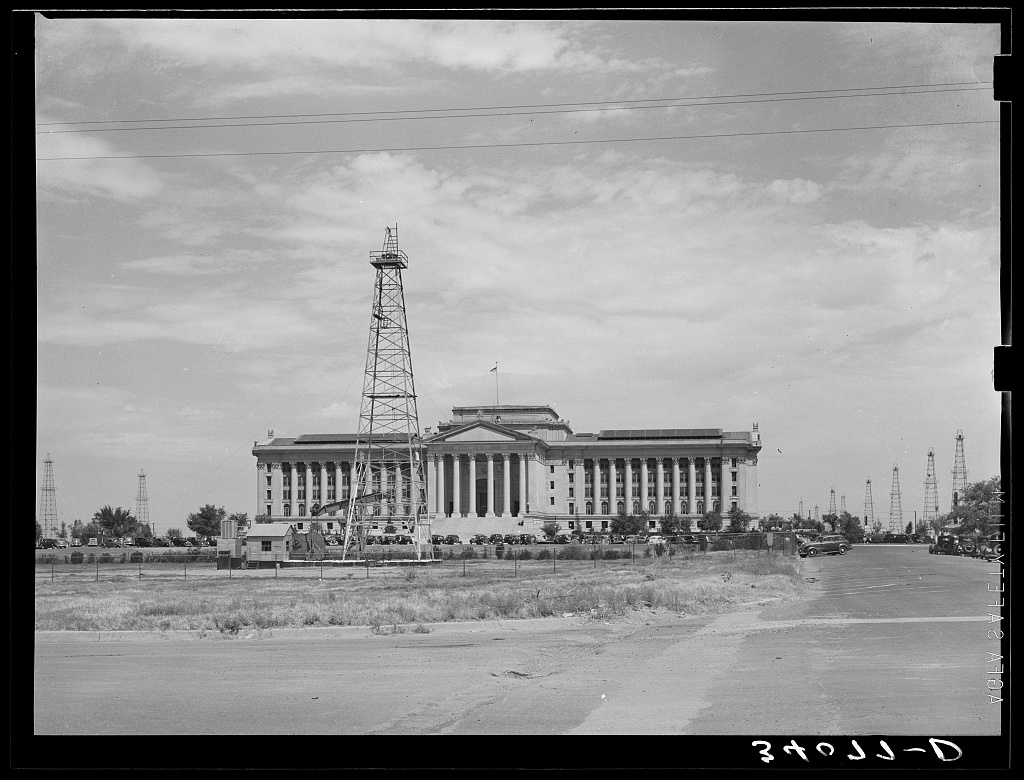
When wildcatter Thomas B. Slick, 49, died from a stroke in 1930, Oklahoma City oilfield derricks stood silent for one hour in tribute. 1939 capitol building photo by Russell Lee, courtesy Library of Congress.
Massey later recalled that Slick, born in Shippenville, Pennsylvania, in 1883, showed a talent for securing petroleum leases. “Tom would go out and lease most of a territory as yet unproved or doubtful as to oil prospects,” Massey noted. “But he’d spread as clean a bunch of leases before a capitalist as you’d wish to see…He certainly knew what a good oil lease was.”
Spurlock Petroleum Company spudded an exploratory well on the farm of M.C. Teegarden near Tryon. As Slick continued securing leases that eventually totaled more than 27,000 acres, drilling generated excitement in the local newspaper and with other Oklahoma wildcatters.
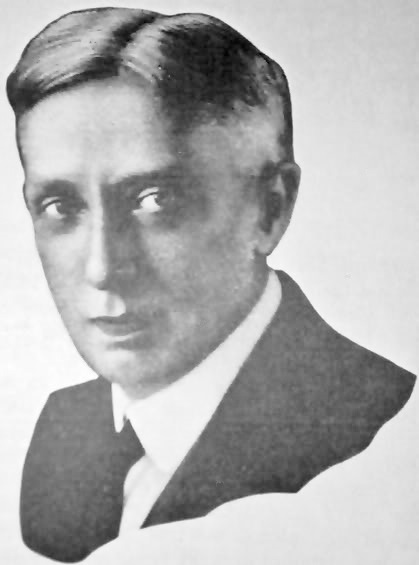
Once known as “Dry Hole Slick,” Tom Slick discovered the giant Cushing oilfield on March 12, 1912.
However, at a depth of 2,800 feet with no signs of oil, Spurlock Petroleum and owner Massey ran out of money. Tom Slick’s first well was a dry hole. It was the first of many.
Dry Hole Slick
In 1907, after another dry hole near Kendrick, Oklahoma, Slick left the employ of Massey and headed for Chicago, Illinois. Charles B. Shaffer of the Shaffer & Smathers Company hired Slick for $100 per month (and expenses) to find and secure promising oil leases.
Slick traveled to Illinois, Kentucky, western Canada and eventually, back to Oklahoma. While leasing for Shaffer & Smathers, the young oilman drilled at least ten dry holes in Oklahoma, earning his unenviable nickname, “Dry Hole Slick.”
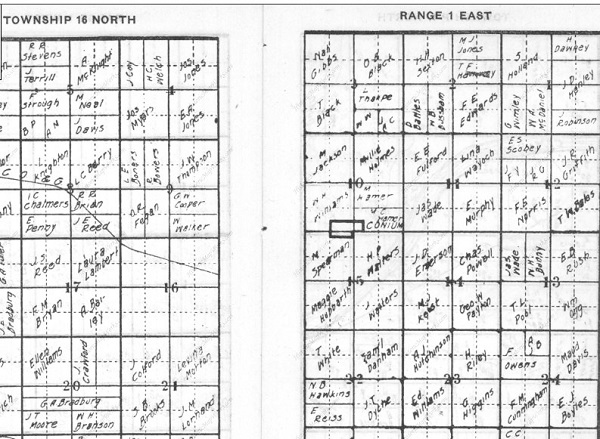
An example of township leases similar to those negotiated by Tom Slick is from the “Atlas of North Central Oklahoma, 1917 Oil Fields and Landowners: Oklahoma, M.P. Burke.”
The Bristow Record newspaper reported that Slick “continues to gamble on wild cat stuff. Few men have stuck to the wildcatting longer and harder than Slick and associates. It is said he has spent $150,000 mostly on dry holes.”
Soon known as “Mad Tom” Slick, the wildcatter tried his luck again 35 miles down the road in Cushing, pursuing leases there in 1912.
Meanwhile, local publications like the Cushing Independent encouraged readers to take advantage of leasing opportunities. “Land owners have everything to gain and no risk to themselves in making leases,” the newspaper reported on January 25.

“It costs from $8,000 to $10,000 to put down a single hole,” the newspaper noted. “Unless the promoters can get the leases they want, they will not chance their money here, while other localities are eager to give leases and even bonuses in money to get prospecting done.”
The Cushing Democrat added, “We would repeat that we believe it to be in the best interests of the individuals and all that these leases be granted…And just a word of warning. If you make a lease see that the lessee’s name is not left blank, but that the name of Thomas B. Slick is there.”
Slick and Charles Shaffer spudded a wildcat well on the farm of Frank M. Wheeler in January 1912.
Gusher at Cushing
On March 12, 1912, the Wheeler No. 1 well struck oil, producing about 400 barrels a day from a depth between 2,319 and 2,347 feet. It marked Tom Slick’s first gusher — and a giant oilfield discovery. Slick was so secretive about his find that he even cut the phone line to the Wheeler house to prevent word from spreading.
Knowing that exploration companies and speculators would descend in droves on the town once word got out, Slick protected his investment. Just how he did so would be described by a frustrated competing lease man to his boss:
You see, sir, Slick and Shaffer roped off their well on the Wheeler farm and posted guards and nobody can get near it…I got a call yesterday at the hotel in Cushing from a friend who said they had struck oil out there. A friend of his was listening in on the party line and heard the driller call Tom Slick at the farm where he’s been boarding and said they’d hit.
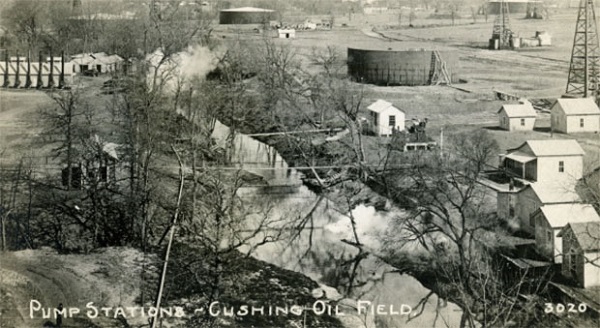
Pump stations in the Cushing oilfield, 1910-1918, from the Oklahoma Historical Society. More than 50 refineries once operated in the Cushing area about 50 miles west of Tulsa. Pipelines and storage facilities have since made it “the pipeline crossroads of the world.”
Well, I rushed down to the livery stable to get a rig to go out and do some leasing and damned if Slick hadn’t already been there and hired every rig. Not only there, but every other stable in town. They all had the barns locked and the horses out to pasture. There’s 25 rigs for hire in Cushing and he had them all for ten days at $4.50 a day apiece, so you know he really thinks he’s got something.

I went looking for a farm wagon to hire and had to walk three miles. Some other scouts had already gotten the wagons on the first farms I hit. Soon as I got one I beat it back to town to pick up a notary public to carry along with me to get leases — and damned if Slick hadn’t hired every notary in town, too.
Eleven days later the news had spread. As a leasing frenzy grew, the Tryon Star reported, “Our old friend Tom Slick the oilman has struck it rich…Slick has been plugging away for several years and has put down several dry holes…He deserves this success and here’s hoping that it will make Tom his millions.”
New King of the Wildcatters
Tom Slick’s No. 1 Wheeler was the discovery well for the prolific Drumright-Cushing oilfield, which produced for the next 35 years, reaching 330,000 barrels every day at its peak.
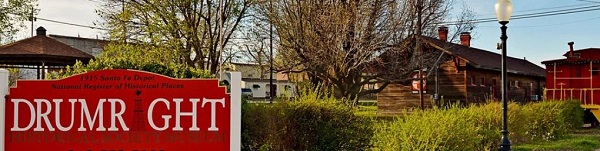
Oklahoma’s Drumright Historical Society Museum includes the town’s 1915 Santa Fe Railroad Depot, which is listed in the National Register of Historic Places.
Slick was suddenly a very rich man. After his dramatic success in Drumright and Cushing, he began an incredible 18-year streak of discoveries in some of the nation’s most prolific oilfields. Visit the Drumright Historical Society Museum.
Slick was active in the Seminole Area, especially the oilfields of Pioneer, Tonkawa, Papoose, and Seminole. He secured leases and drilled wells that consistently paid off.
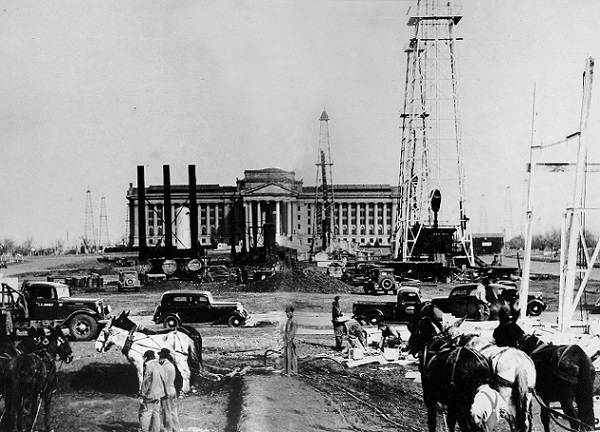
By the end of 1930, Tom Slick was drilling or had completed more than 75 wells with the capacity to produce 200,000 barrels of oil per day.
Slick’s oil gushers were spectacular: No. 4 Eakin — 10,000 barrels per day; No. 1 Laura Endicott — 4,500 barrels per day; No. 1 Walker — 5,000 barrels per day; No. 1 Franks — 5,000 barrels per day (see Greater Seminole Oil Boom).
Reflecting on his fortunes late in his career, he noted, “If I strike oil everyone calls it Tom Slick’s luck, (but) I call it largely judgment based upon experience. Some folks don’t recognize good luck when they meet it in the middle of the road. So I have been fortunate, or lucky, whichever you call it, but I’ve also done a lot of calling good luck to bring it my way.”
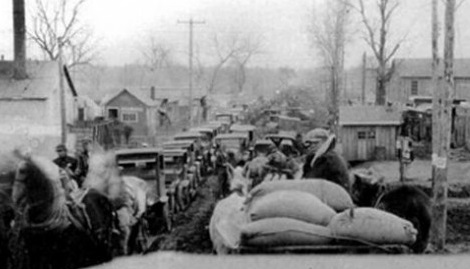
Newly discovered oilfields of the mid-1920s brought prosperity — and traffic jams — to Seminole, Oklahoma. Photo courtesy Oklahoma Oil Museum.
Slick’s leases in Oklahoma, Kansas, and Texas produced millions of barrels of oil. Production from his wells reached 35,000 barrels of oil a day in 1929, and he was proclaimed the largest independent oil operator in the United States with a net worth estimated from $35 million and up to $100 million.
By 1930, in the Oklahoma City field alone, Slick had 45 wells being drilled, more than 30 wells completed, and the capacity to produce 200,000 barrels of crude daily. Across the Mid-Continent, stories of Tom Slick’s business acumen and integrity grew with his fortune.
It was often told how Slick once closed a $100,000 deal for a prized Seminole lease on a street corner. He met the owner on the street and inquired, “What do you want for that lease’ ‘A hundred thousand dollars,’ replied the owner. ‘It’s a sale, bring in your deeds,’ said Slick.”

Thomas B. Slick is among those honored outside the Sam Noble Museum, University of Oklahoma, in Norman.
Thomas B. Slick’s death from a stroke in August 1930 at the age of 46 abruptly ended an oilfield career that had supplied America with the petroleum it needed to grow.
“Oil derricks in the Oklahoma City Field stood silent for one hour in tribute,” reported the Oklahoma Historical Society. Slick’s biggest strike came a week after he died when his Campbell No. 1 well in Oklahoma City produced 43,200 barrels of oil per day.
Stories about the “King of the Wildcatters” and his oilfield discoveries would spread across the Mid-Continent. Thomas B. Slick, — no longer known as “Mad Tom” or “Dry Hole Slick” — joined other Oklahoma petroleum industry leaders honored at the Conoco Oil Pioneers of Oklahoma Plaza.

By the end of the 20th century, more than one-half million Oklahoma oil and natural gas wells were drilled since an oilfield discovery at Bartlesville in 1897 (learn more in First Oklahoma Oil Well).
More about Slick and his extraordinary oilfield career can be found in King of the Wildcatters, the Life and Times of Tom Slick, 1883–1930 by Ray Miles, professor of history and dean of the College of Liberal Arts at McNeese State University, Lake Charles, Louisiana.
For example, Miles relates that in 1933, a friend and business partner of the Oklahoma wildcatter was kidnapped and held for ransom. Once released, Charles Urschel assisted the FBI in catching his abductors, including George “Machine Gun” Kelly, who was sentenced to life in Alcatraz.
_______________________
Recommended Reading: King of the Wildcatters, the Life and Times of Tom Slick, 1883–1930. (2004); The Oklahoma City Oil Field in Pictures
(2005); The Oklahoma Petroleum Industry
(1980). Your Amazon purchase benefits the American Oil & Gas Historical Society. As an Amazon Associate, AOGHS earns a commission from qualifying purchases.
_______________________
The American Oil & Gas Historical Society (AOGHS) preserves U.S. petroleum history. Please support this energy education website, subscribe to our monthly email newsletter, and help expand historical research. Contact bawells@aoghs.org. Copyright © 2026 Bruce A. Wells.
Citation Information – Article Title: “Oklahoma’s King of the Wildcatters.” Authors: B.A. Wells and K.L. Wells. Website Name: American Oil & Gas Historical Society. URL: https://aoghs.org/petroleum-pioneers/wildcatter-tom-slick. Last Updated: March 9, 2026. Original Published Date: December 1, 2004.