This Week in Petroleum History: June 15 – 21

June 15, 1954 – Launch of First Mobile Offshore Rig –

The offshore barge oil drilling platform Mr. Charlie left its Louisiana shipyard and went to work for Shell Oil Company in a new oilfield in East Bay, near the mouth of the Mississippi River. The vessel’s design, which would revolutionize the offshore industry, originated with Alden “Doc” Laborde, a marine superintendent for the Kerr-McGee Company in Morgan City, Louisiana.
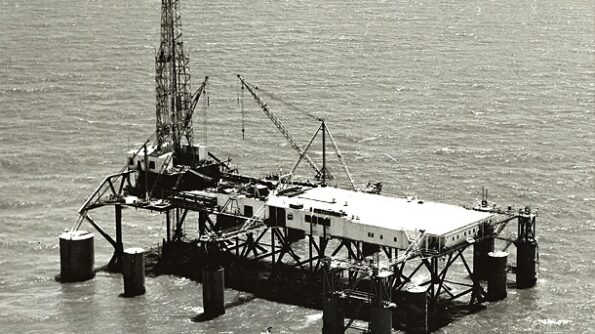
Mr. Charlie, the first mobile offshore drilling unit (MODU) for petroleum exploration and production.

Beginning in 1954 and capable of drilling wells in water up to 40 feet in depth, Mr. Charlie became the first mobile offshore drilling unit (MODU). Photos courtesy Murphy Oil Corp.

Despite Kerr-McGee’s experience with many post-World War II offshore technologies, including drilling the first oil well out of sight of land in 1947, the company decided against Laborde’s idea for a transportable, submersible drilling barge. The inventor, a Navy veteran, eventually found support from Charles Murphy Jr., founder of Murphy Oil Company.
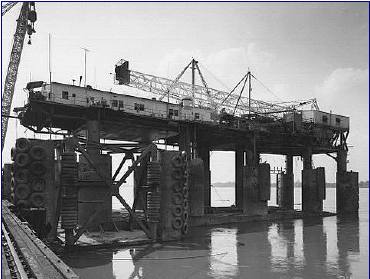
Petroleum technology pioneer Mr. Charlie offshore rig at dock in Louisiana.

With its transportable, column-stabilized design, Mr. Charlie was a self-sufficient drilling rig on a barge that in 1954 became an offshore technology milestone.

LaBorde established Ocean Drilling & Exploration and contracted with J. Ray McDermott Company to convert a 220-foot barge into a drilling platform — the world’s first mobile offshore drilling unit (MODU). Today moored in Morgan City as an international petroleum museum, in December 2024 the Secretary of the Interior added Mr. Charlie to the National Register of Historic Places. Learn more in Mr. Charlie, First Mobile Offshore Drilling Rig.

June 16, 1903 – Ford Motor Company Incorporated

After successfully testing his gasoline-powered Quadricycle in 1896, Henry Ford and a group of investors (including machinist John Dodge) filed articles of association for the Ford Motor Company. Ford’s contributions included machinery, drawings, and several patents. The first sale was a Ford Model A to a Chicago physician in July as the Detroit-based automaker began ordering carriages, wheels, and tires for a low-cost car that would become the Model T by 1908, according to the Henry Ford Heritage Association (HFHA).

June 18, 1889 – Standard Oil of New Jersey adds Indiana

Standard Oil Company of New Jersey incorporated a subsidiary, Standard Oil Company of Indiana, and began processing oil at its new refinery in Whiting, Indiana, southeast of Chicago. In 1910, the refinery added pipelines connecting it to Kansas and Oklahoma oilfields. When the Supreme Court mandated the breakup of John D. Rockefeller’s empire in 1911, Standard Oil of Indiana emerged as an independent company. Amoco-branded service stations arrived in the 1950s. Amoco merged with British Petroleum (BP) in 1998, the largest foreign takeover of a U.S. company at the time.

June 18, 1946 – Truman establishes National Petroleum Council

At the request of President Harry S. Truman, the Department of the Interior established the National Petroleum Council to make policy recommendations relating to oil and natural gas. Transferred to the new Department of Energy in 1977, the council became a privately funded advisory committee with 200 members appointed by the Secretary of Energy. “The NPC does not concern itself with trade practices, nor does it engage in any of the usual trade association activities,” notes the NPC, which held its 134th meeting on April 23, 2024, in Washington, D.C.

June 18, 1948 – Service Company celebrates 100,000th Perforation

Fifteen years after its first well-perforation job, the Lane-Wells Company returned to the well at Montebello, California, to perform its 100,000th perforation. The return to Union Oil Company’s La Merced No. 17 well included a ceremony hosted by Walter Wells, chairman and company co-founder.
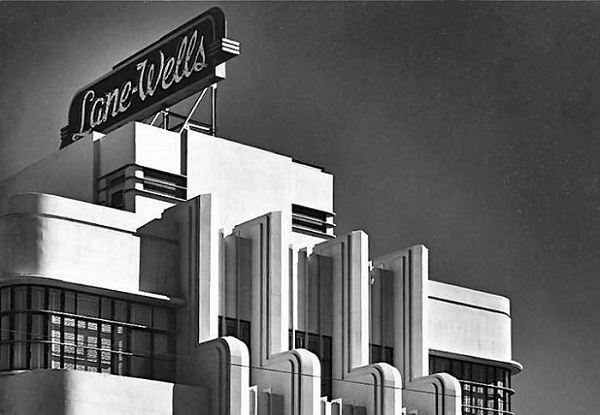
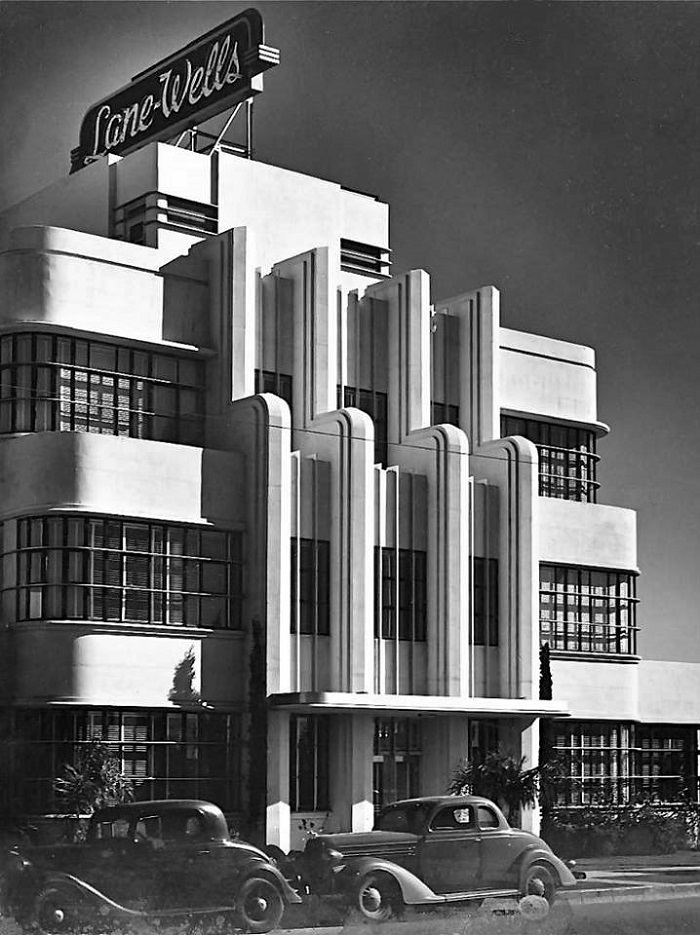
Exterior of the Lane-Wells headquarters designed by architect William E. Mayer and completed in 1937. Photo detail courtesy Water and Power Associates.

Designed by architect William E. Mayer and completed in 1937, Lane-Wells’ Los Angeles headquarters was exceptional, “even in a city full of Streamline Moderne buildings,” notes Decopix.com.

In 1930, Wells and oilfield tool salesman Bill Lane developed a practical multiple-shot perforator that could shoot steel bullets through casing. After many tests, success came at the La Merced No. 17 well. By late 1935, Lane-Wells established a small fleet of trucks for well-perforation services. The company merged with Dresser Industries in 1956 and later became part of Baker-Atlas.

Learn more in Lane-Wells 100,000th Perforation.

June 20, 1977 – Oil begins Flowing in Trans-Alaska Pipeline

The Trans-Alaska Pipeline began carrying oil 800 miles from Prudhoe Bay to the Port of Valdez at Prince William Sound. The oil arrived 38 days later, culminating in the world’s largest privately funded construction project. The Prudhoe Bay field had been discovered in 1968 by Atlantic Richfield and Exxon about 250 miles north of the Arctic Circle.
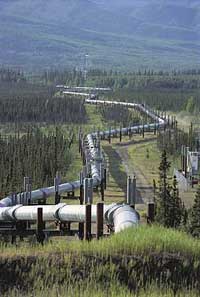
The Trans-Alaska Pipeline zigzags in the wilderness.

Construction of the controversial pipeline began in 1974. Photo courtesy Alaska Pipeline Authority.

After years of controversy, construction of the 48-inch-wide pipeline began in April 1974. Above-ground sections of the pipeline (420 miles) were built in a zigzag configuration to allow for expansion or contraction and include heat pipes. Oil throughput of the $8 billion pipeline peaked in 1988 at just over 2 million barrels per day, according to the Energy Information Administration (EIA), adding that since 2003, deliveries have been less than 1 million barrels per day and averaged a record low of 464,748 barrels per day in 2024.

“That creates challenges for the pipeline’s operators, including the formation of ice and the buildup of wax that is in the oil on the inside pipeline wall,” EIA notes. “The amount of time it takes for oil to travel the 800 miles through the pipeline from the North Slope to the Valdez port increased from 4.5 days in 1988 to about 19 days in recent years.”

Learn more in Trans-Alaska Pipeline History.

Link to form page for free email newsletter "Oil & Gas History News."

June 21, 1893 – Submersible Pump Inventor born

Armais Arutunoff, inventor of the electric submersible pump for oil wells, was born to Armenian parents in Tiflis, Russia. He invented the world’s first electrical centrifugal submersible pump in 1916. At first, Arutunoff could not find financial support for his oilfield production technology after emigrating to the United States in 1923.
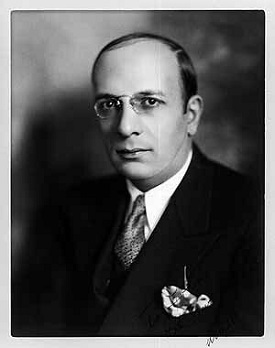
Portrait of Armais Arutunoff inventor of electric submersible pump.

Russian engineer Armais Arutunoff, inventor of the first electric submersible pumps.

Thanks to help from Frank Phillips, president of Phillips Petroleum, Arutunoff moved to Bartlesville, Oklahoma, in 1928 and established a manufacturing company. The Tulsa World described the Arutunoff pump as “an electric motor with the proportions of a slim fencepost which stands on its head at the bottom of a well and kicks oil to the surface with its feet.”

REDA Pump Company manufactured pump and motor devices — and employed hundreds during the Great Depression. The name stands for Russian Electrical Dynamo of Arutunoff, the cable address of his first company in Germany and since 1998 a subsidiary of SLB (Schlumberger).

Learn more in Inventing the Electric Submersible Pump.

June 21, 1932 – Oklahoma Governor battles “Hot Oil”

Thirty National Guardsmen marched into the Oklahoma City oilfield when Governor William H. “Alfalfa Bill” Murray took control of oil production after creating a proration board despite objections from independent producers.
Oil derricks in Devon Energy Park at Oklahoma History Center, dedicated in 2005.

The Oklahoma History Center in Oklahoma City includes petroleum equipment on display in the Devon Energy Park, which opened in 2005. Photo by Bruce Wells.

Murray declared martial law again in March 1933 to enforce his regulations preventing the sale or transport of oil produced in excess of the quota, referred to as “hot oil.”

The state legislature passed a law in April giving the Oklahoma Corporation Commission authority to enforce its rules — taking away Murray’s power to regulate the petroleum industry. The commission had been established in 1907 to regulate railroad, telephone, and telegraph companies.

Support the American Oil & Gas Historical Society link.

June 21, 1937 – “Great Karg Well” Marker dedicated in Ohio

Similar to the Indiana natural gas boom, discoveries in Ohio brought petroleum prosperity, as evidenced by a 1937 historic marker at one well — “erected in humble pride by the people of Findlay, Ohio,” in celebration of the “Great Karg Well” that revealed a giant natural gas field in January 1886.
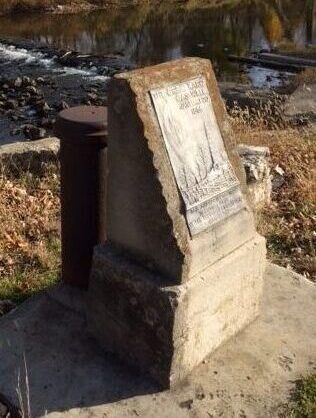
Ohio benefited from natural gas discoveries, as indicated by this 1937 historic marker for the 1886 Great Karg Well.

Marker dedicated in 1937 at the wellhead of the famous 1886 natural gas discovery at Findlay, Ohio. Photo by Michael Baker, courtesy Historical Marker Database.

“At that time gas was simply a by-product of oil drilling, and with no way to store it they ended up piping it away for free to heat homes and drive industrial machinery,” notes the historic marker inscription at the wellhead. Many companies promoted Ohio’s natural gas supplies, which “attracted glass companies from around the world” — until the gas ran out.

_______________________

Recommended Reading: Offshore Pioneers: Brown & Root and the History of Offshore Oil and Gas (2011); Breaking the Gas Ceiling: Women in the Offshore Oil and Gas Industry (2019); From Here to Obscurity: An Illustrated History of the Model T Ford, 1909 – 1927 (1971); Standard Oil Company: The Rise and Fall of America’s Most Famous Monopoly (2016); The Prize: The Epic Quest for Oil, Money & Power (2008); Wireline: A History of the Well Logging and Perforating Business in the Oil Fields (1990); The Great Alaska Pipeline (1988); Artificial Lift-down Hole Pumping Systems (1984); Oil in Oklahoma (1976); Ohio Oil and Gas, Images of America (2008). Your Amazon purchase benefits the American Oil & Gas Historical Society. As an Amazon Associate, AOGHS earns a commission from qualifying purchases.

_______________________

The American Oil & Gas Historical Society (AOGHS) preserves U.S. petroleum history. Support this energy education website, our monthly email newsletter, This Week in Oil and Gas History News, and help expand historical research. Contact bawells@aoghs.org. Copyright © 2026 Bruce A. Wells. All rights reserved.
Lane-Wells 100,000th Perforation

Founded in 1932, the oilfield service company Lane-Wells developed powerful perforating guns. 


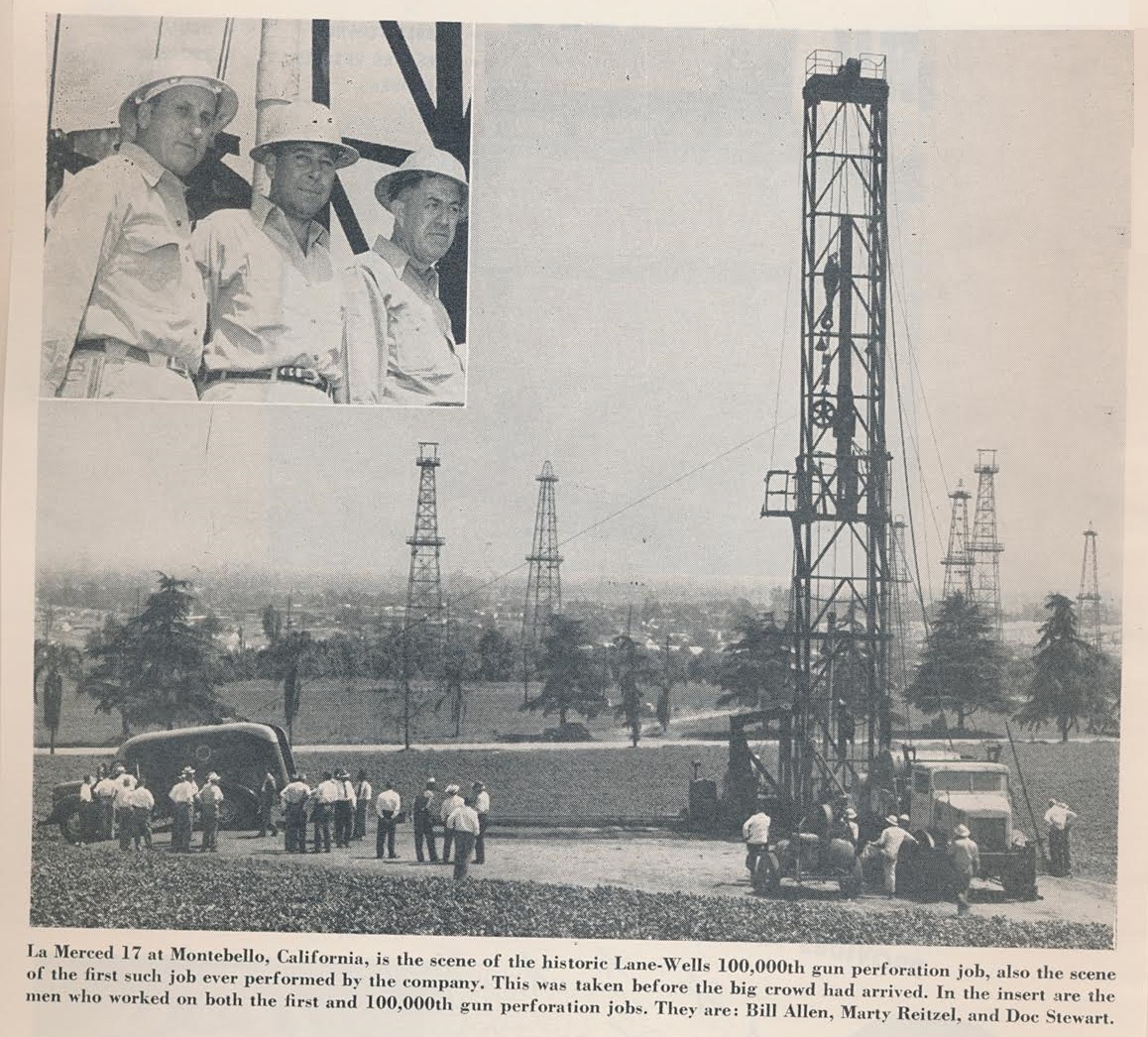
Fifteen years after its first well-perforation job, Lane-Wells Company returned to the same well near Montebello, California, to perform its 100,000th perforation. The publicity event of June 18, 1948, was a return to Union Oil Company’s La Merced No. 17 well.

The gathering of executives at the historic well celebrated a significant leap in petroleum production technology. The combined inventiveness of the two oilfield service companies had accomplished much in a short time, “so it was a colorful ceremony,” reported a trade magazine.

A 1948 magazine article about historic Lane-Wells 100,000th oil well perforation.

As technologies evolved after World War II, Lane-Wells developed a downhole gun to pierce well casing. Above, an article saved in the family scrapbook of Connie Jones Pillsbury, Atascadero, California.

Officials from both companies and guests gathered to witness the repeat performance of the company’s early perforating technology, noted Petroleum Engineer magazine in its July 1948 issue. Among them were “several well-known oilmen who had also been present on the first occasion.”

Walter Wells, chairman of the board for Lane-Wells, was present for both events. The article reported he was more anxious at the first, which had been an experiment to test his company’s new perforating device. In 1930, Wells and another enterprising oilfield tool salesman, Bill Lane, developed a practical way of using improved “guns” downhole. 

The two men envisioned a tool that could shoot steel bullets through casing and into the formation. They would create a multiple-shot perforator that fired bullets individually by electrical detonation. After many test firings, commercial success came at the Union Oil Company’s La Merced well.

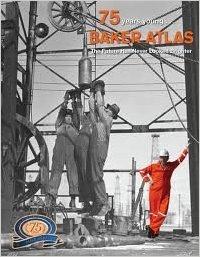
Cover of a special publication featuring 75th anniversary of Baker Atlas oil well service company.

Cover of a special publication featuring the 75th anniversary of Baker Atlas, an oil well service company. Lane-Wells became part of Baker Atlas, today a division of Baker-Hughes.

Founded in Los Angeles in 1932, the oilfield service company Lane-Wells built a fleet of trucks as it became a specialized provider of well perforations — a key service for enhancing well production (see Downhole Bazooka).

The two men designed tools that would better help the oil industry during the Great Depression. “Bill Lane and Walt Wells worked long hours at a time, establishing their perforating gun business,” explained Susan Wells in a 2007 book celebrating the 75th anniversary of Baker-Atlas. 

“It was a period of high drilling costs, and the demand for oil was on the rise,” Wells added. “Making this scenario worse was the fact that the cost of oil was relatively low.”

Shotgun Perforator

By late 1935, Lane-Wells recognized high-powered guns were needed for breaking through casing, cement, and into oil-bearing rock formations.

Support the American Oil & Gas Historical Society link.

An experienced oilfield worker, Sidney Mims, had patented a similar technical tool, but he “could not get it working as well as it should.” Lane and Wells purchased the patent and refined the downhole gun design. In effect, they developed a remotely controlled 128-shot perforator — a downhole shotgun.

“Lane and Wells publicly used the re-engineered shotgun perforator they bought from Mims on Union Oil’s oil well La Merced No. 17,” Wells noted. “There wasn’t any production from this oil well until the shotgun perforator was used, but when used, the well produced more oil than ever before.”

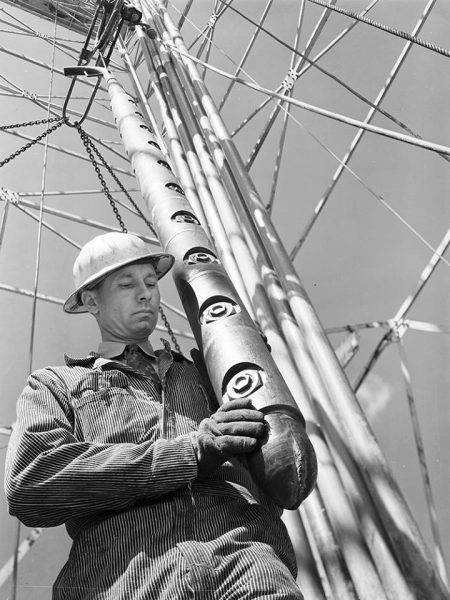
Lane-Wells became a major oilfield provider of perforating services using downhole “bullet guns,” seen here in 1940.

Lane-Wells provided perforating services using downhole “bullet guns,” seen here in 1940.

The successful application attracted many other oil companies to Lane-Wells as the company modified the original 128-shot perforator to use 6-shot and 10-shot cylinders. For a public relations event, executives decided to conduct the company’s 100,000th perforation almost 16 years after the first at the La Merced No. 17 well.

Continued success in Oklahoma and Texas oilfields led to new partnerships beginning in the 1950s. A Lane-Wells merger with Dresser Industries was finalized in March 1956, and another corporate merger arrived in 1968 with Pan Geo Atlas Corporation, forming the service industry giant Dresser Atlas.

A 1987 joint venture with Litton Industries led to Western Atlas International, which became an independent company before becoming a division of Baker-Hughes in 1998 (Baker Atlas) providing well logging and perforating services. Dresser merged with Halliburton the same year.

Family Scrapbook

Connie Jones Pillsbury of Atascadero, California, and the family of Walter T. Wells wanted to preserve rare Lane-Wells artifacts. In 2017, she contacted the American Oil & Gas Historical Society for help finding a home for an original commemorative album, press clippings and guest book from June 18, 1948. 

Seeking to preserve the “Lane-Wells 100,000th Gun Perforating Job” event at Montebello, California — site of the Union Oil Company La Merced No. 17 well — Pillsbury and the children of Dale G. Jones, the grandson of Walter T. Wells, contacted petroleum museums, libraries, and archives (see Oil & Gas Families). 

Subscribe to Our Free Newsletter link.

Pillsbury’s quest to preserve the Walter T. Wells album and records proved successful, and she emailed AOGHS to report the family’s album was “safely archived at the USC Libraries Special Collections. Sue Luftschein is the Librarian. It’s on Online Archive of California (OAC).”

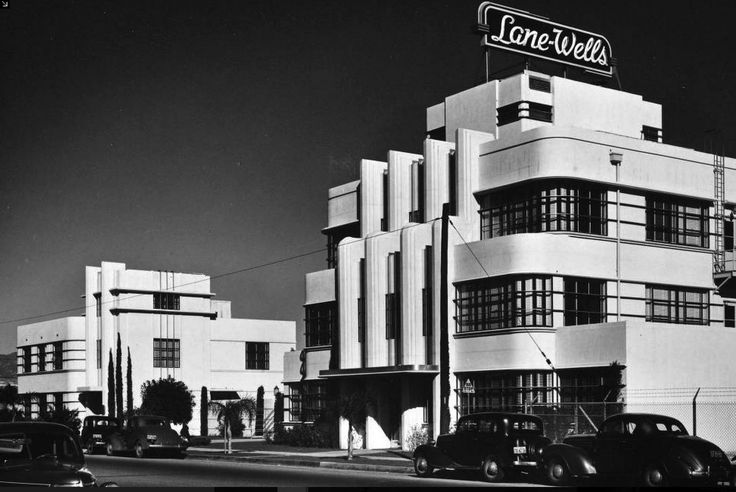
 View showing the Lane-Wells Building located at 5610 S. Soto Street in Huntington Park.  The building still stands.

The Lane-Wells headquarters designed by architect William E. Mayer and completed in 1937 in Los Angeles. Photo courtesy Water and Power Associates.

Research Resource

The Lane-Wells collection — Gift of Connie Pillsbury, October 27, 2017 — can be accessed via the OAC website. 

Title: Lane-Wells Company records
Creators: Wells, Walter T. and Lane-Wells Company
Identifier/Call Number: 7055
Physical Description: 1.5 Linear Feet 1 box
Date (inclusive): 1939-1954

The archive abstract also notes: “This small collection consists of a commemorative album celebrating the 100,000th Gun Perforating Job by the Lane-Wells Company of Los Angeles on June 18, 1948, and additional printed ephemera, 1939-1954, created and collected by Walter T. Wells, co-founder and Chairman of the Board of the Lane-Wells Company.”

Lane-Wells headquarters buildings, 5610 South Soto Street in Huntington Park, California.

Pillsbury sought a museum or archive home for her rare oil patch artifact, which came from an event attended by many from the Los Angeles petroleum industry.

“The professionally-prepared book has all of the attendees signatures, photographs and articles on the event from TIME, The Oil and Gas Journal, Fortnight, Oil Reporter, Drilling, The Petroleum Engineer, Oil, Petroleum World, California Oil World, Lane-Wells Magazine, the L.A. Examiner, L.A. Daily News and L.A. Times, etc.,” Pillsbury noted in 2017.

The 1948 commemorative book, now preserved at USC, “was given to my first husband, Dale G. Jones, Ph.D., grandson of Walter T. Wells, one of the founders of Lane-Wells,” she added. “His children asked me to help find a suitable home for this book. I found you (the AOGHS website) through googling ‘History of Lane-Wells Company.’”

_______________________

Recommended Reading:  75 Years Young…BAKER-ATLAS The Future has Never Looked Brighter (2007); Wireline: A History of the Well Logging and Perforating Business in the Oil Fields (1990). Your Amazon purchase benefits the American Oil & Gas Historical Society. As an Amazon Associate, AOGHS earns a commission from qualifying purchases.

_______________________

The American Oil & Gas Historical Society (AOGHS) preserves U.S. petroleum history. Support this energy education website, subscribe to our monthly email newsletter, and help expand historical research. Contact bawells@aoghs.org. Copyright © 2026 Bruce A. Wells. 

Citation Information – Article Title: “Lane-Wells 100,000th Perforation” Authors: B.A. Wells and K.L. Wells. Website Name: American Oil & Gas Historical Society. URL: https://aoghs.org/technology/oil-well-perforation-company. Last Updated: June 14, 2026. Original Published Date: June 30, 2017.

Pin It on Pinterest