by Bruce Wells | Aug 17, 2026 | This Week in Petroleum History
August 17, 1785 – “Bituminous Matter” reported at Oil Creek –
Two years after the end of the Revolutionary War, oil was reported floating on a creek in northwestern Pennsylvania. “Oil Creek has taken its name from an oil or bituminous matter being found floating on its surface,” noted a report by Gen. William Irvine, adding, “Many cures are attributed to this oil by the natives, and lately by some of the whites, particularly rheumatic pains and old ulcers.” (more…)
by Bruce Wells | Aug 14, 2026 | Petroleum Pioneers
The astute businesswoman who prospered in booming Pennsylvania and New York oilfields.
In 1899, Mary Byron Alford, the “Only Woman in the World who Owns and Operates a Dynamite Factory,” prospered in the midst of America’s first billion-dollar oilfield. Mrs. Alford’s oilfield nitro factory cooked 3,000 pounds of nitroglycerin every day.
The 85,000-acre Bradford oilfield in north-central McKean County, Pennsylvania, and south-central Cattaraugus County, New York, remains an important part of U.S. petroleum heritage. There are many reasons, including Mary Alford’s pioneering oilfield career at the turn of the century.
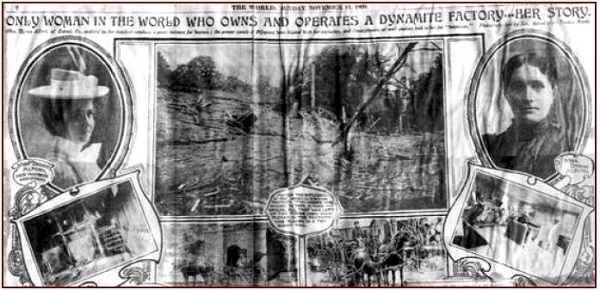
Penn-Brad Oil Museum Director Sherri Schulze in 2005 exhibited a laminated (though wrinkled) newspaper article from 1899. “This was done by a student many years ago,” she said. “It was a school project done by one of Mrs. Alford’s descendants.”
(more…)
by Bruce Wells | Dec 22, 2025 | This Week in Petroleum History
December 22, 1875 – Grant paves Pennsylvania Avenue with Asphalt –
President Ulysses S. Grant convinced Congress to repave Pennsylvania Avenue’s badly deteriorated plank boards with asphalt. Grant delivered to Congress a “Report of the Commissioners Created by the Act Authorizing the Repavement of Pennsylvania Avenue.” (more…)