by Bruce Wells | Sep 8, 2022 | Petroleum History Almanac
Who we are
The American Oil & Gas Historical Society (see About AOGHS) website address is: https://aoghs.org.
Like most website operators, aoghs.org, using WordPress and WP Engine, collects non-personally-identifying information of the sort that web browsers and servers typically make available, such as the browser type, language preference, referring site, and the date and time of each visitor request. The purpose in collecting non-personally identifying information is to better understand how aoghs.org visitors use its website.
When visitors leave comments on the site we collect the data shown in the comments form, and also the visitor’s IP address and browser user agent string to help spam detection. An anonymized string created from your email address (also called a hash) may be provided to the Gravatar service to see if you are using it. The Gravatar service privacy policy is available here: https://automattic.com/privacy/. After approval of your comment, your profile picture is visible to the public in the context of your comment.
If you upload images to the website, you should avoid uploading images with embedded location data (EXIF GPS) included. Visitors to the website can download and extract any location data from images on the website.
If you leave a comment on our site you may opt-in to saving your name, email address and website in cookies. These are for your convenience so that you do not have to fill in your details again when you leave another comment. These cookies will last for one year. If you have an account and you log in to this site, we will set a temporary cookie to determine if your browser accepts cookies. This cookie contains no personal data and is discarded when you close your browser.
When you log in, we will also set up several cookies to save your login information and your screen display choices. Login cookies last for two days, and screen options cookies last for a year. If you select “Remember Me”, your login will persist for two weeks. If you log out of your account, the login cookies will be removed. If you edit or publish an article, an additional cookie will be saved in your browser. This cookie includes no personal data and simply indicates the post ID of the article you just edited. It expires after 1 day.
Embedded content from other websites
Articles on this site may include embedded content (e.g. videos, images, articles, etc.). Embedded content from other websites behaves in the exact same way as if the visitor has visited the other website. These websites may collect data about you, use cookies, embed additional third-party tracking, and monitor your interaction with that embedded content, including tracking your interaction with the embedded content if you have an account and are logged in to that website.
How long we retain your data
If you leave a comment, the comment and its metadata are retained indefinitely. This is so we can recognize and approve any follow-up comments automatically instead of holding them in a moderation queue. For users that register on our website (if any), we also store the personal information they provide in their user profile. All users can see, edit, or delete their personal information at any time (except they cannot change their username). Website administrators can also see and edit that information.
What rights you have over your data
If you have an AOGHS member account on this site, or have left comments, you can request to receive an exported file of the personal data we hold about you, including any data you have provided to us. You can also request that we erase any personal data we hold about you. This does not include any data we are obliged to keep for administrative, legal, or security purposes.
Where we send your data
Visitor comments may be checked through an automated spam detection service.
Bruce A. Wells, Executive Director
American Oil & Gas Historical Society
3204 18th Street, No. 3
Washington, DC 20010
(202) 387-6996
Required Privacy Policy Details
Last updated September 08, 2023
This AOGHS (“we,” “us,” or “our”) privacy notice describes how and why we might collect, store, process, use, and/or share your information when you use our services, including when you: Visit our website at aoghs.org, or any website of ours that links to this privacy notice. Reading this privacy notice will help you understand your privacy rights and choices. If you do not agree with our policies and practices, please do not use our services. If you still have any questions or concerns, please contact us at bawells@aoghs.org.
SUMMARY
This summary provides key points from our privacy notice, but you can find out more details about any of these topics by clicking the link following each key point or by using our table of contents below to find the section you are looking for.
What personal information do we process? When you visit, use, or navigate our Services, we may process personal information depending on how you interact with us and the Services, the choices you make, and the products and features you use. Learn more about personal information you disclose to us.
Do we process any sensitive personal information? We do not process sensitive personal information.
Do we receive any information from third parties? We do not receive any information from third parties.
How do we process your information? We process your information to provide, improve, and administer our Services, communicate with you, for security and fraud prevention, and to comply with law. We may also process your information for other purposes with your consent. We process your information only when we have a valid legal reason to do so. Learn more about how we process your information.
In what situations and with which parties do we share personal information? We may share information in specific situations and with specific third parties. Learn more about when and with whom we share your personal information.
How do we keep your information safe? We have organizational and technical processes and procedures in place to protect your personal information. However, no electronic transmission over the internet or information storage technology can be guaranteed to be 100% secure, so we cannot promise or guarantee that hackers, cybercriminals, or other unauthorized third parties will not be able to defeat our security and improperly collect, access, steal, or modify your information. Learn more about how we keep your information safe.
What are your rights? Depending on where you are located geographically, the applicable privacy law may mean you have certain rights regarding your personal information. Learn more about your privacy rights.
How do you exercise your rights? The easiest way to exercise your rights is by visiting https://aoghs.org/contact-aoghs/, or by contacting us. We will consider and act upon any request in accordance with applicable data protection laws.
Want to learn more about what we do with any information we collect? Review the privacy notice in full.
TABLE OF CONTENTS
1. WHAT INFORMATION DO WE COLLECT?
2. HOW DO WE PROCESS YOUR INFORMATION?
3. WHAT LEGAL BASES DO WE RELY ON TO PROCESS YOUR PERSONAL INFORMATION?
4. WHEN AND WITH WHOM DO WE SHARE YOUR PERSONAL INFORMATION?
5. WHAT IS OUR STANCE ON THIRD-PARTY WEBSITES?
6. HOW LONG DO WE KEEP YOUR INFORMATION?
7. HOW DO WE KEEP YOUR INFORMATION SAFE?
8. DO WE COLLECT INFORMATION FROM MINORS?
9. WHAT ARE YOUR PRIVACY RIGHTS?
10. CONTROLS FOR DO-NOT-TRACK FEATURES
11. DO CALIFORNIA RESIDENTS HAVE SPECIFIC PRIVACY RIGHTS?
12. DO VIRGINIA RESIDENTS HAVE SPECIFIC PRIVACY RIGHTS?
13. DO WE MAKE UPDATES TO THIS NOTICE?
14. HOW CAN YOU CONTACT US ABOUT THIS NOTICE?
15. HOW CAN YOU REVIEW, UPDATE, OR DELETE THE DATA WE COLLECT FROM YOU?
1. WHAT INFORMATION DO WE COLLECT?
Personal information you disclose to us
In Short: We collect personal information that you provide to us.We collect personal information that you voluntarily provide to us when you register on the Services, express an interest in obtaining information about us or our products and Services, when you participate in activities on the Services, or otherwise when you contact us.
Sensitive Information. We do not process sensitive information.
Payment Data. We may collect data necessary to process your payment if you make purchases, such as your payment instrument number, and the security code associated with your payment instrument. All payment data is stored by https://donorbox.org/. You may find their privacy notice link(s) here: https://donorbox.org/privacy.
All personal information that you provide to us must be true, complete, and accurate, and you must notify us of any changes to such personal information.
Information automatically collected
In Short: Some information — such as your Internet Protocol (IP) address and/or browser and device characteristics — is collected automatically when you visit our Services.
We automatically collect certain information when you visit, use, or navigate the Services. This information does not reveal your specific identity (like your name or contact information) but may include device and usage information, such as your IP address, browser and device characteristics, operating system, language preferences, referring URLs, device name, country, location, information about how and when you use our Services, and other technical information. This information is primarily needed to maintain the security and operation of our Services, and for our internal analytics and reporting purposes.
The information we collect includes:
Log and Usage Data. Log and usage data is service-related, diagnostic, usage, and performance information our servers automatically collect when you access or use our Services and which we record in log files. Depending on how you interact with us, this log data may include your IP address, device information, browser type, and settings and information about your activity in the Services (such as the date/time stamps associated with your usage, pages and files viewed, searches, and other actions you take such as which features you use), device event information (such as system activity, error reports (sometimes called “crash dumps”), and hardware settings).
Device Data. We collect device data such as information about your computer, phone, tablet, or other device you use to access the Services. Depending on the device used, this device data may include information such as your IP address (or proxy server), device and application identification numbers, location, browser type, hardware model, Internet service provider and/or mobile carrier, operating system, and system configuration information.
Location Data. We collect location data such as information about your device’s location, which can be either precise or imprecise. How much information we collect depends on the type and settings of the device you use to access the Services. For example, we may use GPS and other technologies to collect geolocation data that tells us your current location (based on your IP address). You can opt out of allowing us to collect this information either by refusing access to the information or by disabling your Location setting on your device. However, if you choose to opt out, you may not be able to use certain aspects of the Services.
2. HOW DO WE PROCESS YOUR INFORMATION?
In Short: We process your information to provide, improve, and administer our Services, communicate with you, for security and fraud prevention, and to comply with law. We may also process your information for other purposes with your consent.
We process your personal information for a variety of reasons, depending on how you interact with our Services, including:
To facilitate account creation and authentication and otherwise manage user accounts. We may process your information so you can create and log in to your account, as well as keep your account in working order.
To request feedback. We may process your information when necessary to request feedback and to contact you about your use of our Services.
To deliver targeted advertising to you. We may process your information to develop and display personalized content and advertising tailored to your interests, location, and more.
To save or protect an individual’s vital interest. We may process your information when necessary to save or protect an individual’s vital interest, such as to prevent harm.
3. WHAT LEGAL BASES DO WE RELY ON TO PROCESS YOUR INFORMATION?
In Short: We only process your personal information when we believe it is necessary and we have a valid legal reason (i.e., legal basis) to do so under applicable law, like with your consent, to comply with laws, to provide you with services to enter into or fulfill our contractual obligations, to protect your rights, or to fulfill our legitimate business interests.
If you are located in the EU or UK, this section applies to you.
The General Data Protection Regulation (GDPR) and UK GDPR require us to explain the valid legal bases we rely on in order to process your personal information. As such, we may rely on the following legal bases to process your personal information:
Consent. We may process your information if you have given us permission (i.e., consent) to use your personal information for a specific purpose. You can withdraw your consent at any time. Legitimate Interests. We may process your information when we believe it is reasonably necessary to achieve our legitimate business interests and those interests do not outweigh your interests and fundamental rights and freedoms. For example, we may process your personal information for some of the purposes described in order to: Develop and display personalized and relevant advertising content for our users and understand how our users use our products and services so we can improve user experience
Legal Obligations. We may process your information where we believe it is necessary for compliance with our legal obligations, such as to cooperate with a law enforcement body or regulatory agency, exercise or defend our legal rights, or disclose your information as evidence in litigation in which we are involved.
Vital Interests. We may process your information where we believe it is necessary to protect your vital interests or the vital interests of a third party, such as situations involving potential threats to the safety of any person.
If you are located in Canada, this section applies to you.
We may process your information if you have given us specific permission (i.e., express consent) to use your personal information for a specific purpose, or in situations where your permission can be inferred (i.e., implied consent). You can withdraw your consent at any time.
In some exceptional cases, we may be legally permitted under applicable law to process your information without your consent, including, for example:
If collection is clearly in the interests of an individual and consent cannot be obtained in a timely way
For investigations and fraud detection and prevention
For business transactions provided certain conditions are met
If it is contained in a witness statement and the collection is necessary to assess, process, or settle an insurance claim
For identifying injured, ill, or deceased persons and communicating with next of kin
If we have reasonable grounds to believe an individual has been, is, or may be victim of financial abuse
If it is reasonable to expect collection and use with consent would compromise the availability or the accuracy of the information and the collection is reasonable for purposes related to investigating a breach of an agreement or a contravention of the laws of Canada or a province
If disclosure is required to comply with a subpoena, warrant, court order, or rules of the court relating to the production of records
If it was produced by an individual in the course of their employment, business, or profession and the collection is consistent with the purposes for which the information was produced
If the collection is solely for journalistic, artistic, or literary purposes
If the information is publicly available and is specified by the regulations
4. WHEN AND WITH WHOM DO WE SHARE YOUR PERSONAL INFORMATION?
In Short: We may share information in specific situations described in this section and/or with the following third parties.
We may need to share your personal information in the following situations:
Business Transfers. We may share or transfer your information in connection with, or during negotiations of, any merger, sale of company assets, financing, or acquisition of all or a portion of our business to another company.
5. WHAT IS OUR STANCE ON THIRD-PARTY WEBSITES?
In Short: We are not responsible for the safety of any information that you share with third parties that we may link to or who advertise on our Services, but are not affiliated with, our Services.
The Services may link to third-party websites, online services, or mobile applications and/or contain advertisements from third parties that are not affiliated with us and which may link to other websites, services, or applications. Accordingly, we do not make any guarantee regarding any such third parties, and we will not be liable for any loss or damage caused by the use of such third-party websites, services, or applications. The inclusion of a link towards a third-party website, service, or application does not imply an endorsement by us. We cannot guarantee the safety and privacy of data you provide to any third parties. Any data collected by third parties is not covered by this privacy notice. We are not responsible for the content or privacy and security practices and policies of any third parties, including other websites, services, or applications that may be linked to or from the Services. You should review the policies of such third parties and contact them directly to respond to your questions.
6. HOW LONG DO WE KEEP YOUR INFORMATION?
In Short: We keep your information for as long as necessary to fulfill the purposes outlined in this privacy notice unless otherwise required by law.
We will only keep your personal information for as long as it is necessary for the purposes set out in this privacy notice, unless a longer retention period is required or permitted by law (such as tax, accounting, or other legal requirements). No purpose in this notice will require us keeping your personal information for longer than the period of time in which users have an account with us.
When we have no ongoing legitimate business need to process your personal information, we will either delete or anonymize such information, or, if this is not possible (for example, because your personal information has been stored in backup archives), then we will securely store your personal information and isolate it from any further processing until deletion is possible.
7. HOW DO WE KEEP YOUR INFORMATION SAFE?
In Short: We aim to protect your personal information through a system of organizational and technical security measures.
We have implemented appropriate and reasonable technical and organizational security measures designed to protect the security of any personal information we process. However, despite our safeguards and efforts to secure your information, no electronic transmission over the Internet or information storage technology can be guaranteed to be 100% secure, so we cannot promise or guarantee that hackers, cybercriminals, or other unauthorized third parties will not be able to defeat our security and improperly collect, access, steal, or modify your information. Although we will do our best to protect your personal information, transmission of personal information to and from our Services is at your own risk. You should only access the Services within a secure environment.
8. DO WE COLLECT INFORMATION FROM MINORS?
In Short: We do not knowingly collect data from or market to children under 18 years of age.
We do not knowingly solicit data from or market to children under 18 years of age. By using the Services, you represent that you are at least 18 or that you are the parent or guardian of such a minor and consent to such minor dependent’s use of the Services. If we learn that personal information from users less than 18 years of age has been collected, we will deactivate the account and take reasonable measures to promptly delete such data from our records. If you become aware of any data we may have collected from children under age 18, please contact us at bawells@aoghs.org.
9. WHAT ARE YOUR PRIVACY RIGHTS?
In Short: In some regions, such as the European Economic Area (EEA), United Kingdom (UK), Switzerland, and Canada, you have rights that allow you greater access to and control over your personal information. You may review, change, or terminate your account at any time.
In some regions (like the EEA, UK, Switzerland, and Canada), you have certain rights under applicable data protection laws. These may include the right (i) to request access and obtain a copy of your personal information, (ii) to request rectification or erasure; (iii) to restrict the processing of your personal information; (vi) if applicable, to data portability; and (vii) not to be subject to automated decision-making. In certain circumstances, you may also have the right to object to the processing of your personal information. You can make such a request by contacting us by using the contact details provided in the section “HOW CAN YOU CONTACT US ABOUT THIS NOTICE?” below.
We will consider and act upon any request in accordance with applicable data protection laws.
If you are located in the EEA or UK and you believe we are unlawfully processing your personal information, you also have the right to complain to your Member State data protection authority or UK data protection authority.
If you are located in Switzerland, you may contact the Federal Data Protection and Information Commissioner.
Withdrawing your consent: If we are relying on your consent to process your personal information, which may be express and/or implied consent depending on the applicable law, you have the right to withdraw your consent at any time. You can withdraw your consent at any time by contacting us by using the contact details provided in the section “HOW CAN YOU CONTACT US ABOUT THIS NOTICE?” below or updating your preferences.
However, please note that this will not affect the lawfulness of the processing before its withdrawal nor, when applicable law allows, will it affect the processing of your personal information conducted in reliance on lawful processing grounds other than consent.
Account Information
If you would at any time like to review or change the information in your account or terminate your account, you can:
Contact us using the contact information provided.
Upon your request to terminate your account, we will deactivate or delete your account and information from our active databases. However, we may retain some information in our files to prevent fraud, troubleshoot problems, assist with any investigations, enforce our legal terms and/or comply with applicable legal requirements.
If you have questions or comments about your privacy rights, you may email us at bawells@aoghs.org.
10. CONTROLS FOR DO-NOT-TRACK FEATURES
Most web browsers and some mobile operating systems and mobile applications include a Do-Not-Track (“DNT”) feature or setting you can activate to signal your privacy preference not to have data about your online browsing activities monitored and collected. At this stage no uniform technology standard for recognizing and implementing DNT signals has been finalized. As such, we do not currently respond to DNT browser signals or any other mechanism that automatically communicates your choice not to be tracked online. If a standard for online tracking is adopted that we must follow in the future, we will inform you about that practice in a revised version of this privacy notice.
11. DO CALIFORNIA RESIDENTS HAVE SPECIFIC PRIVACY RIGHTS?
In Short: Yes, if you are a resident of California, you are granted specific rights regarding access to your personal information.
California Civil Code Section 1798.83, also known as the “Shine The Light” law, permits our users who are California residents to request and obtain from us, once a year and free of charge, information about categories of personal information (if any) we disclosed to third parties for direct marketing purposes and the names and addresses of all third parties with which we shared personal information in the immediately preceding calendar year. If you are a California resident and would like to make such a request, please submit your request in writing to us using the contact information provided below.
If you are under 18 years of age, reside in California, and have a registered account with Services, you have the right to request removal of unwanted data that you publicly post on the Services. To request removal of such data, please contact us using the contact information provided below and include the email address associated with your account and a statement that you reside in California. We will make sure the data is not publicly displayed on the Services, but please be aware that the data may not be completely or comprehensively removed from all our systems (e.g., backups, etc.).
CCPA Privacy Notice
The California Code of Regulations defines a “resident” as:
(1) every individual who is in the State of California for other than a temporary or transitory purpose and
(2) every individual who is domiciled in the State of California who is outside the State of California for a temporary or transitory purpose
All other individuals are defined as “non-residents.”
If this definition of “resident” applies to you, we must adhere to certain rights and obligations regarding your personal information.
What categories of personal information do we collect?
We have collected the following categories of personal information in the past twelve (12) months:
Category Examples Collected
A. Identifiers
Contact details, such as real name, alias, postal address, telephone or mobile contact number, unique personal identifier, online identifier, Internet Protocol address, email address, and account name
NO
B. Personal information categories listed in the California Customer Records statute
Name, contact information, education, employment, employment history, and financial information
NO
C. Protected classification characteristics under California or federal law
Gender and date of birth
NO
D. Commercial information
Transaction information, purchase history, financial details, and payment information
NO
E. Biometric information
Fingerprints and voiceprints
NO
F. Internet or other similar network activity
Browsing history, search history, online behavior, interest data, and interactions with our and other websites, applications, systems, and advertisements
NO
G. Geolocation data
Device location
NO
H. Audio, electronic, visual, thermal, olfactory, or similar information
Images and audio, video or call recordings created in connection with our business activities
NO
I. Professional or employment-related information
Business contact details in order to provide you our Services at a business level or job title, work history, and professional qualifications if you apply for a job with us
NO
J. Education Information
Student records and directory information
NO
K. Inferences drawn from other personal information
Inferences drawn from any of the collected personal information listed above to create a profile or summary about, for example, an individual’s preferences and characteristics
NO
L. Sensitive Personal Information
NO
We may also collect other personal information outside of these categories through instances where you interact with us in person, online, or by phone or mail in the context of:
Receiving help through our customer support channels;
Participation in customer surveys or contests; and
Facilitation in the delivery of our Services and to respond to your inquiries.
How do we use and share your personal information?
More information about our data collection and sharing practices can be found in this privacy notice.
You may contact us by visiting https://aoghs.org/contact-aoghs/, or by referring to the contact details at the bottom of this document.
If you are using an authorized agent to exercise your right to opt out we may deny a request if the authorized agent does not submit proof that they have been validly authorized to act on your behalf.
Will your information be shared with anyone else?
We may disclose your personal information with our service providers pursuant to a written contract between us and each service provider. Each service provider is a for-profit entity that processes the information on our behalf, following the same strict privacy protection obligations mandated by the CCPA.
We may use your personal information for our own business purposes, such as for undertaking internal research for technological development and demonstration. This is not considered to be “selling” of your personal information.
We have not disclosed, sold, or shared any personal information to third parties for a business or commercial purpose in the preceding twelve (12) months. We will not sell or share personal information in the future belonging to website visitors, users, and other consumers.
Your rights with respect to your personal data
Right to request deletion of the data — Request to delete
You can ask for the deletion of your personal information. If you ask us to delete your personal information, we will respect your request and delete your personal information, subject to certain exceptions provided by law, such as (but not limited to) the exercise by another consumer of his or her right to free speech, our compliance requirements resulting from a legal obligation, or any processing that may be required to protect against illegal activities.
Right to be informed — Request to know
Depending on the circumstances, you have a right to know:
whether we collect and use your personal information;
the categories of personal information that we collect;
the purposes for which the collected personal information is used;
whether we sell or share personal information to third parties;
the categories of personal information that we sold, shared, or disclosed for a business purpose;
the categories of third parties to whom the personal information was sold, shared, or disclosed for a business purpose;
the business or commercial purpose for collecting, selling, or sharing personal information; and
the specific pieces of personal information we collected about you.
In accordance with applicable law, we are not obligated to provide or delete consumer information that is de-identified in response to a consumer request or to re-identify individual data to verify a consumer request.
Right to Non-Discrimination for the Exercise of a Consumer’s Privacy Rights
We will not discriminate against you if you exercise your privacy rights.
Right to Limit Use and Disclosure of Sensitive Personal Information
We do not process consumer’s sensitive personal information.
Verification process
Upon receiving your request, we will need to verify your identity to determine you are the same person about whom we have the information in our system. These verification efforts require us to ask you to provide information so that we can match it with information you have previously provided us. For instance, depending on the type of request you submit, we may ask you to provide certain information so that we can match the information you provide with the information we already have on file, or we may contact you through a communication method (e.g., phone or email) that you have previously provided to us. We may also use other verification methods as the circumstances dictate.
We will only use personal information provided in your request to verify your identity or authority to make the request. To the extent possible, we will avoid requesting additional information from you for the purposes of verification. However, if we cannot verify your identity from the information already maintained by us, we may request that you provide additional information for the purposes of verifying your identity and for security or fraud-prevention purposes. We will delete such additionally provided information as soon as we finish verifying you.
Other privacy rights
You may object to the processing of your personal information.
You may request correction of your personal data if it is incorrect or no longer relevant, or ask to restrict the processing of the information.
You can designate an authorized agent to make a request under the CCPA on your behalf. We may deny a request from an authorized agent that does not submit proof that they have been validly authorized to act on your behalf in accordance with the CCPA.
You may request to opt out from future selling or sharing of your personal information to third parties. Upon receiving an opt-out request, we will act upon the request as soon as feasibly possible, but no later than fifteen (15) days from the date of the request submission.
To exercise these rights, you can contact us by visiting https://aoghs.org/contact-aoghs/, or by referring to the contact details at the bottom of this document. If you have a complaint about how we handle your data, we would like to hear from you.
12. DO VIRGINIA RESIDENTS HAVE SPECIFIC PRIVACY RIGHTS?
In Short: Yes, if you are a resident of Virginia, you may be granted specific rights regarding access to and use of your personal information.
Virginia CDPA Privacy Notice
Under the Virginia Consumer Data Protection Act (CDPA):
“Consumer” means a natural person who is a resident of the Commonwealth acting only in an individual or household context. It does not include a natural person acting in a commercial or employment context.
“Personal data” means any information that is linked or reasonably linkable to an identified or identifiable natural person. “Personal data” does not include de-identified data or publicly available information.
“Sale of personal data” means the exchange of personal data for monetary consideration.
If this definition “consumer” applies to you, we must adhere to certain rights and obligations regarding your personal data.
The information we collect, use, and disclose about you will vary depending on how you interact with us and our Services. To find out more, please visit the following links:
Personal data we collect
How we use your personal data
When and with whom we share your personal data
Your rights with respect to your personal data
Right to be informed whether or not we are processing your personal data
Right to access your personal data
Right to correct inaccuracies in your personal data
Right to request deletion of your personal data
Right to obtain a copy of the personal data you previously shared with us
Right to opt out of the processing of your personal data if it is used for targeted advertising, the sale of personal data, or profiling in furtherance of decisions that produce legal or similarly significant effects (“profiling”)
We have not sold any personal data to third parties for business or commercial purposes. We will not sell personal data in the future belonging to website visitors, users, and other consumers.
Exercise your rights provided under the Virginia CDPA
More information about our data collection and sharing practices can be found in this privacy notice.
You may contact us by email at bawells@aoghs.org, by visiting https://aoghs.org/contact-aoghs/, or by referring to the contact details at the bottom of this document.
If you are using an authorized agent to exercise your rights, we may deny a request if the authorized agent does not submit proof that they have been validly authorized to act on your behalf.
Verification process
We may request that you provide additional information reasonably necessary to verify you and your consumer’s request. If you submit the request through an authorized agent, we may need to collect additional information to verify your identity before processing your request.
Upon receiving your request, we will respond without undue delay, but in all cases, within forty-five (45) days of receipt. The response period may be extended once by forty-five (45) additional days when reasonably necessary. We will inform you of any such extension within the initial 45-day response period, together with the reason for the extension.
Right to appeal
If we decline to take action regarding your request, we will inform you of our decision and reasoning behind it. If you wish to appeal our decision, please email us at bawells@aoghs.org. Within sixty (60) days of receipt of an appeal, we will inform you in writing of any action taken or not taken in response to the appeal, including a written explanation of the reasons for the decisions. If your appeal if denied, you may contact the Attorney General to submit a complaint.
13. DO WE MAKE UPDATES TO THIS NOTICE?
In Short: Yes, we will update this notice as necessary to stay compliant with relevant laws.
We may update this privacy notice from time to time. The updated version will be indicated by an updated “Revised” date and the updated version will be effective as soon as it is accessible. If we make material changes to this privacy notice, we may notify you either by prominently posting a notice of such changes or by directly sending you a notification. We encourage you to review this privacy notice frequently to be informed of how we are protecting your information.
14. HOW CAN YOU CONTACT US ABOUT THIS NOTICE?
If you have questions or comments about this notice, you may email us at bawells@aoghs.org or contact us by post at:
AOGHS
3204 18th Street, NW, No. 3
Washington, DC 20010
United States
15. HOW CAN YOU REVIEW, UPDATE, OR DELETE THE DATA WE COLLECT FROM YOU?
Based on the applicable laws of your country, you may have the right to request access to the personal information we collect from you, change that information, or delete it. To request to review, update, or delete your personal information, please visit: https://aoghs.org/contact-aoghs/.
by Bruce Wells | Aug 16, 2022 | Petroleum History Almanac
“New Jersey Not a Good Field for Oil Investments.”
There would be no East Coast oil boom, despite enthusiastic promotions of a mythical New Jersey oilfield after a family in Millville decided to expand from real estate into oil exploration business on their farm in Cumberland County.
As early as August 1916, a West Coast newspaper covered the unusual attempt to find oil East Coast oil. “Lewis Steelman, the man who has been prospecting for oil near Millville, N.J., for some time, has begun active work to locate an oil well and he confidently expects to strike the fluid,” reported California’s Santa Ana Register.
Steelman Realty Gas & Oil Company
“Steelman has secured options on the property in the vicinity of his estate at Cumberland, near here, and has erected a derrick 75 feet high, by which the drilling will be done,” the newspaper explained.
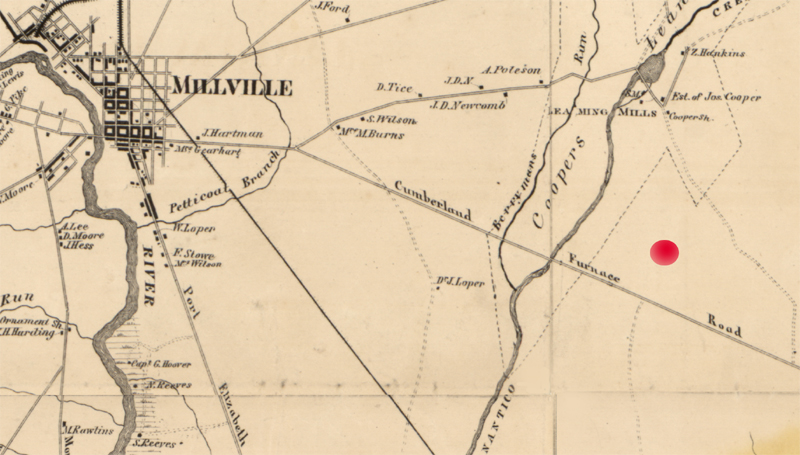
A New Jersey “oil well” drilled in 1916 was said to have found a previously unknown geologic oil-bearing formation.
Steelman Realty Gas & Oil Company officially incorporated on November 13, 1916, with $300,000 in capital. Most of the company’s stock was sold to Pittsburgh independent producers. Officers included Lewis Steelman, Merton Steelman and Leroy Steelman. Their objective was to “drill for natural gas and oil on lands of the company.”
When a Steelman exploratory well reportedly discovered oil 800 feet deep on a 1,500-acre tract, the Petroleum Gazette in Titusville, Pennsylvania, took note of the discovery.
“Lewis Steelman struck oil on his estate four miles east of Millville in the depths of a big forest,” the Gazette reported. “Experts who were here several months ago assured Steelman that there was oil on the property and he built a derrick and today struck a deposit which it is believed will yield 25 barrels of crude oil daily.”
The Petroleum Gazette (published where the first U.S. oil well had been drilled in 1859) added that Steelman was not satisfied with the oil strike and would “go a few feet lower to protect himself from prospectors who might drain his well.”
Dr. von Hagen’s Predictions
With Steelman Realty Gas & Oil said to be buying hundreds of acres of forest land surrounding Steelman property, company stock sales were buttressed by the declarations of geologist Dr. H. J. von Hagen, cited as “one of the world’s greatest living geologists and petroleum engineers.”
Dr. von Hagen also predicted this previously unknown geologic oil-bearing formation extended into Maryland and West Virginia, varied in width, “but is nowhere more than fifteen miles across.” Dr. von Hagen had spent two years in tracing it, the newspaper added.
Covering news of the New Jersey wildcat well from North Carolina, the Durham Morning Herald reported Dr. von Hagen as one of the men who had struck oil at Millville. The newspaper quoted the geologist as saying the petroleum came from “a great belt which starts near Moncton, New Brunswick, reappears at the eastern end of Long Island, runs near Lakewood, N.J.”
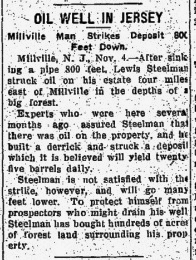
Newspapers as far away as California reported the dubious New Jersey oil discovery.
“Dr. von Hagen says he and his associates have received a $100,000 offer for the well which they are sinking, and from which they can get about fifteen barrels of oil a day, though the final depth has not been reached,” reported the Morning Herald. Dr. Von Hagan himself leased thousands of acres of land east of Millville, as well as nearby Hammonton.
It looked like the beginning of New Jersey’s first commercial oil production. Then Bridgewater’s Courier-News reported startling news. “Dr. von Hagen and His Bag Gone,” the account began. “Residents of this city, Millville and other places in this section are puzzled over Dr. von Hagen and his oil locating scheme. The doctor is away, his offices here are unoccupied at the present, no oil has been struck, and no one has been asked to buy stock.”

The Courier-News also had something to say about the geologist and his unusual methods. “The story about the doctor sinking his wells for wireless communication with Germany is all rot. He claims to have discovered the secret of locating oil under ground. He has a little bag with a golden cord attached. When that Is held over ground where there is oil the bag becomes agitated and swings violently.”
Meanwhile, another account of the well from the Oil, Paint and Drug Reporter said the discovery had “brought considerable notoriety to a locality in which geologic conditions, as promptly announced by the State geologist, are unfavorable to the occurrence of oil in commercial quantities…No instance of oil seepage and no oil-bearing shales have ever been observed by any worker on the State Geological Survey.”
The publication added that the survey had been “continuously active since 1864” and the geology of New Jersey had been studied “to a more minute degree than that of any other State, the conclusion seems irresistible that they (oil-bearing formations) do not occur.”
No New Jersey Oil Boom
Articles describing a successful oil well in New Jersey nonetheless excited investors and apparently attracted more drillers and cable-tool rigs. “Discovery of Flow Near Millville, N.J., Starts Rush of Prospectors,” proclaimed the Gettysburg (Pennsylvania) Times. “The Steelman Realty, Gas and Oil Company, which recently struck oil at their well on the 1,500 [acre] tract three miles east of Millville, has received pipe for a second well which will be started at once.”
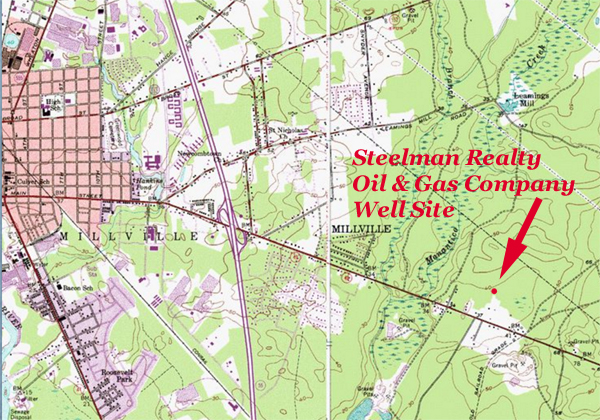
“The old timers called the woods road leading to the site Oil Well Road,” notes one Millville resident.
The newspaper said pipe and drills had arrived “for three independent concerns, and prospectors from Oklahoma and elsewhere will sink the wells on leased ground near the location of the well where oil has been struck.”
However, the state geologist remained dubious. “All drilling for oil here is extremely speculative and should be undertaken only by those who fully understand the hazards of the game and can afford to lose their entire venture,” he warned. “The public should therefore beware of stock-selling schemes based on reported discoveries or assumed occurrences of oil in New Jersey.”
An October 1917 report on the well’s status noted technical problems. “For months no work was done at the well owing to the loss of tools and obstruction of the casing (see Fishing in Petroleum Wells).” Despite this trouble, “the sale of stock in an oil and realty company controlling adjoining territory was actively pushed by some of the persons interested in the company which sank the well.”
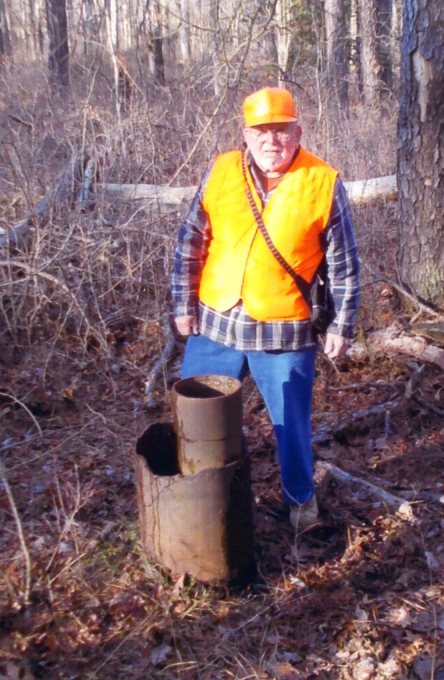
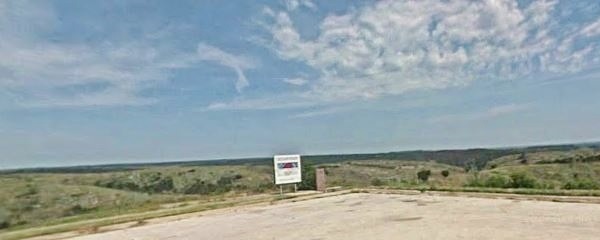
Millville resident George Martin tracked down the abandoned New Jersey well.
Perhaps the New Jersey State Geologist had the last word about the well when:
“Facts have come to his knowledge which verify what he formerly suspected, namely, that the reputed discovery at Millville was a fake pure and simple, although not all of the persons interested in drilling the well had knowledge of the fraud.”
Steelman Realty, Gas and Oil Company stock certificates today are valued by collectors as remnants of a failed petroleum speculation scheme. “New Jersey Not a Good Field for Oil Investments,” concluded the April 1921 Oil Trade Journal.
For a thoroughly researched chronology of the Steelman well, visit the Millville Historical Society and see Paul M. McConnell’s “A Century Ago, Southern New Jersey Had Its Fifteen Minutes of Fame.”
Home to major East Coast refineries, New Jersey has never produced commercial quantities of oil or natural gas.
The American Oil & Gas Historical Society thanks long-time Millville resident George R. Martin, who trekked the countryside to find the Steelman well in 2017. “”My father and my uncle took me to see it many years ago,” he recalled. “The old timers called the woods road leading to the site Oil Well Road.”
The stories of exploration and production companies trying to join petroleum booms (and avoid busts) can be found updated in Is my Old Oil Stock worth Anything?
_______________________
Recommended Reading: The Prize: The Epic Quest for Oil, Money & Power (1991); Myth, Legend, Reality: Edwin Laurentine Drake and the Early Oil Industry (2009). Your Amazon purchase benefits the American Oil & Gas Historical Society. As an Amazon Associate, AOGHS earns a commission from qualifying purchases.
_______________________
The American Oil & Gas Historical Society preserves U.S. petroleum history. Join today as an annual AOGHS supporting member. Help maintain this energy education website and expand historical research. For more information, contact bawells@aoghs.org. Copyright © 2022 Bruce A. Wells. All rights reserved.
Citation Information – Article Title: “Fake New Jersey Oil Well.” Authors: B.A. Wells and K.L. Wells. Website Name: American Oil & Gas Historical Society. URL: https://aoghs.org/oil-almanac/steelman-realty-gas-oil-company. Last Updated: August 24, 2022. Original Published Date: July 20, 2018.