Chicago business sought risky shale opportunities during WWI.
At the end of the 20th century, record-breaking petroleum production from shale oil grew thanks to drilling and production technologies that produced from low permeability “tight oil” formations. But a century ago, the shale was an unconventional resource mined, crushed and transported to a retorting facility.
Mining shale began as an extraction process that converted organic matter within the rock (kerogen) into synthetic oil and gas, which could be used as a fuel or upgraded for an oil refinery feedstock.
The strategic importance of America’s mined shale production led to establishment of the Naval Petroleum and Oil Shale Reserves in 1912, “to insulate the United States from foreign dependency on oil during times of war.”
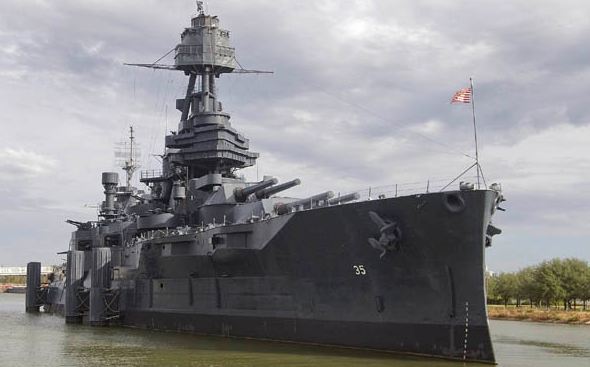
Commissioned in 1914 with coal-powered boilers, the battleship USS Texas was converted to use fuel oil in 1925. Photo courtesy Texas Parks and Wildlife Department.
Meanwhile, fuel oil also began replacing coal in U.S. warships (See Petroleum and Sea Power), as World War I erupted in Europe. After more than three years of neutrality, America entered the war on April 2, 1917.
Recognizing wartime demand for oil, Van H. Manning, director, U.S. Bureau of Mines, declared, “We have as yet untouched our great reserves of shale that contain oil…and are conservatively estimated to contain many times the amount of oil that has been or will have been produced from all the porous formations in this country.”
Central Oil Shale Refining Company formed with $500,000 capitalization and set up offices in Chicago. The venture saw a financial opportunity in mining shale and secured leases on 480 acres in Garfield County, Colorado, an area with known deposits.
Central Oil Shale Refining also leased a total of about 5,000 acres in Kentucky, Kansas, and Texas. These investments were a gamble on the margins of supply and demand.
Despite the risks, Central Oil Shale Refining presented “Expert Information on Oil Shale” to stockholders and potential investors at Chicago’s Palmer House hotel. Company executives promoted the mining and distillation of Colorado oil shales as an opportunity not to be missed. It helped that publications like Oil Field Engineering (December 1917) proclaimed shales as “A New Source of Gasoline.”
Shale Business Model
Oil shale operator Joseph Bellis presented a business model to the Palmer House audience, describing oil shale production process and economics. Bellis, a veteran of Colorado shale mining in the Piceance Creek Basin, later published a paper in the Colorado School of Mines’ quarterly magazine.
The paper may have helped Central Oil Shale Refining stock sales, but the company’s trajectory had already been determined on a farm near Ranger, Texas.
Concerns about U.S. wartime oil supplies declined — along with oil prices — soon after an October 17, 1917, gusher halfway between Abilene and Dallas. Still annually celebrated by area residents, “Roaring Ranger” J. McCleskey No. 1 well produced 1,600 barrels of oil a day. Other wells in the oilfield would yield up to 10,000 barrels of oil daily.
The North Texas drilling boom opened giant fields near Desdemona and Breckenridge (Conrad Hilton would buy his first hotel in Cisco). An even bigger oilfield was found in 1918 at Burkburnett, near Wichita Falls. With suddenly abundant supplies, oil sold for less than $2 per barrel — five cents a gallon.
Central Oil Shale Refining was in deep trouble. Even if every ton mined resulted in 50 gallons of oil, it would take more than 1,300 tons of shale every day to match the McCleskey’s well production alone. The numbers didn’t work and debts needed to be paid.
In one last effort to survive, Central Oil Shale Refining reorganized with the same officers, moved its offices, and subtly changed its name to Central Oil Shale and Refining Company. The new company quickly failed, leaving a brief shadow in financial records.
Another example of producing commercial quantities of petroleum from shale can be found in Ute Oil Company – Oil Shale Pioneer. By the 1980s, new technologies revolutionized petroleum production from low-permeability shales — especially for natural gas.
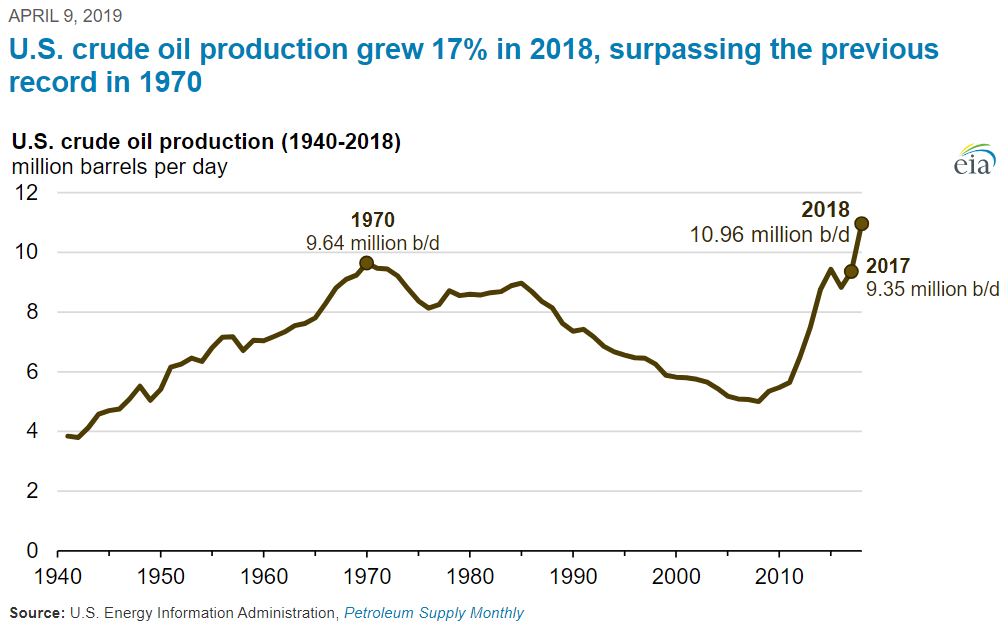
Annual U.S. crude oil production reached a record level of 10.96 million barrels per day in 2018, according to the U.S. Energy Information Administration.
Although geologists had known of the potential of drilling in these “tight oil” formations, only one percent of U.S. natural gas production came from shale as late as 2000. But by applying horizontal drilling and hydraulic fracturing techniques, in 2010 shale gas accounted for more than 20 percent of U.S. natural gas production, according to the Energy Information Administration (EIA).
Citation Information – Article Title: “Central Oil Shale Refining Company.” Authors: B.A. Wells and K.L. Wells. Website Name: American Oil & Gas Historical Society. URL: https:https://aoghs.org/old-oil-stocks/central-oil-shale-refining-company. Last Updated: March 31, 2024. Original Published Date: April 1, 2019.
Exploration company’s cable-tool well showed signs of oil as Great Depression began.
Although successful oil wells had been drilled as early as 1901, oil fever arrived in Montana with the October 1915 discovery of the Elk Basin oilfield in Carbon County.
More discoveries came at the Cat Creek oilfield in 1920 and in the Kevin-Sunburst oilfield of 1922, both of which motivated businessmen in Miles City to form the Montana Bell Oil & Gas Company. They filed to do business in the state on March 8, 1924, but their timing was terrible.
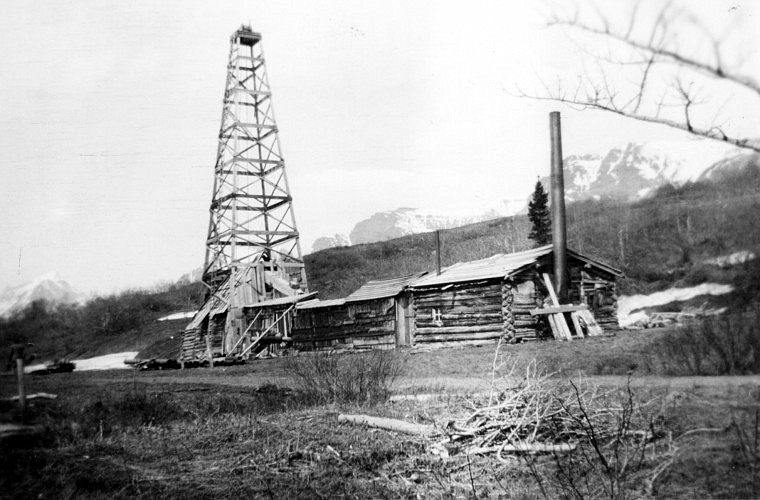
Montana’s first oil well was drilled in 1901 in the Kintla Lake area that’s now part of Glacier National Park. Photo courtesy Daily Inter Lake, Kalispell, Montana.
In the last few months of 1924 alone, a financial crisis described by Montana’s superintendent of banks as a “veritable nightmare” closed 191 banks.
Bankrupt in Montana
Between 1921 and 1926, no state had more bankruptcies than Montana. Newspapers reported in 1924 reported “the tremulous activity” of Montana Belle Oil that “may be expected in this country within the year, unless present plans halted.”
Nonetheless, Montana Belle Oil & Gas was able to secure a mineral lease from Adolph F. Loesch west of Miles City in April 1926. The company selected a drilling site for its first well in typically foreboding southeast Montana (see Public Land Survey System, Northeast Quarter of Section 28, Township 8 North, Range 45 East).
Drilling the wildcat well during hard financial times and in a remote location slowed progress. Legal issues also troubled the company, according to reports in the Billings Gazette.
“With the settlement of differences arising without recourse to the courts, the officers of the Montana Belle Oil & Gas company are preparing to proceed,” the newspaper noted in January 1928.
“Drilling in the Montana Belle Oil and Gas company well, located about twelve miles west of this city is proceeding 24 hours a day,” the reporter added.
Using dated cable-tool drilling technology, the company reached a depth of 1,035 feet. The Billings Gazette reported the company’s objective was a depth of 1,750 feet, “in accordance with the report of the geologist who has made a survey and examination of the earth strata, and at which it is expected that results will follow. Gas is also in evidence in the hole.”
Investors and stockholders were encouraged that the well was “showing some light oil though not in commercial quantities.” The drilling continued into deeper formations. On October 24, 1929 — “Black Thursday” — the U.S. stock market crashed, launching the Great Depression.
In December 1929, five years after incorporating, Montana Belle Oil and Gas Company’s only oil well shut down for the winter. It reportedly had reach the impressive depth of 4,562 feet, but drilling never resumed. Montana Belle Oil and Gas Company failed in 1930, as did Miles City’s oil refinery and many other oilfield businesses.
Citation Information – Article Title: “Montana Belle Oil & Gas Company.” Authors: B.A. Wells and K.L. Wells. Website Name: American Oil & Gas Historical Society. URL: https://aoghs.org/old-oil-stocks/montana-belle-oil-amp-gas-company. Last Updated: February 29, 2024. Original Published Date: April 13, 2022.
African American entrepreneurs began their Oklahoma oil venture in 1917.
Discovery of Oklahoma’s giant Healdton oilfield in August 1913 about 20 miles northwest of Ardmore launched years of investment as petroleum companies competed to secure leases and drill. In the African American community, four entrepreneurs formed the Ardmore Lubricating Oil Company.
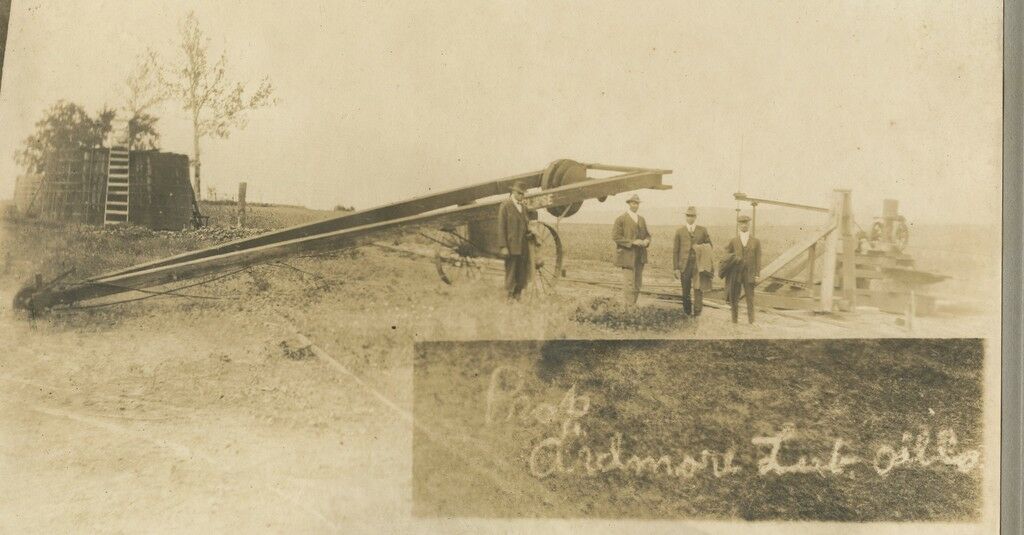
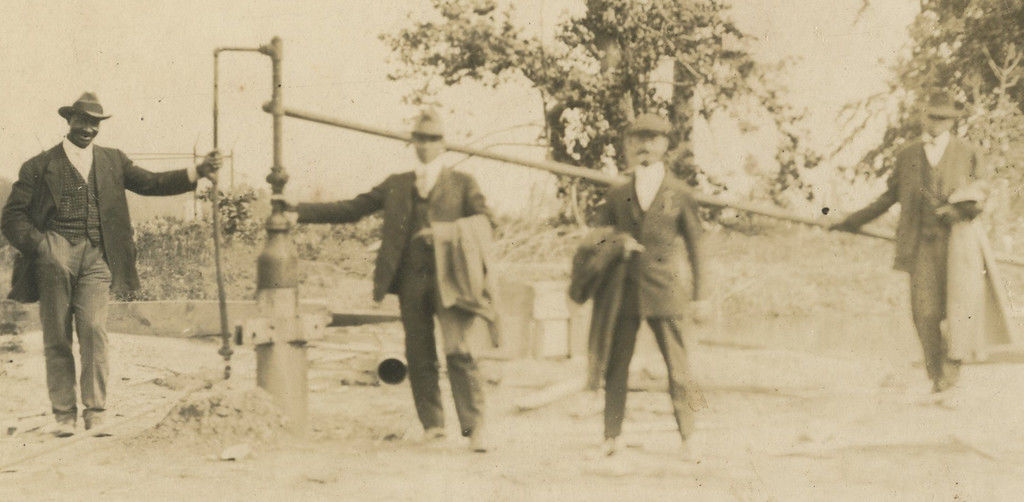
Oklahoma’s Daily Ardmoreite reported on August 15, 1918, that Ardmore Lubricating Oil Company moved a Star Rig to explore for oil on land adjacent to the town of Tatums. Image from online auction sale.
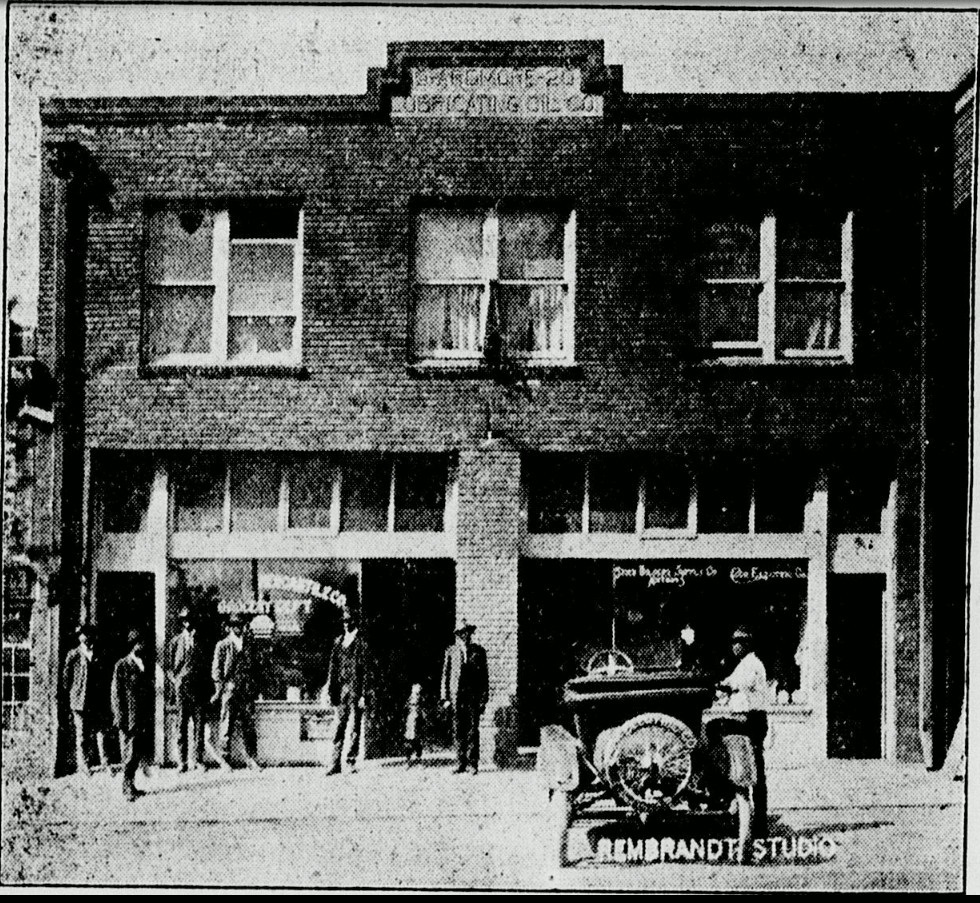
Today, East 2nd Street is the heart of the “Deep Deuce” district and is known for its historic jazz and culture. But in 1917, that part of downtown was exclusively for “coloreds,” segregated to the other side of the Santa Fe railroad tracks. It was the era of Gov. William “Alfalfa Bill” Murray’s Jim Crow laws (the Civil Rights Act was still half a century away), but along East 2nd Street African-American businesses and neighborhoods prospered.
Ardmore Lubricating Oil Company moved into offices at 319 and 321 East 2nd Street, across from the Black Dispatch weekly, established two years earlier by Roscoe Dunjee. Advertised as the “Largest circulation Negro journal in Oklahoma,” the paper soon carried Ardmore Lubricating Oil Company promotions encouraging readers to invest.
“Buy Stock in a Home Company – With Men Whom You Know at its Head…100 acres leased and shallow wells producing the high-grade of oil,” declared one ad. The company announced plans “to deepen our 1,360 foot well to the lower pay.” Early investors could get in for the bargain price of $1 a share.
As Ardmore Lubricating Oil operations continued into June 1919, news reports for stockholders were mixed. The company completed a producing well on its 100-acre lease that yielded one barrel of oil a day of “high grade lubrication oil.” The company’s chemist predicted it would be worth $10 a barrel at a time when ordinary oil was selling for $2 dollars per barrel.
In 1920, Ardmore Lubricating Oil began moving equipment to drill a well just outside Tatums, about 80 miles south of Oklahoma City. The company announced it would build its own refinery there to process its especially valuable oil from the Healdton field. Tatums was one of about 50 all-black towns in the former Indian Territory that grew from post Civil War reconstruction. These self-segregated communities were reflective of the times; they remain as reminders of America’s struggle with race and identity.
With a new lab opened in 1920 upstairs at its Oklahoma City offices, the company’s wells reportedly could produce “high grade lubrication oil” and “Icthyol Oil,” a salve for eczema and other skin conditions. Image from online auction sale.
The superintendent, manager and stock salesman of the Ardmore Lubricating Oil, H.E. Baker, published a telegraphed message about the Tatums well site: “We have three wells producing the highest grade and most valuable oil found in the United States, the great drug Icthyol Oil, one of the most sought for and needed products of the world today.”
“Icthyol” was a popular European skin ointment produced from dry distillation of sulfur-rich oil shale, but Ardmore Lubricating Oil Company executives declared they could refine it from Tatums’ crude oil and process it in their own laboratory. In February 1920, the company announced a four-day grand opening to celebrate their new lab upstairs.
“The general public is cordially invited to come and see Kerosene, Automobile Oil and Icthyol,” noted an Ardmore Lubricating Oil promotion. Other ads proposed mutually beneficial business arrangements with merchants, investors, farmers, and consumers.
Increasingly creative financing and uninterrupted stock sales were needed for Ardmore Lubricating Oil to remain solvent. The Black Dispatch in 1921 praised H.E. Baker, noting his company’s “development grows by leaps and bounds…You can get into this company now on the ground floor, $10 is all that you can invest at this time for each member of the family, this will insure at the outset an equal opportunity for all, later on the hundreds of stock holders can get together and determine as to the larger plan of organization.”
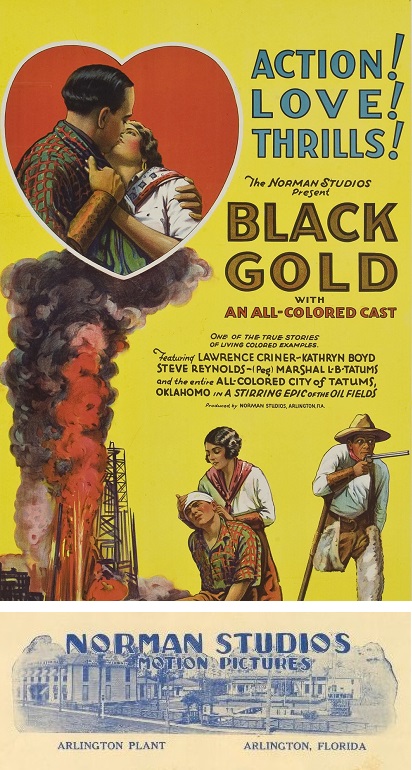
Tatums’ townspeople in 1927 hosted and acted in “Black Gold,” a silent picture produced by Norman Studios and featuring an “All Colored Cast.” Posters courtesy IMDB.com and Norman Studios.org.
However, construction of the Ardmore Lubricating Oil refinery in Tatums still had not begun by August 1921. News about the company’s oil wells grew scarce as Baker sold his own leases. The last appeals for new investors appearing in the Black Dispatch were nevertheless optimistic:
“Wonderful Opportunities In Larger Faith And Deeper Hole,” proclaimed the newspaper. “To anyone with a limited amount of brains it can be seen that a little more faith and a deeper hole will bring into the hands of the Negro landholders in this section the millions of dollars, which their white neighbors all around them are reaping hourly from the derricks that have lunched great holes in the earth and are spouting liquid treasure everywhere.”
A few years later, but too late for Ardmore Lubricating Oil, the area around Tatums did experience an oil boom that was celebrated on the big screen. In 1927, townspeople hosted the making of Black Gold, a silent picture produced by Norman Studios and distributed to all-black theaters the next year. The Florida-based studio described its movie as a “stirring epic of the oil fields” with a cast including, “U.S. Marshall L.B. Tatums. and the entire all-colored City of Tatums, Oklahoma.”
The action-packed melodrama featured Ace Brand, his sweetheart Alice, and a one-legged cowboy (named Peg), who overcame both adversity and injustice in the oil patch. While the film’s happy ending delivered an oil gusher, Ardmore Lubricating Oil Company did not.
Few financial records remain about the company, but Gateway to Oklahoma History and the Black Dispatch’s archives offer more context to this almost forgotten story from U.S. petroleum history.
Citation Information – Article Title: “Ardmore Lubricating Oil Company.” Author: Aoghs.org Editors. Website Name: American Oil & Gas Historical Society. URL: https://aoghs.org/stocks/ardmore-lubricating-oil-company. Last Updated: February 21, 2024. Original Published Date: July 4, 2019.
Ardmore Lubricating Oil Company opened offices in this building on East 2nd Street in a segregated district of downtown Oklahoma City known for its prospering businesses and jazz music nightlife. Photo courtesy The Black Dispatch, Oklahoma City, April 20, 1922, Vol. 7, No. 20.
Decades of production from the Healdton oilfield would yield more than 200 million barrels of oil — but the prolific field left hundreds of forgotten petroleum companies hidden in its exploration and production history.
Oil production from the Healdton field was shallow, averaging about 1,000 feet, and the low cost of drilling attracted many small ventures that operated on capital raised by aggressive stock sales. State “Blue Sky” laws had yet to restrain advertising excesses and promotions. Competition for investors often was fierce (see Homestead Oil Company).
Ardmore Lubricating Oil Company
When a group of foundering Coffeyville, Oklahoma, investors gave up on their 100-acre oil lease in 1917, four African American entrepreneurs bought out the venture and its unfinished 1,360-foot-deep well, which had encountered “several light sands” and a water-filled borehole.
Wilson Newman, J.C. Pratt, S.M. Holland, and Heston Welborn formed the Ardmore Lubricating Oil Company, capitalized at $50,000, and set up offices on East 2nd Street in Oklahoma City.
Oklahoma’s Daily Ardmoreite reported on August 15, 1918, that Ardmore Lubricating Oil Company moved a Star Rig to explore for oil on land adjacent to the town of Tatums. Image from online auction sale.
Today, East 2nd Street is the heart of the “Deep Deuce” district and is known for its historic jazz and culture. But in 1917, that part of downtown was exclusively for “coloreds,” segregated to the other side of the Santa Fe railroad tracks. It was the era of Gov. William “Alfalfa Bill” Murray’s Jim Crow laws (the Civil Rights Act was still half a century away), but along East 2nd Street African-American businesses and neighborhoods prospered.
Ardmore Lubricating Oil Company moved into offices at 319 and 321 East 2nd Street, across from the Black Dispatch weekly, established two years earlier by Roscoe Dunjee. Advertised as the “Largest circulation Negro journal in Oklahoma,” the paper soon carried Ardmore Lubricating Oil Company promotions encouraging readers to invest.
“Buy Stock in a Home Company – With Men Whom You Know at its Head…100 acres leased and shallow wells producing the high-grade of oil,” declared one ad. The company announced plans “to deepen our 1,360 foot well to the lower pay.” Early investors could get in for the bargain price of $1 a share.
As Ardmore Lubricating Oil operations continued into June 1919, news reports for stockholders were mixed. The company completed a producing well on its 100-acre lease that yielded one barrel of oil a day of “high grade lubrication oil.” The company’s chemist predicted it would be worth $10 a barrel at a time when ordinary oil was selling for $2 dollars per barrel.
In 1920, Ardmore Lubricating Oil began moving equipment to drill a well just outside Tatums, about 80 miles south of Oklahoma City. The company announced it would build its own refinery there to process its especially valuable oil from the Healdton field. Tatums was one of about 50 all-black towns in the former Indian Territory that grew from post Civil War reconstruction. These self-segregated communities were reflective of the times; they remain as reminders of America’s struggle with race and identity.
With a new lab opened in 1920 upstairs at its Oklahoma City offices, the company’s wells reportedly could produce “high grade lubrication oil” and “Icthyol Oil,” a salve for eczema and other skin conditions. Image from online auction sale.
The superintendent, manager and stock salesman of the Ardmore Lubricating Oil, H.E. Baker, published a telegraphed message about the Tatums well site: “We have three wells producing the highest grade and most valuable oil found in the United States, the great drug Icthyol Oil, one of the most sought for and needed products of the world today.”
“Icthyol” was a popular European skin ointment produced from dry distillation of sulfur-rich oil shale, but Ardmore Lubricating Oil Company executives declared they could refine it from Tatums’ crude oil and process it in their own laboratory. In February 1920, the company announced a four-day grand opening to celebrate their new lab upstairs.
“The general public is cordially invited to come and see Kerosene, Automobile Oil and Icthyol,” noted an Ardmore Lubricating Oil promotion. Other ads proposed mutually beneficial business arrangements with merchants, investors, farmers, and consumers.
Increasingly creative financing and uninterrupted stock sales were needed for Ardmore Lubricating Oil to remain solvent. The Black Dispatch in 1921 praised H.E. Baker, noting his company’s “development grows by leaps and bounds…You can get into this company now on the ground floor, $10 is all that you can invest at this time for each member of the family, this will insure at the outset an equal opportunity for all, later on the hundreds of stock holders can get together and determine as to the larger plan of organization.”
Tatums’ townspeople in 1927 hosted and acted in “Black Gold,” a silent picture produced by Norman Studios and featuring an “All Colored Cast.” Posters courtesy IMDB.com and Norman Studios.org.
However, construction of the Ardmore Lubricating Oil refinery in Tatums still had not begun by August 1921. News about the company’s oil wells grew scarce as Baker sold his own leases. The last appeals for new investors appearing in the Black Dispatch were nevertheless optimistic:
“Wonderful Opportunities In Larger Faith And Deeper Hole,” proclaimed the newspaper. “To anyone with a limited amount of brains it can be seen that a little more faith and a deeper hole will bring into the hands of the Negro landholders in this section the millions of dollars, which their white neighbors all around them are reaping hourly from the derricks that have lunched great holes in the earth and are spouting liquid treasure everywhere.”
A few years later, but too late for Ardmore Lubricating Oil, the area around Tatums did experience an oil boom that was celebrated on the big screen. In 1927, townspeople hosted the making of Black Gold, a silent picture produced by Norman Studios and distributed to all-black theaters the next year. The Florida-based studio described its movie as a “stirring epic of the oil fields” with a cast including, “U.S. Marshall L.B. Tatums. and the entire all-colored City of Tatums, Oklahoma.”
The action-packed melodrama featured Ace Brand, his sweetheart Alice, and a one-legged cowboy (named Peg), who overcame both adversity and injustice in the oil patch. While the film’s happy ending delivered an oil gusher, Ardmore Lubricating Oil Company did not.
Few financial records remain about the company, but Gateway to Oklahoma History and the Black Dispatch’s archives offer more context to this almost forgotten story from U.S. petroleum history.
Citation Information – Article Title: “Ardmore Lubricating Oil Company.” Author: Aoghs.org Editors. Website Name: American Oil & Gas Historical Society. URL: https://aoghs.org/stocks/ardmore-lubricating-oil-company. Last Updated: February 21, 2024. Original Published Date: July 4, 2019.
An experienced independent oil producer, W.D. Richardson orchestrated the merger of his own company, Lake Park Refining (incorporated 1918), with Dunn Petroleum and Davenport Petroleum to form Meridian Petroleum Company in September 1920.
Merger terms dictated one share of Dunn Petroleum for two shares Meridian Petroleum; one share of Lake Park Refining for two shares Meridian Petroleum; and one share of Davenport Petroleum Co. for 20 shares Meridian Petroleum.
The combined organization held assets valued at about $13 million, including refineries in Oklahoma: Okmulgee (3,500 barrel), Ponca City (2,500 barrel), and Hominy (1,500 barrel). There also were producing wells in Oklahoma, Kansas and Texas, as well as “promising acreage” in Wyoming.
With offices in Kansas City, Missouri, Delaware-chartered Meridian Petroleum was capitalized at $25 million. By the end of 1920, the new company reported a net profit of $1,076,828. At the company’s annual meeting in April 1921, at least 3,000 Meridian Petroleum stockholders re-elected W.D. Richardson and the company’s officers.
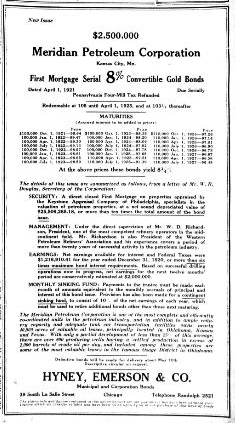
“Rarely have stockholders made so plain their confidence in the management of an oil company,” noted The Oil & Gas News reported. At the same meeting, stockholders approved the issue of $2.5 million dollars in “first mortgage bonds to be used in retiring present outstanding indebtedness and to give the company additional working capital.”
Trade publications carried advertisements for Meridian Petroleum products such as “No. 1100 Straight Run Auto Oil” and “No. 22-600 S. R. Cylinder Stock (Light Green).” These and other lubricants were promoted with the Meridian motto, “The Line that Circles the World.”
But all was not well. The Oklahoma refineries depended upon crude oil deliveries, which were declining. Throughout 1921, only one of Meridian’s Petroleum’s three refineries operated at all, and it at half capacity.
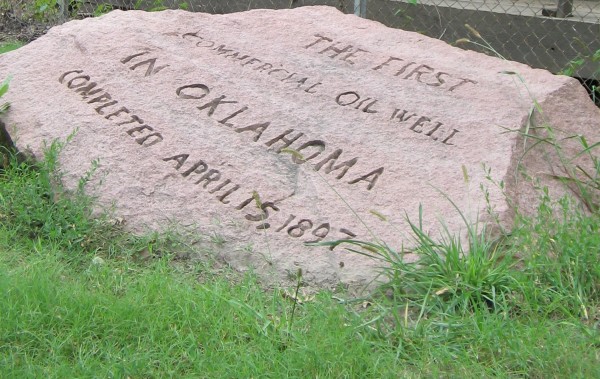
The first official Oklahoma oil well was completed in 1897 at Bartlesville. Photo by Bruce Wells.
Oil production from Meridian Petroleum’s own leases proved insufficient, although in July 1921, Oildom reported a hopeful development.
“The company’s big well in the Hominy district of Osage county, Oklahoma, which came in at 10,000 barrels and ceased flowing after several days, due to a caved hole, was put in commission again and was reported making 3,000 barrels natural (flow),” the publication noted.
A report in the American Investor valued the company’s stock at about 13 cents a share on the New York Curb Market in December 1921, down from a high of 22 cents a share for the year and far less than the original offering at $2 per share.
On April 1, 1922, Meridian Petroleum defaulted on a $100,000 debt and in June, U.S. District Court appointed a receiver as the $2.5 million mortgage approved by stockholders a year earlier went into foreclosure. The company also carried unsecured debt of $600,000 and never paid a dividend.
Despite predictions of a reorganization, by 1927 Meridian Petroleum was gone for good. W.D. Richardson quickly went on to form the Richardson Refining Company, capitalized at $250,000 in November 1922.
Recommended Reading:The Prize: The Epic Quest for Oil, Money & Power(1991). Your Amazon purchase benefits the American Oil & Gas Historical Society. As an Amazon Associate, AOGHS earns a commission from qualifying purchases.
Citation Information – Article Title: “Meridian Petroleum Company.” Authors: B.A. Wells and K.L. Wells. Website Name: American Oil & Gas Historical Society. URL: https://aoghs.org/old-oil-stocks/meridian-petroleum-company. Last Updated: February 14, 2024. Original Published Date: January 29, 2016.
Texas Oil boom brings shady searchers for petroleum riches.
It was the greatest petroleum exploration and production since the birth of the U.S. oil industry in 1859. Hundreds of new companies formed in the wake of the spectacular 1901 “Lucas Gusher” at Spindletop Hill near Beaumont, Texas. Few had experience in the highly competitive and risky business of exploring for oil.
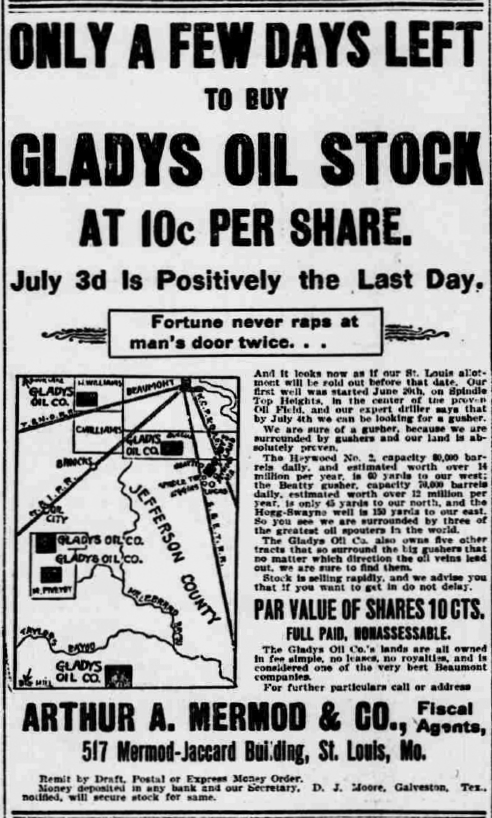
Among those ready to make fortunes for investors were two new “Gladys Oil” companies. One was from Beaumont, the other from Galveston. Contemporary maps show the Gladys Oil Company of Beaumont to have drilled a successful well very close to the famous January 10, 1901, “Lucas Gusher” well at Spindletop Hill that launched the modern U.S. petroleum industry.
Also in 1901, after 29 days of drilling in block 37, the company reported production from “Gusher No. 67” at a depth of 1,025 feet. Locating the “black gold” did not necessarily promise success.
“Swindletop”
By 1903 the Texas Secretary of State reported that Gladys Oil Company of Beaumont had “forfeited its right to do business in the state of Texas” due to a failure to pay franchise taxes. In a scenario that would repeat itself in other oilfields in coming decades, production from the giant field soon brought a collapse in oil prices.
By January 1902, stocks of both Gladys Oil companies were trading for less than 10 cents a share. The company was sued, lost, and United States Investor magazine reported it to be worthless two years later. Meanwhile, because some cash-strapped and desperate companies made questionable claims, newspapers began referring to the historic 1901 discovery as “Swindletop.”
In 1907, Success Magazine named the company in its “Fools and their Money” expose of fraudulent promotion schemes perpetrated by the New York, Chicago, and Beaumont Security Oil Trust. The Gladys Oil Company of Galveston lasted a little longer than its Beaumont twin, but not without controversy.
The trust had proclaimed, “it was impossible to lose” with an investment Gladys Oil Company of Galveston. In 1911 R.M. Smythe’s, Obsolete American Securities and Corporations, reported the stock to be worthless. Read about Pattillo Higgins, the man behind the great Spindletop discovery — and his Gladys City Oil, Gas & Manufacturing Company — see Prophet of Spindletop.
The stories of exploration and production companies joining petroleum booms (and avoiding busts) can be found updated inIs my Old Oil Stock worth Anything?
Citation Information – Article Title: “Gladys Oil Company — Oil Shale Pioneer.” Authors: B.A. Wells and K.L. Wells. Website Name: American Oil & Gas Historical Society. URL: https://aoghs.org/old-oil-stocks/gladys-oil-company. Last Updated: December 4, 2024. Original Published Date: September 11, 2013.
In the early 1950s, Alaska Oil & Gas Development Company marketed 300,000 shares of stock for $1 each.
Decades before Alaska became a state, many petroleum exploration companies drilled expensive dry holes in the remote U.S. territory. The Alaska Oil & Gas Development Company was among them.
Although drillers completed the first Alaska Territory commercial oil well in 1902, significant oilfield production did not arrive until 1957, two years before statehood.
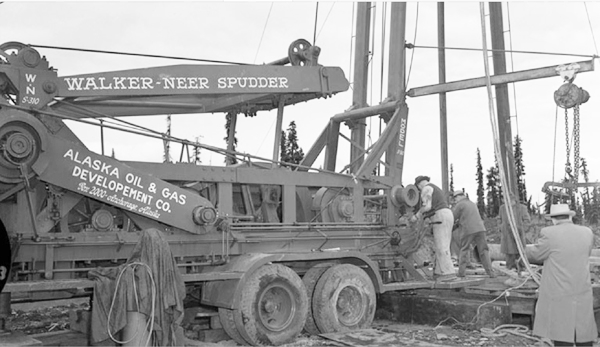
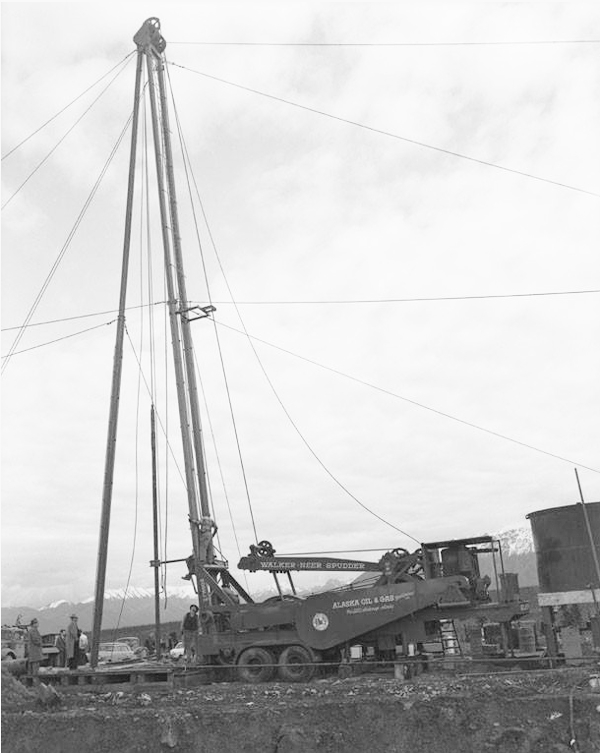
Before switching to a rotary rig in 1954, the Alaska Oil & Gas Development Company drilled its Eureka No. 1 using this Walker-Neer Manufacturing Company cable-tool “spudder.” Photo courtesy the Anchorage Museum.
The July 1957 discovery well by Richfield Oil Corporation — later known as ARCO — successfully drilled near the Swanson River on the Kenai Peninsula. The first well, which produced 900 barrels of oil a day from 11,215 feet, revealed a giant oilfield.
Many Alaskans already had been wildcatting for black gold.
Among those searching for petroleum riches, Alaska Oil & Gas Development accepted the financial challenges of exploring unproven territory. William A. O’Neill and a former oilfield roughneck incorporated the company on October 31, 1952.
“Bill O’Neill, a local mining engineer and University of Alaska regent, and partner C.F. ‘Tiny’ Shield, a giant of a man, believed they could find oil in the Copper River Basin,” explained Jack Roderick in his 1997 book, Crude Dreams: A Personal History of Oil & Politics in Alaska.
“Before coming to Alaska in the early 1920s, Shield had been a cable-rig ‘tool pusher’ in Montana, Texas and California,” he added.
Within a year, Alaska Oil & Gas Development began drilling near “mud volcanoes” — sulfuric residues bubbling up from the valley floor — and near mud cliffs embedded with giant marine fossils, Roderick reported.
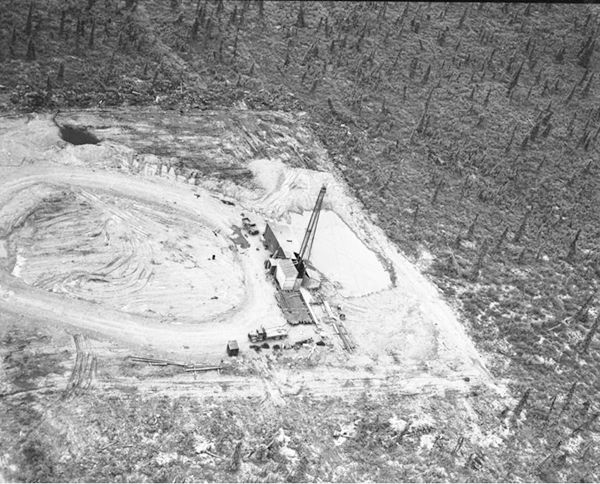
The Eureka No. 1 well with its Walker-Neer cable-tool rig at its remote site just off Glenn Highway about 125 miles northeast of Anchorage. Photo courtesy the Anchorage Museum.
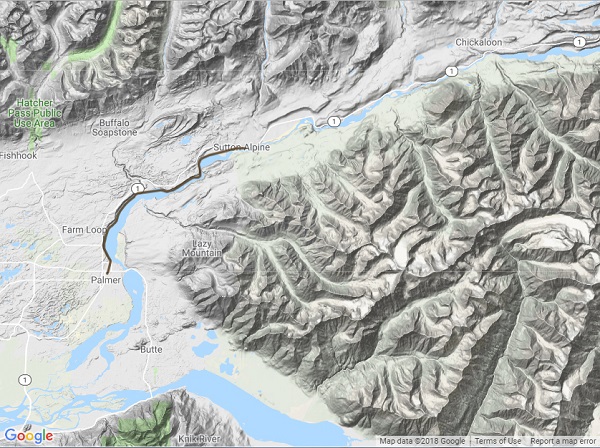
Far from any oil or natural gas producing well in North America, the well site — known as a rank wildcat — was at Eureka Roadhouse, about 125 miles northeast of Anchorage, just 200 feet off the Glenn Highway (part of Alaska Route 1).
Risky Business
Alaska Oil & Gas Development Company offered 300,000 shares of stock at $1 per share, advertising in newspapers:
The money realized from the sale of this stock is being used to purchase equipment and finance operations for oil exploration in the Eureka-Nelchina location. The location of the first exploratory drill hole has been chosen by our consulting geologist after a geological survey of the area.
The Walker-Neer cable-tool rig reached about 2,500 feet deep before drilling was temporarily suspended at the site. A Texas geologist suggested converting to a rotary rig for greater depth. Photo courtesy the Anchorage Museum.
Drilling at the Eureka Roadhouse site began on September 20, 1953, using cable-tool technology — a Walker-Neer Manufacturing Company rig often called a spudder.
“By early 1954, the Eureka No. 1 well had been drilled down more than half a mile, but the antiquated equipment, making each day’s going tougher, eventually forced O’Neill and Shield to shut down the operation,” noted Roderick.
The limitations of outdated cable-tool technology — and the onset of Alaska’s winter — delayed but did not deter the men. “Shield traveled to Texas, and while looking up some tool pusher buddies, contacted Fort Worth independent James H. Snowden,” Roderick explained.
Snowden sent a geologist to Alaska to investigate the well. “He reported that by converting the cable-tool rug to a rotary, the Eureka well could be deepened to 5,500 feet,” Roderick reported.
By the summer of 1954, having switched the Walker-Neer spudder for a rotary rig, the Eureka No. 1 well reached about a mile in depth — but found no indications of oil.
Alaska Oil & Gas Development Company spudded a well in the Matanuska Valley northeast of Anchorage in June 1953. Map courtesy USGS.
O’Neill and Shield tried again, drilling a second well near Houston, Alaska, on the Alaska Railroad line. It ended as a dry hole as well.
According to Roderick, Alaska Oil & Gas Development plugged and abandoned both wells by 1957. Another company also had tried to find oil in the Matanuska Valley, but failed before it could drill even one well (see Chickaloon Oil Company).
With its funds exhausted, the Alaska Oil & Gas Development Company failed to file a required report and was “involuntarily dissolved” by regulators.
In 1957, Richfield Oil Corporation made the first major discovery two years before Alaska statehood. The company struck the territory’s first commercial oil well at Swanson River on the Kenai Peninsula.
Discovery of the Prudhoe Bay field on Alaska’s North Slope in 1968 made the 49th state a world-class oil and natural gas producer. Prudhoe Bay, the largest oilfield in North America, in turn inspired the U.S. petroleum industry’s 1977 engineering marvel, theTrans-Alaska Pipeline.
Discover more articles featuring America’s first oil discoveries. The stories of many exploration companies trying to join petroleum booms (and avoid busts) can be found in an updated series of research in Is my Old Oil Stock worth Anything?
Citation Information – Article Title: “ Alaska Oil & Gas Development Company.” Authors: B.A. Wells and K.L. Wells. Website Name: American Oil & Gas Historical Society. URL: https://aoghs.org/old-oil-stocks/alaska-oil-gas-development-company. Last Updated: November 22, 2023. Original Published Date: July 14, 2016.

 The combined organization held assets valued at about $13 million, including refineries in Oklahoma: Okmulgee (3,500 barrel), Ponca City (2,500 barrel), and Hominy (1,500 barrel). There also were producing wells in Oklahoma, Kansas and Texas, as well as “promising acreage” in Wyoming.