by Bruce Wells | Mar 9, 2026 | This Week in Petroleum History
March 9, 1930 – First Electrically Welded Vessel: Oil Tanker –
An oil tanker became the world’s first electrically welded commercial vessel when the Texas Company (later Texaco) tanker M/S Carolinian was completed in Charleston, South Carolina. The World War I shipbuilding boom had encouraged new electric welding technologies. Naval architect Richard Smith designed the Texas Company’s pioneering 226-ton vessel. (more…)
by Bruce Wells | Nov 5, 2025 | Petroleum in War
Secret WW II project sent Oklahoma drillers to British oilfield, adding one million barrels of oil production by 1944.
As the United Kingdom fought for its survival during World War II, a team of American oil drillers, derrickhands, roustabouts, and motormen secretly boarded the converted troopship HMS Queen Elizabeth in March 1943. Once their story was revealed years later, they would become known as the Roughnecks of Sherwood Forest.
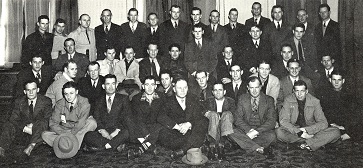
The 42 volunteers from Noble Drilling and Fain-Porter Drilling companies taken before they secretly embarked for the United Kingdom on March 12, 1943, aboard HMS Queen Elizabeth, which had been converted into a troop transport. Photo courtesy Guy Woodward Collection, American Heritage Center.
By the summer of 1942, the situation was desperate. The future of Great Britain — and the outcome of World War II — depended on the supply of petroleum. At the end of that year, demand for 100-octane fuel had grown to more than 150,000 barrels every day — and German U-boats ruled the Atlantic.
British Secretary of Petroleum, Geoffrey Lloyd in August 1942 called for an emergency meeting of his country’s Oil Control Board to assess the “impending crisis in oil.” (more…)