March 9, 1930 – First Electrically Welded Vessel: Oil Tanker –
An oil tanker became the world’s first electrically welded commercial vessel when the Texas Company (later Texaco) tanker M/S Carolinian was completed in Charleston, South Carolina. The World War I shipbuilding boom had encouraged new electric welding technologies. Naval architect Richard Smith designed the Texas Company’s pioneering 226-ton vessel.
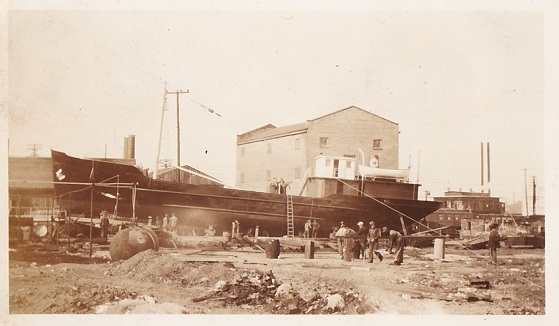
Construction of the Texas Company’s prototype tanker M/S Carolinian began in 1929. The M/S designation meant it used an internal combustion engine. Photo courtesy Z.P. Liollio.
The tanker’s electric welding eliminated the need for more than 85,000 pounds of rivets, according to the International Committee for the Conservation of the Industrial Heritage (TICCIH). The success of the prototype led to the standard of welded hulls and internal combustion engines becoming universal in the construction of new vessels.
March 9, 1959 – Barbie is a Petroleum Doll
Mattel revealed the Barbie doll at the American Toy Fair in New York City. More than one billion “dolls in the Barbie family” have been sold since. Eleven inches tall, Barbie owes her existence to petroleum products and the science of polymerization, including several plastic acronyms: ABS, EVA, PBT, and PVC.
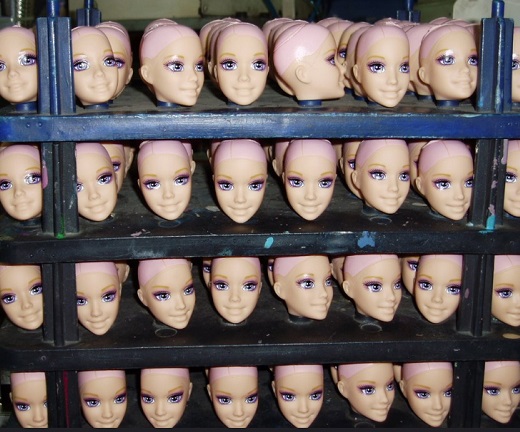
Petroleum-based polymers are part of Barbie’s DNA.
Acrylonitrile-Butadiene-Styrene (ABS) is known for strength and flexibility. This thermoplastic polymer is used in Barbie’s torso to provide impact and heat resistance. EVA (Ethylene-Vinyl Acetate), a copolymer made up of ethylene and vinyl acetate, protects Barbie’s smooth surface.
The Mattel doll also includes Polybutylene Terephthalate (PBT), a thermoplastic polymer often used as an electrical insulator. A mineral component facilitates PBT injection molding of her “full figure,” according to the company. Barbie’s hair and many of her designer outfits are made from the world’s first synthetic fiber, nylon, invented in 1935 (see Nylon, a Petroleum Polymer).
March 11, 1829 – Kentucky Salt Well Driller discovers Oil
Boring for brine with a simple spring-pole method on a farm near Burksville (today Burkesville), Kentucky, Martin Beatty found oil at a depth of 171 feet. Disappointed, he searched elsewhere. Beatty drilled brine wells to meet demand from settlers needing salt to preserve food. He bored wells by raising and dropping a chisel suspended from a sapling, an ancient drilling technology.
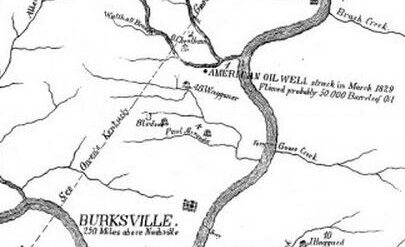
The 1829 “American Oil Well” of Burksville, Kentucky, drilled to find brine, produced oil later bottled and sold as medicine.
Historian Sheldon Baugh described the scene of Beatty’s 1829 oil discovery: “On that day, well-driller Beatty bragged to bystanders, ‘Today I’ll drill her into salt or else to Hell.’ When the gusher erupted, he apparently thought he’d succeeded in hitting Hell. As the story goes, he ran off into the hills and didn’t come back.”
Beatty’s discovery would be neglected for years until the oil from his well was sent to Pittsburgh, where Samuel Kier bottled and sold it as medicine. Kier would soon build the earliest refineries for turning oil into kerosene for lamps.
Learn more in Kentucky’s Great American Oil Well.
March 11, 1930 – Society of Exploration Geophysicists founded
The Society of Exploration Geophysicists (SEG) was founded by 30 men and women in Houston as the Society of Economic Geophysicists to foster “the expert and ethical practice of geophysics in the exploration and development of natural resources.”

The society began publishing its journal Geophysics in 1936 and in 1958 formed a scholarship trust for students of geophysics. In 2021, SEG and the American Association of Petroleum Geologists (AAPG) combined their annual meetings to create IMAGE, the International Meeting for Applied Geoscience & Energy. IMAGE 2025 in Houston included 7,897 attendees from 83 countries. IMAGE 2026 will take place there August 17-20.

March 12, 1912 – Thomas Slick discovers First of Many Oilfields
Once known as “Dry Hole Slick,” Thomas B. Slick discovered a giant oilfield midway between Oklahoma City and Tulsa. His No. 1 Wheeler uncovered the Drumright-Cushing field, which produced for the next 35 years and reached 330,000 barrels of oil per day at its peak.
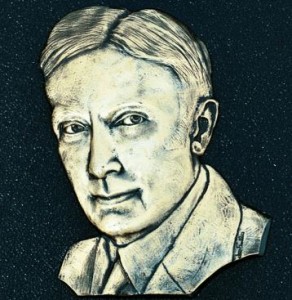
Tom Slick is among those honored at the Conoco Oil Pioneers Plaza at the Sam Noble Museum, University of Oklahoma in Norman.
Following Cushing, Slick began an 18-year streak of discovering oilfields in Oklahoma, Kansas, and Texas. His success during the Greater Seminole Oil Boom of the 1920s made him the leading U.S. independent producer with a net worth of up to $100 million.
By 1930 in the Oklahoma City field, Slick completed 30 wells with the capacity to produce 200,000 barrels of oil a day. When he died suddenly the same year from a stroke at age 46, oil derricks in the Oklahoma City field stood silent for one hour in tribute to Slick.
Learn more in Oklahoma’s King of the Wildcatters.
March 12, 1914 – Last Coal-Powered U.S. Battleship Commissioned
The USS Texas, the last and most powerful American battleship built with coal-fired boilers, was commissioned. Coal-burning boilers, which produced dense smoke and created tons of ash, required the Navy to maintain worldwide coaling stations. Coaling the ship was a major undertaking; battleships carried about 2,000 tons with a crew of “coal passers.”
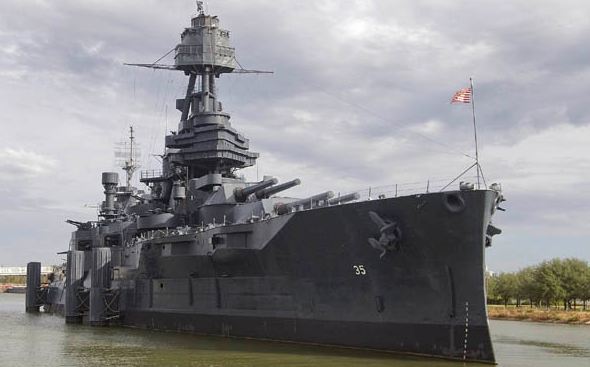
The USS Texas’ coal-powered boilers were converted to burn fuel oil in 1925. A grand reopening of the floating museum is hoped for in 2027. Photo courtesy Battleship Texas Foundation.
Dramatic improvement in efficiency came when the Navy began adopting fuel oil boilers. By 1916, the Navy had commissioned its first two capital ships with oil-fired boilers, the USS Nevada and the USS Oklahoma. To resupply them, “oilers” were designed to transfer fuel while at anchor, although underway replenishment soon became possible.
Converted to burn fuel oil in 1925, the “Big T” was the first battleship declared to be a U.S. National Historic Landmark (see Petroleum and Sea Power). On March 4, 2025, the Galveston Wharves Board approved making Pier 15 a permanent docking berth for the USS Texas. The Battleship Texas Foundation expects a grand reopening of the floating museum in 2027.

March 12, 1943 – WWII Roughnecks of Sherwood Forest
A top-secret team of 42 American drillers, derrickhands, roustabouts, and motormen boarded the troopship HMS Queen Elizabeth. They were volunteers from two Oklahoma companies, Noble Drilling and Fain-Porter Drilling. Their mission was to drill wells in England’s Sherwood Forest and help relieve the crisis caused by submarines sinking Allied oil tankers.
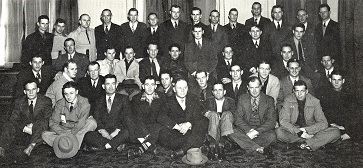
Volunteer roughnecks from two Oklahoma drilling companies embarked for England in March 1943. Derrickhand Herman Douthit would not return.
Four rotary drilling rigs were shipped on separate transport ships — with one sunk by a U-boat. The American roughnecks increased the British drilling rate to an average of one well per week, adding vital oil to the war effort. Learn more in Roughnecks of Sherwood Forest.
March 12, 1968 – Alaska’s Prudhoe Bay Oilfield Discovered
Two hundred and fifty miles north of the Arctic Circle, Alaska’s Prudhoe Bay oilfield was discovered by Richfield Oil (ARCO) and Humble Oil Company (Exxon). The Prudhoe Bay State No. 1 exploratory well arrived more than six decades after the first Alaska oil well. It followed Richfield Oil’s discovery of the Swanson River oilfield on the Kenai Peninsula in 1957.
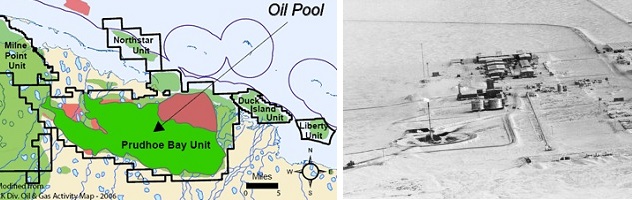
Beginning in 1979 and continuing until early 1989, the Prudhoe Bay field’s maximum production rate reached 1.5 million barrels of oil a day. Map courtesy Alaska Oil and Gas Conservation Commission. Circa 1969 wellsite courtesy Atlantic Richfield Company.
At more than 213,000 acres, the Prudhoe Bay field was the largest oilfield in North America, surpassing the 140,000-acre East Texas oilfield discovery of 1930. Prudhoe Bay’s remote location prevented oil production beginning in earnest until 1977, after completion of the 800-mile Trans-Alaska Pipeline.
Prudhoe Bay field’s production exceeded an average rate of one million barrels of oil a day by March 1978, according to the Alaska Oil and Gas Conservation Commission. It peaked in January 1987 at more than 1.6 million barrels of oil per day.
March 13, 1974 – OPEC ends Oil Embargo
A five-month oil embargo against the United States was lifted by Arab members of the Organization of Petroleum Exporting Countries (OPEC), a cartel formed in 1960. The embargo, imposed in response to America supplying the Israeli military during the October 1973 Yom Kippur War, created gasoline shortages, prompting President Richard M. Nixon to propose voluntary rationing and a ban of gas sales on Sundays. OPEC ended the embargo after Secretary of State Henry Kissinger negotiated an Israeli troop withdrawal from parts of the Sinai.
March 14, 1910 – Lakeview No. 1 Well erupts in California
The Union Oil Company Lakeview No. 1 well erupted a geyser of oil at dawn in Kern County, California (some sources give the date as March 15). With limited technologies for managing the deep, highly pressured formation of the Midway-Sunset field, drillers had experienced several accidental oil spills, including the Shamrock gusher in 1896 and the 1909 Midway gusher.
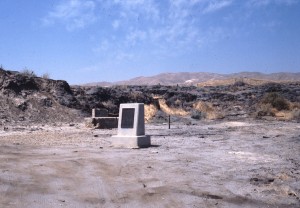
A marker and remnants of a sand berm north of Maricopa, California, mark the site of a 1910 Union Oil gusher that flowed uncontrolled for 18 months. Photo courtesy San Joaquin Valley Geology.
“But none of these wells came close to rivaling the Lakeview No. 1, which flowed, uncapped and untamed, at 18,000 barrels a day for 18 months,” noted a San Joaquin Valley geologist. Surrounded by berms and sandbags to contain the oil, the well collapsed and died in September 1911, after producing 9.4 million barrels of oil (about half was contained and sold).
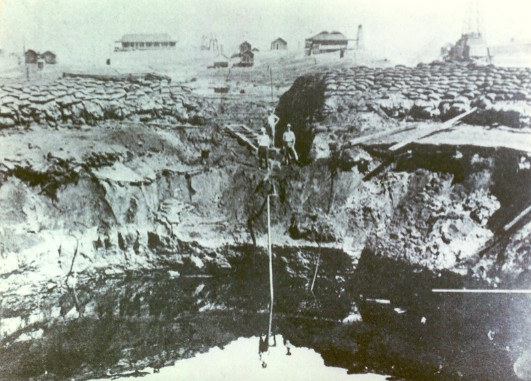
Oil erupted in California’s Midway-Sunset oilfield on March 14, 1910. Contained by sandbags by October, the Lakeview No. 1 well produced 9.4 million barrels during the 544 days it flowed. Photo courtesy San Joaquin Valley Geology.
The environmental impact of the Lakeview well, still the largest oil spill in U.S. history, was less destructive due to evaporation and levees of sandbags that prevented contamination of Buena Vista Lake.
Kern County erected a historic marker in 1952 at the site, today about seven miles from the West Kern Oil Museum. The ram-type blowout preventer to seal well pressure was invented in Lufkin, Texas, in 1922.
March 15, 1946 – Texas Independents produce TIPRO
With oilfield discoveries resulting in overproduction, declining prices, oilfield thefts, and policy disagreements with the major oil companies, Texas independent producers formed an association to lobby federal and state lawmakers. The Texas Independent Producers and Royalty Owners Association (TIPRO) was established “to preserve the ability to explore and produce oil and natural gas and to promote the general welfare of its members.”
_______________________
Recommended Reading: Plastic: The Making of a Synthetic Century Hardcover


_______________________
The American Oil & Gas Historical Society (AOGHS) preserves U.S. petroleum history. Please support this energy education website, our monthly email newsletter, This Week in Oil and Gas History News, and help expand historical research. Contact bawells@aoghs.org. Copyright © 2026 Bruce A. Wells. All rights reserved.