Your source for energy education. Petroleum history offers a context

for teaching the modern business of meeting America's energy needs.

Oil and Natural Gas History, Education Resources, Museum News, Exhibits and Events


The petroleum industry supplies America with an amazing variety of products that are often “hiding in plain sight.” For Binney & Smith Company, common oilfield paraffin changed the company’s destiny by coloring children’s imaginations.

Dustless chalk circa 1904.

Although they longed for color, students in Alice Stead Binney’s classroom had to settle for dustless chalk. An-Du-Septic dustless chalk was so popular among turn-of-the-century teachers that it won a Gold Medal at the 1904 World’s Fair in St. Louis.

Teachers like Alice loved the tidy new product, but their choices were limited. Pencils of the day were primitive, with square “leads” made from a variety of clays, slates, and graphite.

Color writing implements were the toxic and expensive imports of artists, best kept away from schoolchildren.

Alice’s husband Edwin, and his cousin, C. Harold Smith, created the award-winning An-Du-Septic chalk as a consequence of expanding their pigment business into the sideline production of slate pencils for schools. Read the rest of this entry »

Outside the Page Museum of Los Angeles, life-size replicas of several extinct mammals are featured at the Rancho La Brea in Hancock Park. Although commonly called the “tar pits,” the pools are actually comprised of asphalt.

The La Brea “tar pits,” discovered on August 3, 1769, by Spanish explorer Gaspar de Portola, exemplify the many natural petroleum seeps of southern California.

“We proceeded for three hours on a good road; to the right were extensive swamps of bitumen which is called chapapote,” Franciscan friar Juan Crespi noted in a diary of the expedition. “We debated whether this substance, which flows melted from underneath the earth, could occasion so many earthquakes.” Read the rest of this entry »


As the Indiana natural gas boom continued, communities took great pride in what they thought to be an unlimited supply of natural gas. They erected arches of perforated iron pipe and let them burn day and night for months. Indiana lawmakers banned these wasteful “flambeaux” lights in 1891 – becoming one of the earliest states to legislate conservation.

The late 1880s discoveries of natural gas in Eaton and Portland ignited Indiana’s historic gas boom, which would dramatically change the state’s economy.

The “Trenton Field” as it would become known, spread over 17 Indiana counties and 5,120 square miles. It was the largest natural gas field known in the world. Within three years, more than 200 companies were drilling, distributing, and selling natural gas.

In 1859, the same year that “Colonel” Edwin L. Drake drilled the country’s first commercial oil well in Titusville, Pennsylvania, there were already 297 “manufactured gas” (known as coal gas) companies in the 33 United States. Read the rest of this entry »


There are more than 120,000 vehicles on U.S. roads powered by natural gas. Experts say engine design advances promise greater natural gas use for transportation. Historic pursuit of the world land speed record is the heritage of this “fuel of the future.”

The 38-foot Blue Flame’s natural gas-powered rocket motor could produce up to 58,000 horsepower.

Throughout the 20th century, land speed records were set with vehicles powered by steam, electricity, and all manner of petroleum distillates. National pride was often at stake as British, American, French, Belgian, German, and Italian teams fielded competing machines.

The first record was set by a Frenchman in 1898. Count Gaston De Chasseloup-Laubat, driving an electric powered car, achieved 39.24 mph.

Powered by natural gas, the Blue Flame makes a spectacular debut at the Bonneville Salt Flats in Utah. On October 23, 1970, the rocket-car sets a new world land speed record of 630.388 mph.

Jet Engines rule World Speed Record

Natural gas industry funding will provide Dick Keller and his team of engineers vital access to research facilities, including a supersonic wind tunnel.

After decades of more traditional internal combustion fueled records, mainly by the British, by the 1960s, American innovation – at Utah’s famed Bonneville’s Salt Flats – took mankind’s need for speed to a new level. Jet engines began pushing the land record to previously unthinkable levels. Read the rest of this entry »


March 4, 1918 – West Virginia Well sets World Depth Record

On the Martha Goff farm in Harrison County, West Virginia, the Hope Natural Gas Company drills to 7,386 feet and brings the world’s deepest well record to America.

Until then, the deepest well had been drilled to 7,345 feet near Czuehon, Germany.

A March 1974 well set a world record while drilling in Oklahoma’s Anadarko Basin, about 12 miles west of Cordell. The Bertha Rogers No. 1 drilled almost six miles into Oklahoma’s Anadarko Basin before the drill bit stuck.

Today, rotary rigs in the Gulf of Mexico reach up to 35,000 feet deep. A 1970s experimental well on Russia’s Kola Peninsula during the Soviet era exceeded 40,000 feet – after ten years of drilling. Visit the Oil and Gas Museum in Parkersburg, West Virginia. Read the rest of this entry »


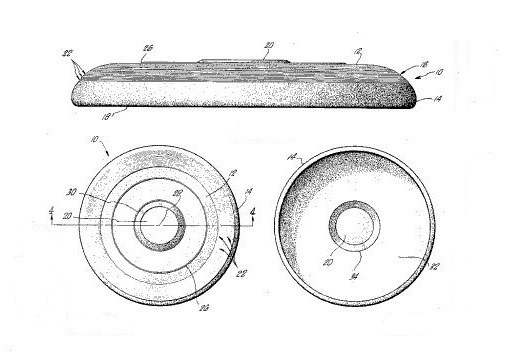
To make Hula Hoops and Frisbees, Arthur Melin, right, and his Wham-O Company partner Richard Kerr, left, chose Marlex – the world’s first high-density polyethylene plastic invented by two chemists at Phillips Petroleum Company.

In the 1950s, few companies knew what to do with a revolutionary plastic invented by Phillips Petroleum. Demand for “Marlex” would come from unexpected source – the Hula Hoop – “the great obsession of 1958 – the undisputed granddaddy of American fads.”

Prompted by a post World War II boom in demand for plastics, Phillips Petroleum invested $50 million to bring its own miracle product – Marlex – to market in 1954.

The company gambled that the new plastic would be perfect for all manner of emerging products trying to keep up with consumer demand.

With millions of dollars already committed, investors expected immediate results from the Phillips lab product.

Marlex is a first in plastics.

Marlex, a high-density polyethylene, was developed by Phillips chemists Paul Hogan and Robert Banks – who were researching gasoline additives. In their experiments, Hogan and Banks began to study catalysts.

“In June 1951, they set up an experiment in which they modified their original catalyst (nickel oxide) to include small amounts of chromium oxide,” notes the American Chemical Society. Their work was expected to produce low-molecular-weight hydrocarbons.

“As Paul Hogan recalls it, he was standing outside the laboratory when Banks came out saying, ‘Hey, we’ve got something new coming in our kettle that we’ve never seen before.’ Running inside, they saw that the nickel oxide had produced the expected liquids. But the chromium had produced a white, solid material. Hogan and Banks were looking at a new polymer – crystalline polypropylene.”

“Extruded tubing is desirable because it may be economically fabricated in continuous lengths,” Arthus Melin notes in his patent application, describing a hoop weighing no more than 10 ounces with an outside diameter of 31 to 37 inches. “The use of plastic gives both economy and strength.”

Only a few years later when Phillips introduced high-density polyethylene in 1954, under the brand name Marlex, “company marketing executives were wildly optimistic, expecting that the product would be a big hit and that the Phillips would not be able to keep it on the shelves.”

But the transition from laboratory to mass production was far more difficult than executives had anticipated. When customers failed to materialize, the dingy, inconsistently sized, off-specification pellets accumulated.

Phillips found itself with no buyers and warehouses full of Marlex. As the Bartlesville company stored its unwanted Marlex and searched for new customers, relief came from an unexpected source.

Phenomenal Toy Craze brings Sales Read the rest of this entry »


Du Pont models at the 1939 New York World’s Fair play tug-of-war with a nylon stocking to dramatize its strength.

Du Pont Corporation foresees the future artificial fibers “strong as steel.” The chemical company becomes a global giant as its scientist create consumer products out of nylon, rayon and lucite.

The world’s first synthetic fiber – nylon – is discovered on February 28, 1935, by a former Harvard professor working at a DuPont Corporation research laboratory. Later called Nylon 6 by scientists, the revolutionary product comes from chemicals found in petroleum.

Professor Wallace Carothers had experimented with artificial materials for more than six years. He previously discovered neoprene rubber (commonly used in wetsuits) and made major contributions to understanding polymers – large molecules composed in long chains of repeating chemical structures.

DuPont names the new petroleum product nylon – although chemists call it Nylon 6 because the adipic acid and hexamethylene diamine each contain 6 carbon atoms per molecule. Durable petroleum-based polymer products are in common use throughout the world.

Just 32-years-old, Carothers creates fibers when he combines the chemicals amine, hexamethylene diamine, and adipic acid.

He forms a polymer chain using a process in which individual molecules join together with water as a byproduct.

However, the fibers are weak, explains a PBS series, A Science Odyssey: People and Discoveries.

“Carothers’ breakthrough came when he realized the water produced by the reaction was dropping back into the mixture and getting in the way of more polymers forming,” notes the PBS website. “He adjusted his equipment so that the water was distilled and removed from the system. It worked!” Read the rest of this entry »


His 1939 “Oil Fields of Graham” today remains on display in its original Texas oil patch community’s historic U.S. Postal Service building – now a museum.

Born in Memphis, Missouri, on February 22, 1898, Alexandre Hogue will become known for his paintings of southwestern scenes during the Great Depression – including murals of the 1930s petroleum industry. Read the rest of this entry »


The U.S.S. Texas, commissioned in 1914, was the last American battleship built with coal-fired boilers. By 1927, it had been converted to burn fuel oil – with a dramatic improvement in efficiency. The revolutionary change from coal to oil-fired boilers at sea is another chapter in the story of petroleum.

When the industrial revolution ended the “age of sail,” coal that fired the boilers of steam-powered ships became a strategic resource. Worldwide “coaling stations” were essential at a time when oil was little more than a crude lubricant or patent medicine.

Commissioned on March 12, 1914, with coal-powered boilers that were converted to use fuel oil in 1925, the U.S.S. Texas “was the most powerful weapon in the world, the most complex product of an industrial nation just beginning to become a force in global events,” says an historian at Battleship Texas State Historic Site.

In 1866, Congress appropriated $5,000 to evaluate petroleum as a potential replacement for coal to fire the Navy’s boilers. The “experts” decided to stay with coal. Read the rest of this entry »


Theodore Seuss Geisel devoted his early career to creating advertising campaigns for Standard Oil – where for more than 15 years he developed the skills that would redefine children’s literature. This Standard Oil Company “Essolube” oil charge card was issued between 1930 and 1940.

The Dr. Seuss Collection of the Mandeville Special Collections Library at the University of California, San Diego notes that the future Dr. Seuss, “hawked such diverse goods as ball bearings, radio promotional spots, beer, and sugar.” The library preserves examples of his Standard Oil artwork, including this 1932 gasoline advertisement.

Ted Geisel’s unique critters populated Standard Oil advertisements for “Flit,” once a popular bug spray.

About 30 years before the Grinch stole Christmas, Dr. Seuss’ strange but wonderful critters worked for Standard Oil of New Jersey.

In the January 14, 1928, issue of New York City’s Judge magazine, Theodore Seuss Geisel first introduced America to one of the many characters inhabiting his imaginative menagerie.

Dr. Seuss later said his experience working at Standard Oil “taught me conciseness and how to marry pictures with words.”

In the cartoon that launched his career, Geisel drew a peculiar dragon inside a castle.  “Flit,” was a popular bug spray of the day – especially against flies and mosquitoes. It was one of Standard Oil Company’s many consumer products derived from petroleum.

Late in 1927, Standard Oil’s growing advertising department, which had focused on sales of Standard and Esso gasolines, lubricating oil, fuel oil and asphalt, reorganized to promote other products, according to author Alfred Chandler Jr.

“Specialities, such as Nujol, Flit, Mistol, and other petroleum by-products that could not be effectively sold through the department’s sales organization, were combined in a separate subsidiary – Stanco,” noted Chandler in his 1962 book, Strategy and Structure: Chapters in the History of the American Industrial Enterprise.

“Quick, Henry, the Flit!”

Geisel’s fortuitous bug-spray cartoon depicted a medieval knight in his bed, facing a dragon who had invaded his room, and lamenting, “Darn it all, another dragon. And just after I’d sprayed the whole castle with Flit.”

According to the curators of the Dr. Seuss Collection at the University of California, San Diego, an anecdote in Judith and Neil Morgan’s 1995 book Dr. Seuss and Mr. Geisel, the wife of the ad executive who handled the Standard Oil account saw the dragon cartoon. Read the rest of this entry »


A handful of America’s earliest oilmen met in Titusville, Pennsylvania, and agreed that henceforth, 42 gallons would constitute a “barrel” of oil. It was August 1866 and Pennsylvania led the world in oil production. Read the rest of this entry »


It was a foggy Tuesday morning, August 16, 1927, as eight airplanes prepared for takeoff before a crowd of more than 50,000 at the Oakland Airport in California. Aviation history was about to be made with a race to Honolulu – thanks to a revolutionary petroleum product: Phillips Nu-Aviation Gasoline.

Four days after Charles Lindbergh’s famous transatlantic flight in May of 1927, James Dole of the Dole Pineapple Company offered a $25,000 first prize for an air race of its own – across the Pacific from Oakland to Honolulu, Hawaii.

Phillips Petroleum Co. vice presidents L.E. Phillips and Clyde Alexander, pilot Arthur Goebel Jr., and legendary oilman Frank Phillips with the 1927 racing airplane – Woolaroc.

Arthur Goebel Jr., a veteran barnstormer and Hollywood stunt pilot joined seven other aircraft in the race, which took place just three months after Lindbergh’s historic flight. Goebel found a sponsor and friend in Frank Phillips, president of Phillips Petroleum Company, Bartlesville, Oklahoma.

Phillips Petroleum – now ConocoPhillips – was involved early in aviation fuel research and had already provided high gravity gasoline for some of the first mail-carrying airplanes after World War I. But in 1927, aviation fuel technology was still in its infancy.

Phillips loaned Goebel $4,500 needed to take delivery of a Travel Air 5000 monoplane. Goebel promised to use a new aviation fuel developed by Phillips Petroleum for the planned 2,439-mile flight over the Pacific. They named the airplane “Woolaroc,” the name of Frank Phillips’ ranch near Bartlesville. Read the rest of this entry »


“Sometimes, when researching history, you find places where it’s still alive. My search for the Tin Man’s mythic oil-can led me to such a spot. L. Frank Baum sold cans of buggy wheel oil for a living as the co-owner of Baum’s Castorine Company of Syracuse, New York.” -  Oz historian Evan L. Schwartz.

The future world-famous author of the children’s novel The Wonderful Wizard of Oz once sold petroleum products in Syracuse, New York. In 1883, L. Frank Baum and his brother Benjamin launched a small business offering lubricants, oils, greases – and “Baum’s Castorine, the great axle oil.”

L. Frank Baum — whose father found great success in Pennsylvania oilfields — would serve as chief salesman for Baum’s Castorine Company, which he founded with his brother on July 9, 1883, but sold only a few years later. The petroleum products company today operates in Rome, New York.

Reporting on the July 9, 1883, opening, the Syracuse Daily Courier newspaper noted that Baum’s Castorine was a rust-resistant axle grease concoction for machinery, buggies, and wagons. The grease was advertised to be “so smooth it makes the horses laugh.” Read the rest of this entry »


New York chemist Robert Chesebrough will find a way to purify the waxy paraffin-like substance that clogged oil wells in early Pennsylvania petroleum fields.

Few associate 1860s oil wells with women’s smiling faces, but they are fashionably related.

This is the story of how the goop that accumulates around an oil well’s sucker-rod first made its way to the eyelashes of American women.

In 1865, a 22-year-old chemist left the prolific oil fields of Titusville, Pennsylvania, to return to his Brooklyn laboratory and experiment with a waxy substance that clogged well-heads.

Cosmetic industry giant Maybeline can traces its roots to a patent for purifying petroleum.

Within a few years Robert Augustus Chesebrough would patent a method that turned the paraffin-like goop into a balm he called “petroleum jelly.”

In 1872, he patented his new product as “Vaseline.”

Even before America’s first oil well was drilled in Pennsylvania, Chesebrough was in the “coal oil” business in Brooklyn, New York. His expertise was in the reduction of cannel coal into kerosene – a much in demand illuminant.

Chesebrough knew of the process for refining oil into kerosene, so when Edwin L. Drake’s August 27, 1859, discovery launched the American petroleum industry, he was one of many who rushed to the Titusville oil fields to make his fortune.

Scientific American reported, “Now commenced a scene of excitement beyond description. The Drake Well was immediately thronged with visitors arriving from the surrounding country, and within two or three weeks thousands began to pour in from the neighboring States.” Read the rest of this entry »


February 20, 1959 – First LNG Tanker arrives in England

After a three-week voyage, the Methane Pioneer – the world’s first liquefied natural gas tanker – arrives at the world’s first LNG terminal at Canvey Island, England, from Lake Charles, Louisiana.

The world’s first liquefied natural gas tanker is a converted World War II liberty freighter.

The vessel, a converted World War II liberty freighter, contains five, 7,000-barrel aluminum tanks supported by balsa wood and insulated with plywood and urethane, according to the Center for Energy Economics (CEE).

“This event demonstrated that large quantities of liquefied natural gas could be transported safely across the ocean,” notes CEE, a research arm of the Bureau of Economic Geology at the University of Texas.

The 340-foot Methane Pioneer, owned by the Comstock Liquid Methane Corporation, refrigerates its cargo to minus 285 degrees Fahrenheit. When vaporized, the LNG expands by the ratio of 600 to one.

“German engineer Karl Von Linde built the first practical compressor refrigeration machine in Munich in 1873,” CEE explains. “The first LNG plant was built in West Virginia in 1912 and began operation in 1917. The first commercial liquefaction plant was built in Cleveland, Ohio, in 1941.” Read the rest of this entry »