Oil and gas history, energy education, and museum exhibits
Updated May 7, 2025
The American Oil & Gas Historical Society (AOGHS) maintains website links and an updated list of U.S. petroleum museums by state. Museums and AOGHS members are encouraged to submit information and news about any oil history events. Have petroleum history news, updates, special gatherings or an exhibit opening? Contact bawells@aoghs.org with details to submit for posting!
Preserving Route 66 — and Parker Rig No. 114
Oklahoma will be at the center of the 2026 centennial festivities for Route 66, according to the Oklahoma Department of Commerce, which on May 2 announced the latest recipients of the Route 66 Revitalization Grant Program. With its 180-foot Parker Rig No. 114 on display next to the historic highway, Elk City was among those chosen by the Oklahoma Route 66 Commission.
“The Elk City Chamber of Commerce has been awarded more than $200,000 through the Route 66 Revitalization Grant Program, aimed at preserving and enhancing one of Elk City’s most recognizable landmarks — Parker Drilling Rig 114,” noted KECO Radio.
The rig — still one of the tallest in the world — has welcomed visitors to Elk City since 1991 (see Anadarko Basin in Depth). Planned improvements include new lighting, painting, and equipment restoration, landscaping, and “digital signage with historical and educational content.”
Route 66 was officially commissioned on November 11, 1926, and Congress established the commission to honor the historical highway with the Route 66 Centennial Commission Act, signed into law on December 23, 2020.
Museum News Update
Phillips Petroleum Company Museum — “Phillips 66 to shut down company museum after 17 years in Bartlesville,” reported the Oklahoma town’s newspaper on March 4, 2025. Opened during the statehood centennial in 2007, the oil museum is closing this April, according to the Bartlesville Herald-Examiner, which also noted that Phillips 66 will make a $5 million donation to the Woolaroc Museum & Wildlife Preserve, where some artifacts will be moved. In Ponca City, the Conoco Museum is open by appointment only.
West Kern Oil Museum — The Taft, California, museum and Chevron are preparing a digitization experience in partnership with the Taft High Heritage Club and Taft Oil Technology, according to the museum’s Arianna Mace. The project “aims to digitize the museum’s extensive collection and create an immersive augmented reality that extends into downtown Taft.”
Pioneer Oil Museum of New York — The museum in southwestern New York has made great progress preserving historic oilfield equipment while expanding exhibit space in the former home of the Hahn & Schaffner Oil Pipe Supply Company, which began operating in Bolivar in 1921.
Oil Region Alliance — The 1870 Titusville, Pennsylvania, home of famed journalist Ida Tarbell will host “Tarbell Teas” on March 28 and May 10 — featuring Titusville High School reenactors, “portraying oil history era figures,” according to the Titusville News-Journal.
Oil Exhibit at Hermosa Beach, California
An exhibit at the Hermosa Beach Museum examines the California community’s long and often controversial relationship with petroleum exploration and production. Open from January 31 to March 31, 2025, “The Drill’s Path: A Timeline of Oil Drilling in Hermosa Beach” traces the history of oil in Hermosa and the South Bay from the turn of the century to the present, according to the Hermosa Beach Historical Society.
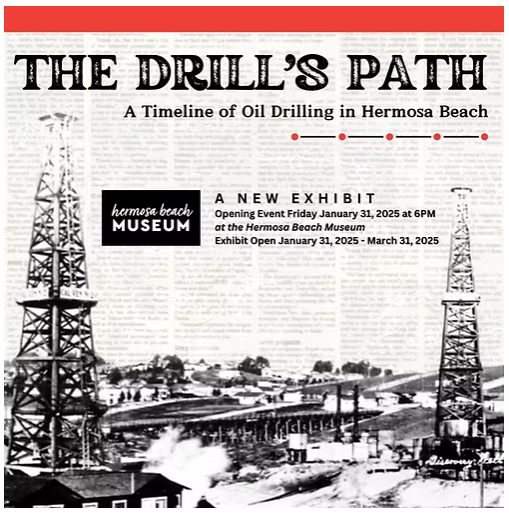
The Hermosa Beach Museum is operated by the Hermosa Beach Historical Society In Los Angeles County, California.
“From debates over the first ban on oil drilling in 1932 to the Measure ‘O’ vote in 2015, grassroots community organization, strong personalities, and backdoor dealings have driven decisions around oil in Hermosa,” noted the Los Angeles County museum at 710 Pier Avenue.
2025 PHI Symposium set for Permian Basin
The 23rd annual Petroleum History Institute Oil (PHI) History Symposium & Field Trip will take place in the historic Permian Basin, March 30 to April 1, 2025, according to PHI Vice President and Symposium Co-Chair Jeff Spencer. Registration and the opening reception occur at the Odessa Marriott Hotel & Conference Center at 305 E. 5th Street, (432) 580-5805. Group rates are available.
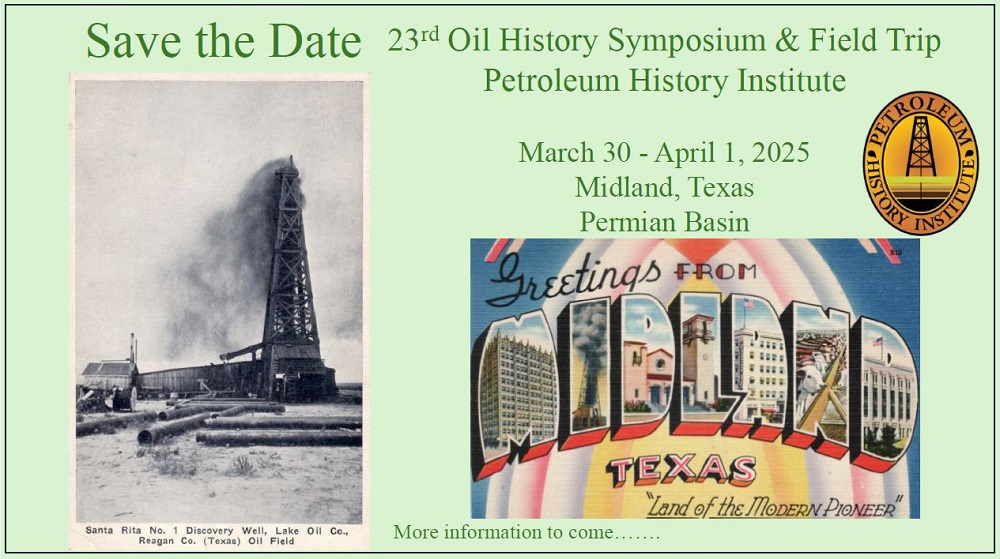
Presentations — both oral and poster — are set for Monday, March 31, at Midland’s Petroleum Museum, 1500 I-20, which opened in 1975. The deadline for submitting abstracts is February 15; they are being accepted by Dr. William Brice, wbrice@pitt.edu., or Spencer, spencerj320@gmail.com, (281) 731-5823.
For more symposium details, including a registration form, visit the PHI website. Proceedings of the 2025 symposium will be featured in the Institute’s annual Oil-Industry History.
California History Collection
The Stanford University Libraries, the California Historical Society, and the Bill Lane Center for the American West announced on January 28, 2025, that Stanford would assume stewardship of more than 600,000 items spanning the history of the West since the 18th century.
Energy Education Awards
The National Energy Education Development (NEED) Project since 1980 has hosted a Youth Energy Conference & Awards. Participating schools are invited to submit a digital portfolio of their energy activities. Participating schools can submit their work each year by April. “NEED is honored to recognize amazing students, teachers, and program leaders for their great work in energy education and community outreach each year,” notes the Project. “Winning projects reflect energy knowledge gains, energy outreach, community involvement, and student leadership.”
The Oklahoma Historical Society (OHS) on March 20. 2025, will honor inductees to the Oklahoma Historians Hall of Fame during its annual awards banquet at the Oklahoma History Center in Oklahoma City.
Petroleum History Papers
The annual Oil History Symposium & Field Trip of the Petroleum History Institute will take place March 30 to April 1, 2025, in Midland and Odessa, Texas. Abstracts for PHI’s Oil-Industry History are due February 15. Another peer-reviewed publication, the Oilfield Journal of the Friends of Drake Well, is accepting submissions for its Winter 2025 issue.
The Kern County Historical Society, Bakersfield, California, will feature details from Wyatt Earp’s California Oil Wells in the next issue of the quarterly publication Historic Kern.
Petroleum Museum 50th Anniversary
The Permian Basin Petroleum Museum has begun a year-long celebration of its 50th anniversary with festivities planned for September 18, and rotating quarterly exhibits about the history of the Midland-based museum where President Gerald R. Ford spoke at the 1975 opening ceremony.
West Virginia Oilfield Engine
The West Virginia Oil and Gas Museum has donated a South Penn one-cylinder, half breed oilfield engine for a new outdoor exhibit at the Capitol in Charleston, according to the Parkersburg News and Sentinel. The term has been commonly used for steam engines modified to run on natural gas.
Call for Papers, 2025 OilField Journal
The Friends of Drake Well, Inc., is accepting article submissions for its scholarly publication the OilField Journal to be published by winter 2025. The nonprofit, community-based organization supports the Drake Well Museum and Park in Titusville, Pennsylvania. The peer-reviewed Oilfield Journal has been published since 2001.
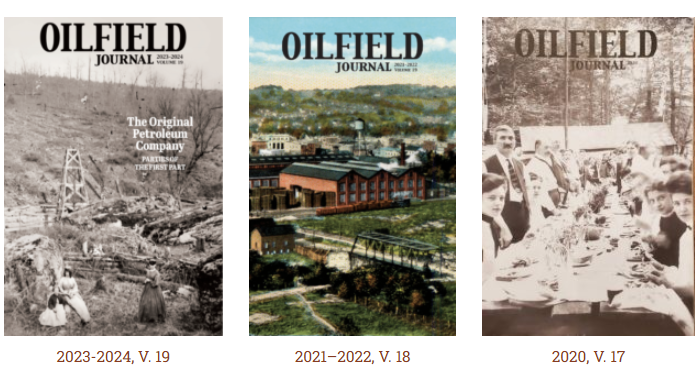
Administered by the Pennsylvania Historical and Museum Commission (PHMC), Titusville’s oil museum “uncovers, preserves, and shares Pennsylvania’s rich petroleum history, connecting past to present through a diversity of perspectives and inspiring our global audience to strive for a sustainable energy future.”
For more information, contact Friends of Drake Well, Inc., Executive Director Emily Weaver, 205 Museum Lane, Titusville, PA 16354, (814) 827-2797, mail: c-emilywea@pa.gov.
2025 East Texas History Summit
The East Texas Oil Museum is looking for submissions for its second annual East Texas History Summit, to be held January 25, 2025, in the Anne Dean Turk Fine Arts Center at Kilgore College. “As stewards of our heritage, we are eager to bring together experts, scholars, and individuals passionate about history,” noted Museum Services Director Olivia Moore.
“The summit aims to delve into the multifaceted aspects of the past, covering topics ranging from the oil boom to cultural to societal transformations and beyond,” Moore added in the museum’s call for submissions, which are due no later than August 30, 2024. “We seek knowledgeable and enthusiastic individuals willing to share their expertise and insights as speakers at this event.”

The East Texas Oil Museum at Kilgore College “Reel Oil” exhibit will be open from July to December. Image courtesy Kilgore College.
On July 2, the oil museum at Kilgore College opened its latest exhibit, “Reel Oil: Hollywood’s Oil Boom of the 1940s and 1950s,” which allows visitors “to dive into the golden age of cinema and explore the fascinating world of oil as portrayed in classic films.”
Mr. Charlie designated National Historic Landmark
Secretary of the Interior Deb Haaland on December 13, 2024, designated Mr. Charlie, the first mobile offshore platform, as a National Historic Landmark, according to Virgil Allen, longtime manager of Mr. Charlie, today the International Petroleum Museum and Exposition in Morgan City.
“Mr. Charlie is now the fifty-fourth National Historic Landmark in Louisiana, the first in St. Mary Parish, and the first in the country representing the offshore oil and gas industry,” Allen noted in an email to the American Oil & Gas Historical Society, which supported his effort beginning with a 2021 letter to the National Landmarks Preservation Program Committee. Launched in 1954 as the world’s first mobile offshore drilling unit (MODU), Mr. Charlie drilled its last well in 1986.
Oil Festival celebrates 1929 Discovery
The Annual Van Oil Festival will take place October 19, 2024, 9 a.m. to 2 p.m., 60 miles east of Dallas. Events in Van City Park will include special entertainment, vendors, games, face painting, and more. The Van Oil Pageant Rehearsal and Pageant with photo sessions are scheduled for October 11 at the Van ISD Auditorium, according to the Van Chamber of Commerce, established in 1929 when an oilfield discovery by Pure Oil Company launched a drilling boom in Van Zandt County.
Gateways to Oklahoma History
The Gateway to Oklahoma History is a free online repository of Oklahoma history by the Oklahoma Historical Society. Visitors can search and view historic newspapers, photographs, maps, and documents. The Oklahoma City-based OHS also maintains the Encyclopedia of Oklahoma History and Culture, launched in 2007 during celebrations of the state’s statehood centennial. The encyclopedia has become an online portal with more than 2,600 entries.
Earth Science Week happening October 13-19, 2024
The American Geosciences Institute (AGI) has announced that the theme of Earth Science Week 2024 will be “Earth Science Everywhere.” The annual event will take place October 13-19, and “explore the many ways that earth science is conducted — by various types of people and professions in interconnected disciplines — to help solve problems for communities and the planet.”
More information about 2024 events has been posted, according to AGI’s director of education and outreach, Ed Robeck (ecrobeck@americangeosciences.org), who can be contacted if your organization would like to become a sponsor or provide educational materials for the Earth Science Week 2024 Toolkit.
Ranger College unveils Traveling Exhibit
The Golemon Library and Ranger College in Ranger, Texas, on June 19, 2024, unveiled a traveling exhibit, “Black Gold: A History of Texas Oil Boom Towns,” that will travel to Eastland County schools and be made available to other schools, special events, and museums — just for the cost of shipping, according to Assistant Librarian Helen Cozart.

“We are excited to share our newest project with you,” Cozart noted, adding that the new exhibit “tells the story of life in the oil patch and the people who made it work.” It already has been scheduled to appear at upcoming Eastland County events, including RipFest, Roaring Ranger Days, and the Cisco Pie Fest,
Visit the Goleman Library website to schedule or call the library at (254) 267-7022 or email library@rangercollege.edu.
Registration Underway for May 2024 PHI History Symposium in Canada
The 22nd annual Oil History Symposium and Field Trip of the Petroleum History Institute (PHI) is planned for May 20 – 22, 2024, in Canmore, Alberta, Canada. The theme of the PHI symposium is “Exploration in the Canadian Rocky Mountain Foothills: From Drilling the Bumps to Deeper Insights.”
According to PHI’s Matt Silverman, symposium headquarters will be the Chateau Canmore Hotel in Canmore. An event registration form will be posted soon on the PHI website. The 2024 Oil History Symposium will include oral and poster presentations for the institute’s annual Oil-Field History, a peer-reviewed journal devoted to the history of the international oil and natural gas industry, Silverman noted.
Papers are encouraged on all aspects of the history of the petroleum industry in Canada. Abstracts now are being accepted by Clinton Tippett, PhD, at clintontippett88@gmail.com. The symposium’s May 24 annual field trip will include visits to Tuner Valley and the Museum of the Making. Learn more by contacting Rick Green: vrgreen1@telus.net.
Kansas Oil Museum hosts 2024 Rockfest
The Kansas Oil Museum hosted its popular annual Rockfest March 23, 2024, from 9:00 a.m. to 1:00 p.m. “Rockfest is a celebration tailored especially for kids that focuses on the founding of geology in El Dorado, Kansas,” the museum reported, adding that free events included rock sluicing — “for families to come together, enjoy the outdoors, and immerse themselves in the rich geological history of our community.”
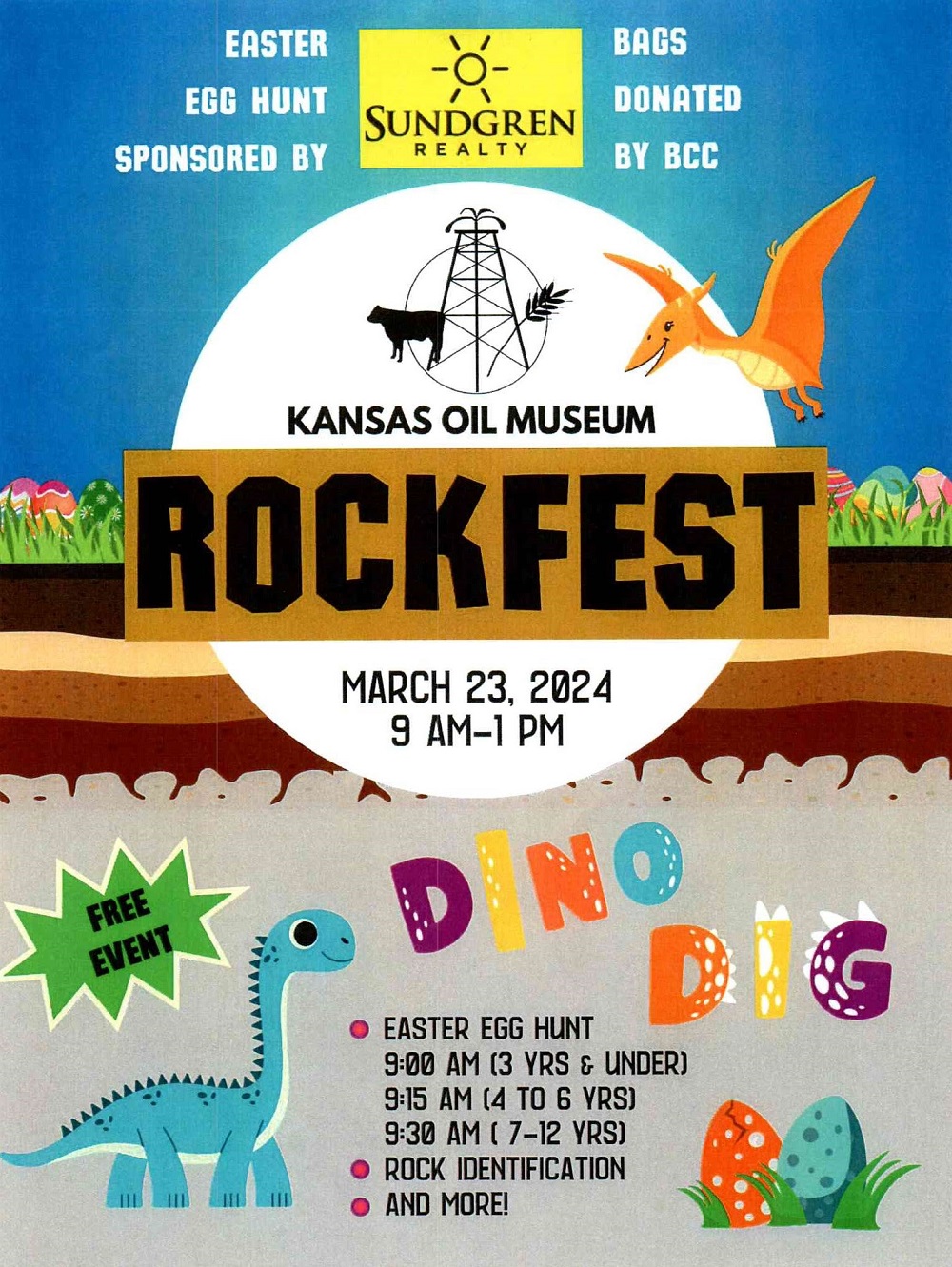
Another educational program at the museum is its Thursday Speaker Series. On March 14 is a presentation about El Dorado’s early cultural history by Sonja Sommers Milbourn, speaking about Frank and Stella Armstrong, who migrated from Ohio to El Dorado and contributed to the city’s cultural and community of visual and performing arts.
“Dr. Frank C. Armstrong led an amazing life, both at home and abroad. As a beloved physician in our community in the 1880’s and 90’s, he also performed in drama performances at the Ellet Opera House, socialized with most of El Dorado’s founders, and helped introduce bicycles to both men and women in our town. At the end of the century, he served our country, as a military physician in the Philippine-American War.”
Petroleum Museum’s Kathy Shannon retires
After almost three decades of leading the largest oil and gas museum in the country, Kathy Shannon retired on on October 1, 2023, as executive director of the Petroleum Museum. Shannon, who joined the Midland, Texas-based museum in 1995 as director of education, became the “driving force behind the mission and growth of the museum for nearly thirty years” noted the new executive director, Bryan Grant, in a news release, also noting:
“Under her leadership the Museum opened its Education Hall, giving education programs a dedicated space to prosper. The Mineral Gallery was added in 2012, highlighting beautiful mineral specimens from across the globe and deepening the Museum’s focus on geology. In 2016, the Museum celebrated its grand opening of its updated petroleum exhibits, an $18 million renovation of its east and north galleries. She was presented the President’s Award from Texas Association of Museum’s for the project. In August 2023, the Museum’s STEAM Education Center opened as a state-of-the-art STEAM education facility.”
The museum, which also preserves the world’s largest collection of Chaparral racing cars, began in 1975 as the Permian Basin Petroleum Museum, Library and Hall of Fame, established by Texas independent producer George T. Abell, The museum opened on September 13, 1975, with President Gerald Ford speaking at the opening ceremony. Today’s Petroleum Museum “continues to serve the Permian Basin community as an evolving resource for the petroleum industry and honors the individuals that have helped create its rich history.”
AAPG preserving History
Congratulations to William R. Brice for his latest article about America’s first commercial oil well and and the role of fate in the good outcomes — and the bad. The geologist and professor emeritus, who in 2009 published a definitive biography of Edwin Drake, has again been published in the American Association of Petroleum Geologists — in the AAPG Explorer. His October 2023 contribution, “Twists of Fate in the Early Oil Fields.”
Most people know the story of “Colonel” Edwin Drake and “Uncle Billy” Smith who drilled the oil discovery well near Titusville, Penn. in 1859 that started the modern petroleum revolution. While Drake was in charge of the operation, “Uncle Billy,” the blacksmith who made the tools, and three of his sons did the actual drilling work.
“But what many people do not know is how close this project came to failing on at least two fronts,” Brice adds in the AAPG Explorer article, which requires AAPG registration.
Earth Science Week 2023
The American Geosciences Institute (AGI) completed its annual Earth Science Week October 8-14, 2023, celebrating the theme Geoscience Innovating for Earth and People.
“The week featured events that are estimated to have reached millions of people around the world,” according to AGI. “There are still opportunities to engage with Earth Science Week 2023.” Energy education toolkits and useful resources are still available as the event highlights report is being completed. Applications also are being accepted for the 2024 Edward C. Roy Jr. Award for excellence in K-8 teaching.
Founded in 1948, AGI is a nonprofit federation of geoscientific and professional associations representing more than 250,000 geologists, geophysicists and other earth scientists.
Energy Education from “Dr. Petro”
As part of its popular Brown Bag Lunch & Lecture Series, “Dr. Petro” — Greg Hinterlong — a longtime friend of the Petroleum Museum, will speak on July 11, 2023. He also has been conducting Family Science Nights experiments for many years, according to the Midland, Texas, museum. Other recent Petroleum Museum lecturers have included Richard Brantley, senior vice president of operations with University Lands, who noted the 100th anniversary of the Santa Rita No.1 well, and Scott W. Tinker, director of the Bureau of Economic Geology and State Geologist of Texas, who on May 18 spoke about “Balancing Energy Security, Economic Security, and Climate Security.”
PHI Symposium set for Illinois Oil Patch, May 11 – 13, 2023
The annual gathering of a dedicated group of petroleum historians is being planned for May 11-13, 2023, in the Illinois Basin as the Petroleum History Institute (PHI) prepares to host its 21st annual Oil History Symposium and Field Trip.
PHI’s Oil History Symposiums include oral and poster presentations for the institute’s annual Oil-Field History, a journal reviewing the history of the international oil and natural gas industry – upstream, midstream and downstream.
2023 Petroleum History Institute Symposium and Field Trip, New Harmony, Indiana
- Registration and evening reception – Thursday, May 11
- Field trip – Friday, May 12
- Presentations, oral and poster – Saturday, May 13
- Proceedings to be published in the 2023 journal, Oil-Industry History.
- Headquarters Hotel – New Harmony Inn, 504 North Street, New Harmony, IN 47631
- Contact the hotel directly for reservations (812) 682-4431. For group rate ($89 plus tax), mention the Petroleum History Institute.
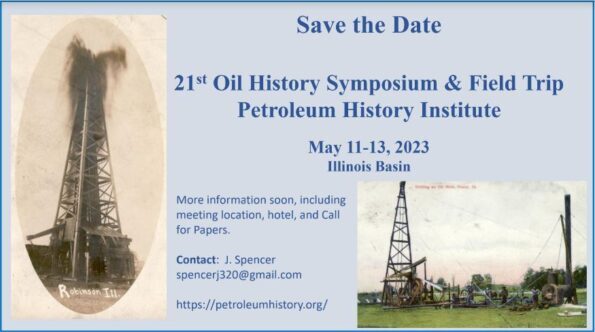
The journal’s articles often are from the symposiums, which include history presentations of about 30 minutes each. Many articles focus on the area where the meeting is held, but related papers are accepted regardless of geography. For details about submitting an abstract, email spencerj320@gmail.com, and check for 2023 Symposium updates at the PHI website.
Oil Museum plans 2023 Anniversary of Opening
Above California’s historic and prolific Midway-Sunset oilfields, volunteers at the West Kern Oil Museum in Taft are planning oil history events celebrating the museum’s 1973 opening, according to Executive Director Arianna Mace.
“Throughout the year we will be documenting the 50th anniversary as well as compiling history and local stories of the oil industry and how it has influence our area, Mace noted. The latest exhibits focus on the important role energy has played in the history of California, especially in Kern County.
The first Kern County wooden derricks appeared as early as 1878. Sunset Oil Company in 1887 drilled the first producing well in what became known the as the Midway-Sunset field. By the 1920s, more than 7,000 derricks covered 21 miles in southwestern Kern County. After producing billions of barrels of oil, the San Joaquin Basin’s oilfields remain the largest in California and the principal source for most of the petroleum in the continental United States.

According to Mace, the West Kern Oil Museum, today operated entirely by dedicated volunteers, was established in 1973 by six women of the local chapter of the American Association of University Women. The oil museum — and a restored Jameson No. 17 well derrick — can be found near Highway 33 and Wood Street in Taft. Contact the museum at info@westkernoilmuseum.org or (661) 765-6664.
Congressional Recognition of Olinda Oil Museum & Trail
“We had a great surprise this week,” noted Chris Farren of the Olinda Oil Museum and Trail in Brea, California, in an October 14, 2022, email to AOGHS. “The museum had a distinguished visitor, U.S. Rep. Young Kim, and special guests who received a tour of the museum — an historic landmark — and afterwards presented the museum a Certificate of Congressional Recognition,” Farren reported.
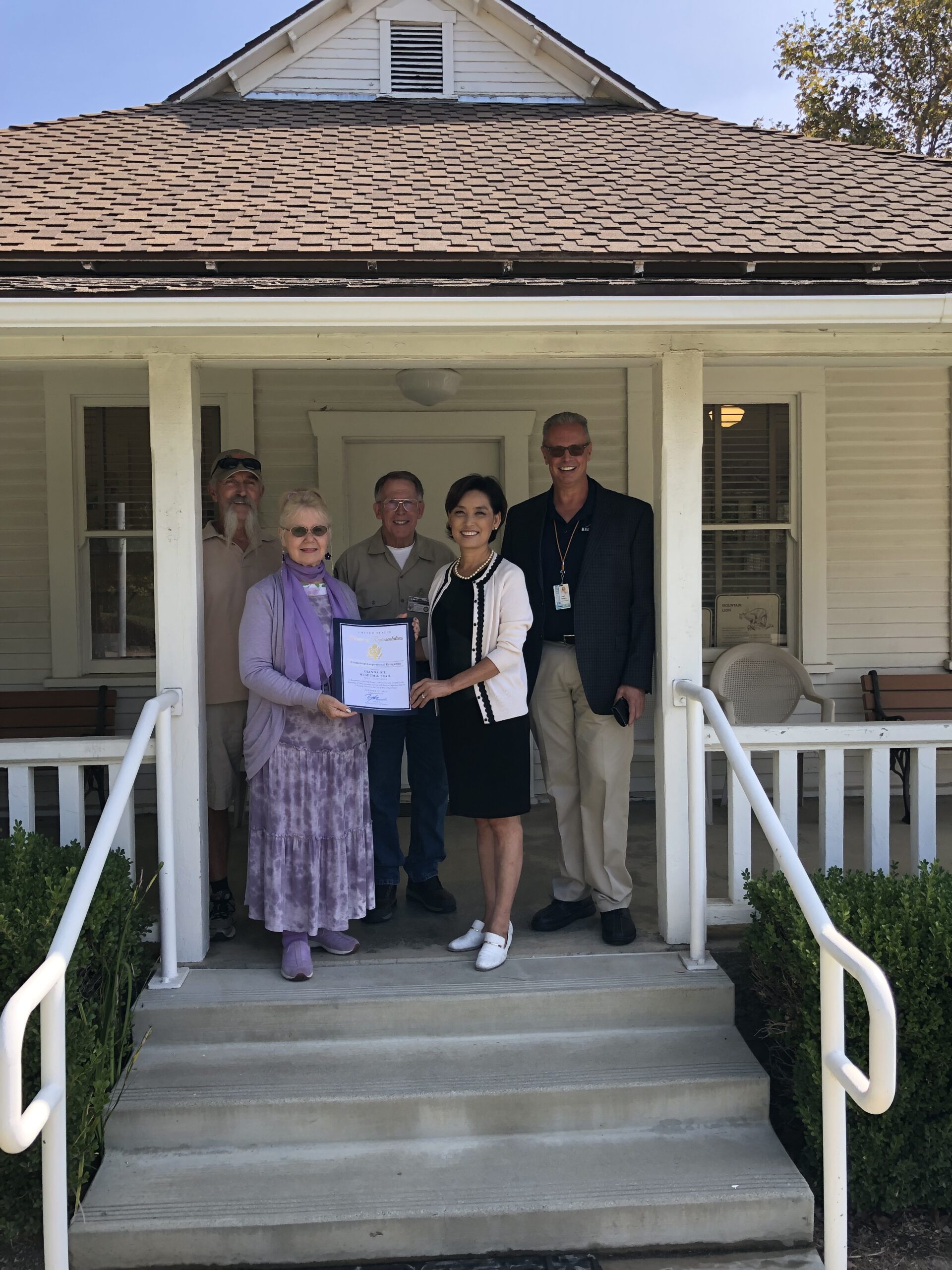
California U.S. Rep. Young Kim (front right) presents a 2022 Certificate of Congressional Recognition to Olinda Oil Museum Docent Pamela Harrell. Looking on (left to right) are museum docents Chris Farren and Michael Lindsey and City of Brea Community Services Director Sean Matlock.
On October 6, the City of Brea celebrated the centennial of the Brea-Olinda Oilfield’s “Field House,” once a petroleum company office and now filled with exploration and production artifacts. The 100-year-old building is the centerpiece of the 12-acre Olinda Oil Museum and Trail, “a historic park that recapture the sights, sounds, smells, and the vital role Olinda played in the development of Brea.”
Farren, an Olinda native who grew up on the area’s Santa Fe oil lease, is a fourth generation Olinda oil industry worker. He is a docent for the museum and a frequent speaker about the history and pioneers of the oil boom town of Olinda (now part of Brea) in Orange County.
Road Map Collectors in Kansas City for “MapCon”
The Road Map Collectors Association (RMCA) educates the public about historic road maps from the automobile age. Founded in 1996, RMCA preserves the historical aspects of road maps, and facilitates the collection, preservation and dissemination of information regarding map histories.
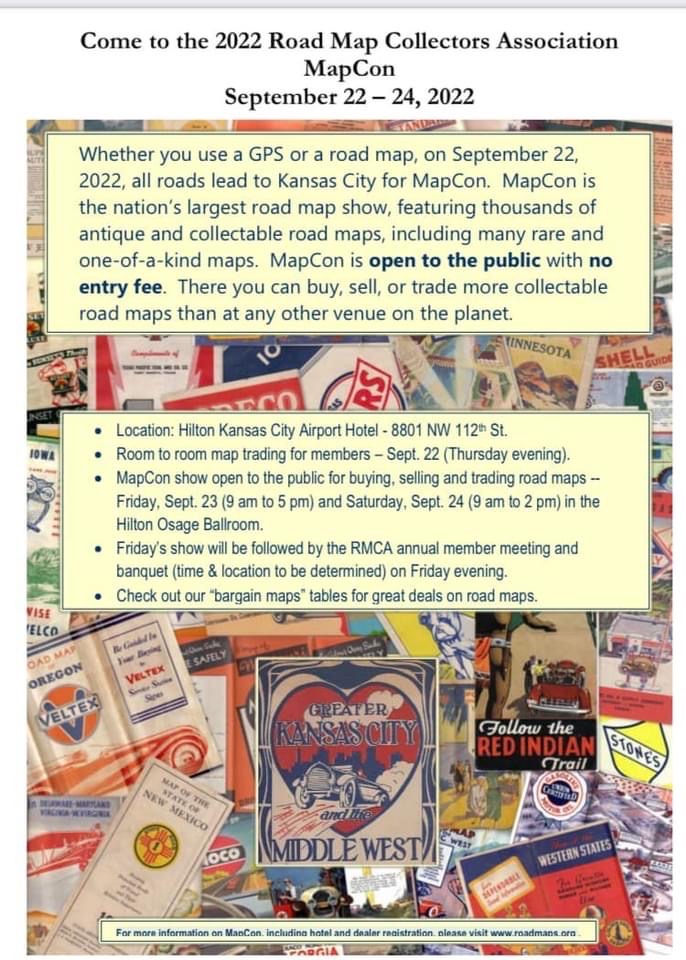
The association hosted its annual meeting and MapCon, September 22-24, 2022, at the Hilton Kansas City Airport Hotel. RMCA maintains an exhibit on historic road maps at the Antique Automobile Club of America Museum in Hershey, Pennsylvania (ACCA Museum), and publishes The Legend, a quarterly publication.
Learn more at roadmaps.org.
Pennsylvanians celebrate “Mystery Well” 140th anniversary
Cherry Grove Old Home and Community Day are observing the 140th anniversary of the “646 Mystery Well” on June 18, 2022, according to Edwin W. Atwood, CGOHCD treasurer. This year’s oil history events, which continue a long community tradition the day before Father’s Day, celebrate a significant but little known prolific oil well.
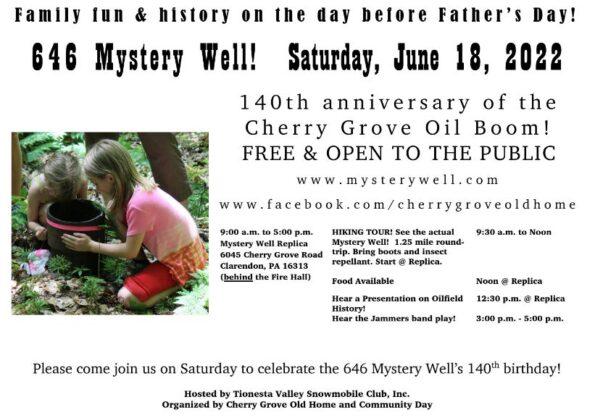
“In the spring of 1882, a historic oil well gusher on Lot 646 in Cherry Grove Township resulted in a ‘boom town,’ causing the isolated ridgetop farming village of Cherry Grove to grow in population to rival that of current-day Warren,” Atwood noted in a May press release (also see Cherry Grove Mystery Well).
The 646 Mystery Well was “the well that changed the world” — destabilizing world petroleum markets. CGOHCD will stage the 140th anniversary celebration on Saturday, June 18 (the day before Father’s Day) and conduct trail hikes to the site of the actual Mystery Well on Lot 646.
“That’s where we need your support,” Atwood added. The community seeks donations of time and equipment to improve the 646 Mystery Well trail, a blacksmith exhibit, the oilfield drilling rig, and a “hit and miss engine” exhibit. Contact Cherry Grove Old Home and Community Day Treasurer Ed Atwood, 694 Mohawk Avenue Warren, Pennsylvania 16365; (814) 72 –2774; email cherrygroveoldhome@gmail.com.
2022 Oil History Symposium held in Santa Barbara
The Petroleum History Institute (PHI) annual Oil History Symposium and Field Trip took place May 17 to May 19, 2022, at Santa Barbara, “birthplace of the California oil industry and the modern environmental movement.” The city’s historic Montecito Inn hosted the annual gathering of oil patch historians. The popular opening reception was on Tuesday, May 17.
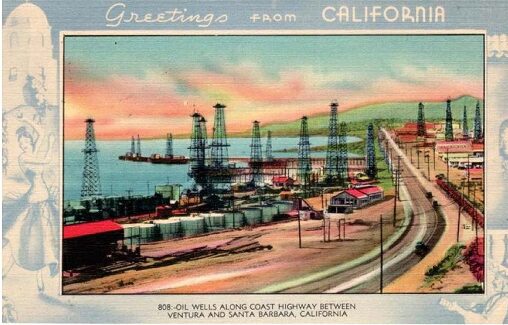
The Petroleum History Institute’s Oil History Symposium will take place May 17-19, 2022, a few blocks away from Santa Barbara beaches once lined with oil derricks.
According to this year’s symposium chair, petroleum geologist Stephen Testa (stesta@goldrush.com), Santa Barbara has been home to historic oil discoveries, extensive shale oil reserves, and the infamous 1969 oil spill.
“The region is underlain in part by the Monterey formation, which spans some 1,750 miles from Central to Southern California, with some claiming that this formation contains up to two-thirds of the United States’ shale oil reserves, and 15 billion barrels of oil,” Testa reported. Natural offshore oil seeps at nearby Goleta also are among the largest and most studied examples of marine seepage in the world.
PHI annual symposiums have recognized individuals who contributed to petroleum industry heritage by awarding them the Colonel Edwin L. Drake Legendary Oilman Award. Further, the Samuel T. Pees Keeper of the Flame Award has recognized those “who have provided great service in preserving and bringing before the public the heritage and history of the oil and gas industry.”
American Oil & Gas Historical Society members participated in this annual gathering of dedicated oil patch historians. More information can be found on the PHI website.
2022 Earth Science Week
The American Geosciences Institute (AGI) has announced that the theme of Earth Science Week 2022 will be “Earth Science for a Sustainable World.” AGI energy education (including some oil history events), beginning October 9 and continuing though October 15, 2022, “will emphasize the essential role of Earth science in helping people make decisions that maintain and strengthen the planet’s ability to support thriving life.”

The American Geoscience Institute was founded in 1948.
The 2022 theme offers educators and students opportunities to explore geoscience, including professions, new technologies, and practices for a sustainable life on earth. “Within people’s daily lives, they are challenged to provide for human health, safety, and prosperity, while preserving environmental sustainability,” explained AGI, which can provide resources and activities online for Earth Science Week throughout the coming year.
California Oil Museum temporarily closed
The California Oil Museum has temporarily closed its doors at the former Union Oil Company headquarters in Santa Paula as the California Oil Museum Foundation considers “re-energizing” the museum, which opened in 1950.
Devoted to energy education and preserving the state’s oil history, the museum spent most of 2020 closed because of Covid-19 before reopening in April 2021. It closed again on September 13, according to an article in the Ventura County Star (VC Star), which noted funding issues forced the museum to temporarily close its doors.
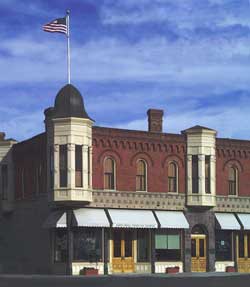
The 1890 Union Oil Company headquarters building in Santa Paula is home to Ventura County’s California Oil Museum.
In addition to permanent exhibits — one being an authentic turn-of-the-century cable-tool drilling rig — the museum’s rotating installations have explored energy sciences, transportation, and culture, including memorable brands of gas marketed to early California drivers. A courtyard on museum grounds has been used activities at oil history events.
Union Oil moved its headquarters to Los Angeles in 1901. The museum’s Santa Paula building, constructed by Union Oil in 1890, was added to the National Register of Historic Places in 1986.
150th Anniversary of Bradford Oilfield & 50th of Penn-Brad Oil Museum
On September 14-17, 2021, oil patch historians and many others are celebrating the 150th anniversary of Pennsylvania’s “Bradford Oil Field — the First Billion Dollar Oil Field in the World.” On September 18th, the celebration continues with the 50th Anniversary of the Penn Brad Oil Museum.”
Discovered in 1871, the historic 85,000-acre field extends from northwestern Pennsylvania into New York (also see Mrs. Alford’s Nitro Factory). Historic re-enactors, heritage craft vendors, oilfield equipment demonstrations, dedication of the replacement wooden standard rig, food, music, children’s games and collectible keepsakes.
In addition, according to the Ellicottville Now, the Allegheny National Forest Visitors Bureau, has released a promotional video, “Penn Brad Oil Museum-Explore the Gold Rush of the Billion Dollar Oil Field,” designed to motivate visitors to explore the history of the Bradford oilfield, the video features independent oil producers and the Penn Brad Oil Museum.
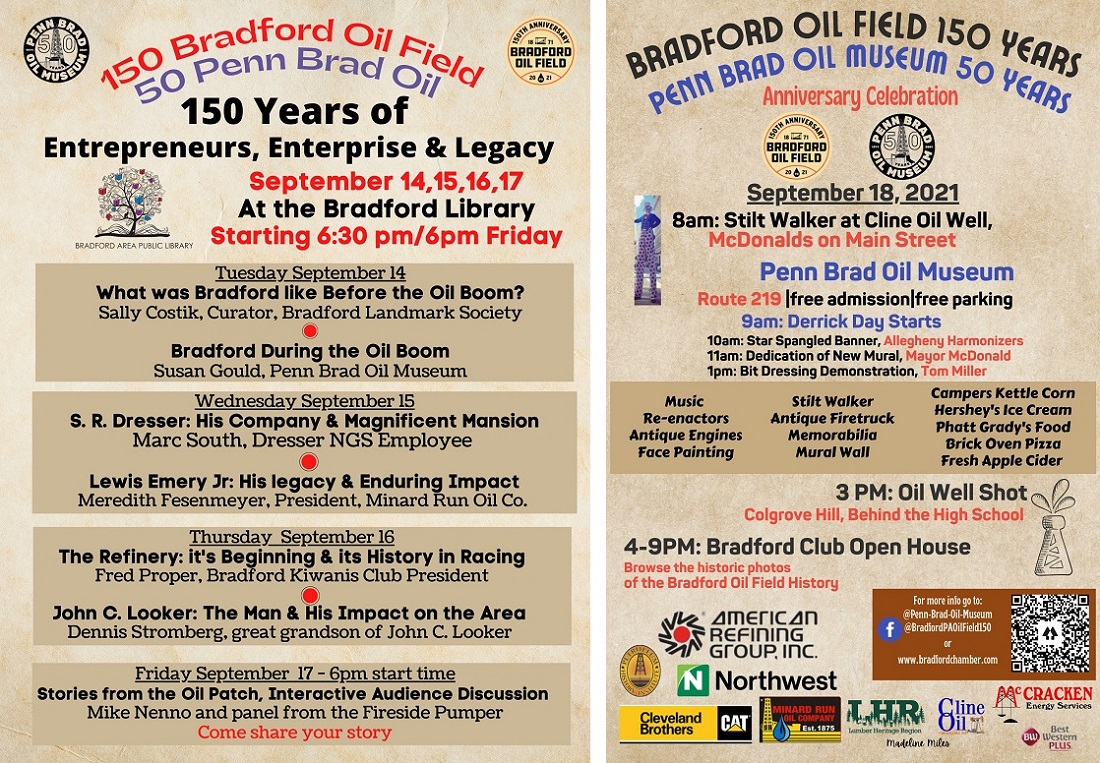
The video highlights the rich oil history of Bradford, once the “High Grade Oil Metropolis of the World,” producing 81 percent of the oil and gas used in the United States in 1800, and 70 percent of the world’s oil. Fran Battone, director of the Penn Brad Oil Museum, assisted videographer Ashley Baron of ABCinematography. For more information about the September 18, 2021, celebration, follow the Facebook Page @BradfordPAOilField150.
Summer Oil Festival in Healdton, Oklahoma
Healdton Oilfield Days has returned for its 44th year with festivities August 27-28, 2021. Two days of oil history events begin Friday evening with the Healdton Oilfield Days Rodeo at the Healdton Rodeo Grounds, according to The Daily Ardmoreite. Other activities included a parade, games, and children activities all day Saturday.
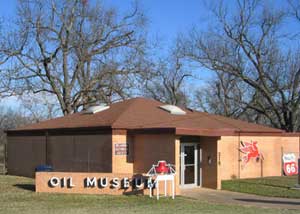
Oklahoma’s Healdton Oil Museum preserves petroleum history in Carter County, including a 1913 oilfield discovery. Photo by Bruce Wells.
“Healdton Chamber of Commerce Coordinator Amber Ford said everything will begin with the Mutton Bustin’ competition prior to Friday’s rodeo,” the newspaper noted. A popular car show will be hosted at the Healdton Oil Museum — along with “vendors, food trucks and a dunk tank which will be raising funds for the Healdton Band Boosters.”
Petroleum Museum adding STEM Center
The Permian Basin Petroleum Museum in Midland, Texas, hosted a groundbreaking ceremony on August 24, 2021 to began construction of a new, 8,000-square-foot science center designed for young people. The STEM Education Center will include classrooms and “outdoor learning patio” on the museum grounds.

A planned STEM education facility at the Petroleum Museum Midland, Texas, will increase collaborations with Permian Basin schools, including partnerships with to provide resources and workshops. Photo Courtesy Permian Basin Petroleum Museum.
Petroleum Museum Director Kathy Shannon and museum staff were joined by representatives from the University of Texas – Permian Basin, Midland College, and Midland and Odessa school districts. “The center is designed to help develop childrens’ love of science in an engaging learning environment,” Shannon noted.
In addition to its new STEM Education Center, the museum hosts school tour groups; family science night programs; a brown bag lunch and lecture series; and traveling trunks offering a variety of STEM teaching tools.
Renovated Luling Oil Museum
After months of renovations, the Luling Oil Museum in Luling, Texas, reopened its doors on March 15, 2021, with oil history events. The museum, which preserves the history of Luling oilfields, is in a historic downtown 1885 mercantile store. The Walker Brothers was the oldest continually operating mercantile store in the Texas until it closed in 1984, according to the Lockhart Post-Register, which noted:
The Luling Oil Museum purchased the building in 1994 and set out to showcase what made Luling one of the toughest towns in Texas. There are dozens of vintage photos of men working the oil rigs from the early 1920s, and maps showing the expanse of oil in the region. Original tools that were donated to the museum line some of the original Walker Brothers shelves. Bricks with a name and year (1907) scratched into it, and an old guest book from the Wilson Hotel from 1925 that was rescued from a burning trash fire are sealed in cases.
Oilfield Service Associations merge
In February 2021, the Association of Energy Service Companies (AESC) and the Petroleum Equipment and Services Association (PESA) merged to form a new organization, the Energy Workforce & Technology Council.
Established in 1956 , AESC national committees and local chapters focused on safety, technology, environmental performance, insurance, government advocacy, and workforce training, according to Council Vice President Kenny Jordan, former AESC executive director. PESA, founded in 1933 as the American Petroleum Equipment Suppliers Association, developed industry-recognized workforce and certification programs, noted Energy Workforce & Technology Council CEO Leslie Beyer, formerly the PESA president.
The combined organization will represent more than 600 member companies in all aspects of the servicing, supply, and manufacturing segments, and will focus on enabling our members to safely, profitably, and sustainably produce the energy needed to meet rising demand around the world. — Energy Workforce & Technology Council
Petroleum Museum reopens in West Texas
The Petroleum Museum in Midland, Texas, has returned to “normal business hours” while carefully managing visitor safety. “Museums are essential to our culture, and we are committed to continuing to serve our community,” the museum justly proclaimed as it reopened (with COVID-19 protocols). The museum, founded in 1975, also will maintain its online programs and “engagement opportunities for those who may not yet feel comfortable returning.”
Museum staff is prepared to provide the safest environment possible for museum visitors ready to take “an amazing journey through over 230 million years of history. Located in the heart of the Permian Basin, the Petroleum Museum offers interactive education and entertainment for adventurers of all ages.”
East Texas Oil Museum celebrates 40th Anniversary
In the heart of a giant oilfield discovered in during the Great Depression, the East Texas Oil Museum at Kilgore College is celebrating the anniversary of the museum’s opening in 1980. The extended celebration, September 5 to October 24, 2020, includes renovations and a new exhibit, according to Museum Manger Olivia Moore. More special oil history events are planned.
Thanks to a two-year project. visitors can experience an upgraded Boomtown Theater. “Seating in the theater was refinished to maintain a vintage feel, along with the installation of a digital projector to display the theater’s movie, Moore explained. A digitized version of the original 16 mm film “The Great East Texas Oil Boom” is the main attraction.
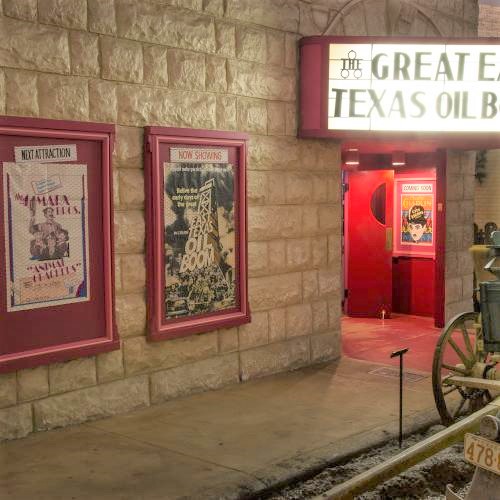
“The Great East Texas Oil Boom,” now digitized, is playing in Kilgore, Texas. Photo courtesy East Texas Oil Museum at Kilgore College.
A new exhibit chronicles the important history of the East Texas oilfield, which encompasses an area 43 miles long and 12.5 miles wide. Discovered by Columbus Marion “Dad” Joiner in 1930, it was the most prolific oil reservoir ever found in the contiguous United States.
“We’re thrilled to be celebrating 40 years since we opened our doors,” Moore said. “For anyone who hasn’t visited the museum, it’s a real treasure. And for those who have visited, the new limited exhibit depicting our history is a must-see for visitors of all ages.”
Visit the East Texas Oil Museum — Wednesdays through Saturdays from 10 a.m. to 5 p.m. — at 1301 S. Henderson Blvd. in Kilgore. The museum currently is limiting guests to 25 at a time, and face coverings are required. For more information, contact Moore at (903) 983-8295 or email omoore@kilgore.edu.
Nitro Truck joins Woolaroc Collection in Oklahoma
A 1952 GMC pickup truck from the American Torpedo Company of Bartlesville, Oklahoma, has been added to petroleum exhibits at the Woolaroc Ranch and Wildlife Preserve about 12 miles southwest of the city. Donated in July 2020 by Patrick Hagerman of Scotlea Hot Rods of Nowata, the oilfield service truck once brought an explosive technology for “shooting” wells to improve oil and natural gas production. Nitroglycerin fractured petroleum-producing rock formations for more than a century after the first U.S. oil well of 1859.
“The truck was found in a field in Osage County in 2013, where it had been abandoned for over 50 years,” noted Shiloh Thurman, director of the 3,700 acre preserve’s Western Art and History Museum. “We felt it was an important piece of Bartlesville history that deserved to be showcased in the museum.”
The former ranch of Phillips Petroleum Company founder Frank Phillips, the Woolaroc combines three words – the woods, lakes and rocks that make up the Osage Hills. Phillips and his brother L.E. took part in the Osage County oil boom, which began in 1917 (see Million Dollar Elm). Will Rogers once said, “When you are visiting the beauty spots of this country, don’t overlook Frank Phillips’ ranch and game preserve in Bartlesville. It’s the most unique place in this country.”
Frank Phillips’ private collection includes a race-winning monoplane that made aviation history in 1927, according to Bob Fraser, CEO of the Frank Phillips Foundation and operating officer of the Woolaroc Museum and Wildlife Preserve. Learn more in Flight of the Woolaroc.
Oklahoma Geological Foundation offers Online Learning
A new, online education initiative for learning earth science has been launched by the Oklahoma Geological Foundation. Designed as an educational tool for Oklahoma teachers, the EveryDay Earth program consists of an integrated set of short, entertaining and educational videos with interactive activities to engage students.

According to the Everyday Earth website, the first version of program will explore sites in Oklahoma and Southern Plains region, It will offer videos and online materials to help teacher’s “tie abstract learning to concrete concepts that support national and state earth science educational standards.”
Teachers are encouraged to join the adventures of the EveryDay Earth Corps. The online, interactive earth science lessons let students choose where and how they should explore while introducing earth science concepts such as “How water changes Earth’s landscape” or “How are rocks formed?”
The courses also explore Oklahoma’s scenic natural areas and parks, including rivers, waterfalls, and mountains. “EveryDay Earth courses are developed by experienced geologists and educators. You can trust this program as a supplement to your classroom plan,” notes the website.
The Oklahoma Geological Foundation, which has long supported earth science education for all grade levels, established the new online program with several partnering organizations and companies.
COVID-19 cancels 2020 History Symposium
The 2020 Oil History Symposium and Field Trip of the Petroleum History Institute (PHI), scheduled April 2-4 in Santa Barbara, California, has been cancelled due to the COVID-19 pandemic.
Cancelled (COVID-19) East Texas Oil History Event
The East Texas Oil Museum at Kilgore College on May 5, 2020, will host the eleventh annual East Texas Energy Symposium. This year’s speakers include Sendhendu Kashikar, CEO of Reveal Energy Services; Tim Greene, business development manager for Deep Imaging Technologies; and Dr. Mahdi Haddad, postdoctoral fellow for the Bureau of Economic Geology.
 The symposium, 10 a.m. to 1:30 p.m. with lunch, also features keynote speaker Dr. Neil Frank, former director of the U.S. Hurricane Center and chief meteorologist for KHOU Houston – Channel 11 News, who will speak on “Climate Change: Carbon Dioxide Distortions.”
The 2020 symposium costs $50; attendees are welcome to tour the museum from 9 a.m. to 10 a.m. or after the symposium. To learn more, contact East Texas Oil Museum at Kilgore College Director Olivia Moore at (903) 983-8295 or email omoore@kilgore.edu.
Cancelled (COVID-19) Global Oil Oil Heritage Conference in Ontario
A seminar on the international heritage of the oil industry is set for May 7-9, 2020, in Oil Springs, Ontario, Canada. About 30 petroleum experts, historians, preservationists, and representatives from conservation agencies will discuss a variety of issues, according to conference organizers, Fairbank Oil Fields and The International Committee for the Conservation of Industrial Heritage (TICCIH).
A May 9 field trip will include trips to the Oil Museum in Oil Springs and a tour of Fairbank Oil Fields. The oil heritage conference also “will mark the presentation of the TICCIH thematic study on the oil industry (which can be downloaded at ticcih.org thematic studies), the preparation of which has been supported by Fairbank Oil Fields,” according to James Douet, who authored the study and will discuss it at 11 a.m. on May 8.
After the meeting, Douet’s “The Heritage of the Oil Industry: TICCIH Thematic Study” will be presented to the International Committee for the Conservation of Industrial Heritage (ICOMOS), which provides guidance in evaluating nominations to the UNESCO World Heritage List. For more information about the conference and tour, contact Patricia McGee (fairbankoil@access.com), Chair of the Lambton TICCIH Conference Steering Committee. To learn more about the thematic study, contact Douet at editor@ticcih.org.
EIA expands International Energy Website
The U.S. Energy Information Administration (EIA) on February 5, 2020, announced it had redesigned its International Energy Portal, “to streamline navigation, simplify data presentation, and implement responsive design use.”
Among the improvements, EIA site visitors now can customize data tables to sort by energy source and activity or by country and region. “Users can now see and select countries within continental regions, International Energy Agency regions, and economic groups” and “Animated maps allow users to see how trends in energy production, consumption, reserves, imports, and exports have changed over time.”
EIA charts also provide annual data on energy production, consumption, trade, and reserves. Examples of information available in the portal include: country-level refined petroleum products consumption; global carbon dioxide emissions over a 30-year period; how the United States ranks in energy consumption; and annual Eurasia regional total and country-level natural gas reserves.
Earth Science Week 2019 promoted Geosciences in Education
The American Geoscience Institute was founded in 1948.
The American Geosciences Institute, as part of its annual Earth Science Week, presented popular educational tool kits to teachers according to AGI. Each kit included: school-year activity calendar; NASA, LandSat, and National Park Service posters; geologic maps for mineral education; global change and materials on Geodesy; a fact sheet from Critical Zones Observatories; Switch Energy Project information on energy science; Bureau of Land Management dinosaur coloring page; material on constructing the “Rock Cycle” from the Geological Society America; and more on what it means to be an Earth scientist.
“The photography contest is open to all ages. In addition, the Earth Expressions contest calls for brief videos exploring Earth science,” adds AGI, which was founded in 1948 under a directive of the National Academy of Sciences.“Each year, many science teachers encourage students to participate in the traditional Earth Science Week visual arts contest, open to students in grades K-5, or the essay contest, which is open to those in grades 6-9,” AGI explains.
Based in Alexandria, Virginia, AGI reports that Earth Science Week 2018 toolkits will ship starting in August. For ordering, special shipping, and bulk orders, visit the AGI Online Store or phone AGI Publications at (703) 379-2480.
Oil History Lost in Connecticut
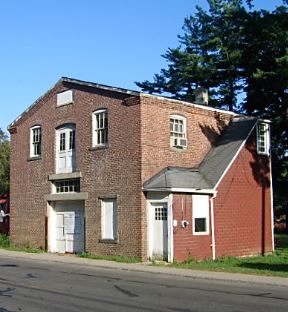
Standard Oil distributed kerosene from this now demolished 1910 carriage house.
A failed 2018 effort to preserve oil history by residents of New Canaan, Connecticut, at least educated many people about Standard Oil history.
At issue was “The Barn,” a Standard Oil Company of New York storage and distribution facility built around 1910. The brick carriage house is located in a city park that once sheltered horse-drawn kerosene tank wagons for distributing lamp fuel to local hardware stores.
“There is no other structure like The Barn in New Canaan,” noted one local historian. It was the last remaining structure of its type and style in the state. In the course of researching Standard Oil history, many residents discovered little-known details about facility (learn more in Preserving a Standard Oil Barn in Connecticut).
The historic community, located a short distance from New York City, has been home to some leading industry executives (see Oil Executives in Connecticut).
1929 Ice Truck joins East Texas Oil Museum Exhibits
A 1929 Mack Ice Truck exhibit. Photo courtesy the East Texas Oil Museum. The rare truck was donated by Mike and Amy Clements; the building to house it was designed and built by Mobbs Builders.
In a victory for preserving history in East Texas, community activists and volunteers have dedicated a new building at the East Texas Oil Museum in Kilgore. Inside is a truck that delivered ice during a giant oil boom during the Great Depression.
The Longview News-Journal reported on February 2, 2018, that Mike and Amy Clements donated “a beautifully restored 1929 Mack truck” to the museum’s collection.
A special structure was built to house the exhibit. “The truck, outfitted to deliver ice used to keep provisions cool in iceboxes like those seen during the early days of the East Texas oil boom, will help the museum more fully tell the story of life in those times,” the newspaper reported. Located at Kilgore College, the East Texas Oil Museum is “a tribute to the men and women who dared to dream as they pursued the fruits of free enterprise.” The museum opened in 1980 on the 50th anniversary of the giant oilfield discovery.
Oil Industry’s Chief Roughnecks Award began in 1955
One of the petroleum industry’s top awards since 1955 recognizes “one individual whose accomplishments and character represent the highest ideals of the oil and natural gas industry.” The annual award includes a bronze bust of Joe Roughneck presented by a U.S. Steel executive during the annual meeting of the Independent Petroleum Association of America.
AOGHS participates in Oklahoma Meeting of Mid-Continent Geologists
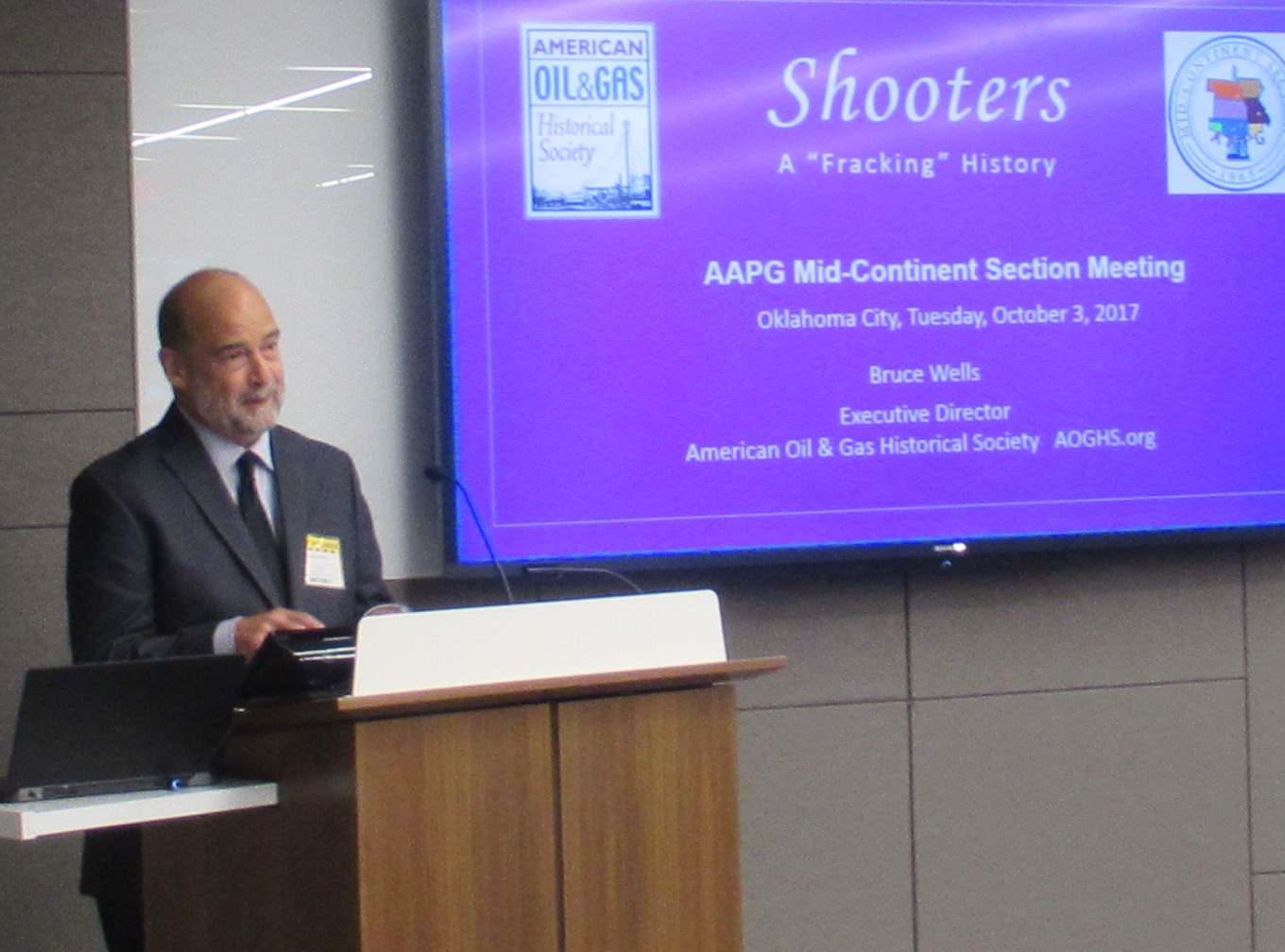
Bruce Wells, executive director of the American Oil & Gas Historical Society made a history presentation to AAPG members and later to employees of a technology research center of Baker Hughes.
Bruce Wells, founder and executive director of the American Oil & Gas Historical Society (AOGHS), attended the Mid-Continent Section Meeting of the American Association of Petroleum Geologists (AAPG), September 30 to October 4, 2017, in Oklahoma City. The Oklahoma Geological Foundation sponsored his attendance.
Wells described the AOGHS energy education mission while leading a September 30 field trip to the Phillips Petroleum Company Museum in Bartlesville. Wells later spoke on the history of “shooters” and hydraulic fracturing during a technical session on October 3.
Among AAPG members attending the meeting was current national President Charles Sternbach, an expert on a pioneering New York State geologist who created geological maps based on excavation of the Erie Canal in the 1820s. Learn more about the 2017 AAPG Oklahoma City meeting in Meeting Mid-Continent Geologists and the related article, Library of Mid-Continent Well Data.
Celebrating a Texas Oil Boom Centennial in Ranger
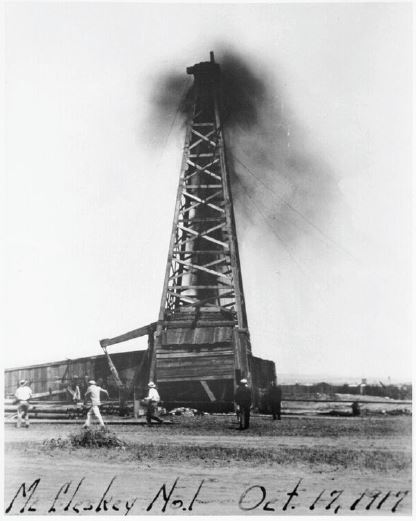
Ranger and other in Eastland County oilfield discoveries between Fort Worth and Abilene would fuel the Allied victory in WWI.
For a week in mid-October, the town of Ranger and all of Eastland County, Texas, celebrated a discovery well drilled 100 years ago. Their historic J.H. McClesky No. 1 well is better known as “Roaring Ranger.”
Word spread far and wide soon after that fall day in 1917 when the McCleskey No. 1 well of Ranger, Texas, hit pay dirt, explains local historian Jeane B. Pruett. The October 17 gusher that proclaimed the beginning of the Great Boom.
An article in the New York Times proclaimed it, “probably the most spectacular boom ever to have occurred within the United States.”
Spectacular indeed, says Pruett. The United States, Great Britain, Italy, France and Russia were in the midst of WWI with Germany and the Central Powers. Russia had supplied the Allies with oil since 1914 and its withdrawal from the conflict in 1917 caused the Allies to have a “critical” petroleum shortage, she explains. Thus, Roaring Ranger’s oil boom was noted “The Boom that Won the War.”
“The week of October 14- 21, 2017, we’re celebrating,” Pruett said in a recent new release for oil history events promoted as “The Centennial Year of The Boom that Won the War, and made our Eastland County.”
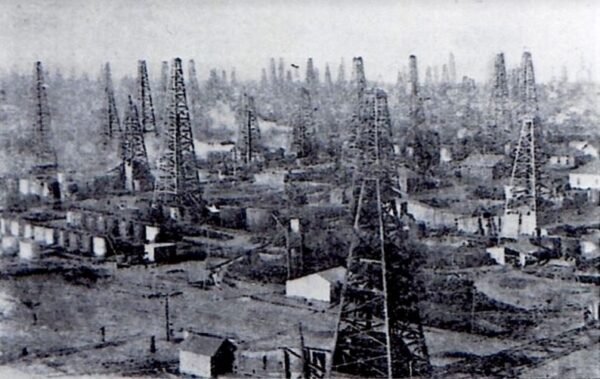
“Almost over-night, you couldn’t even see the homes for the derricks,” says Ranger historian Jeane Pruett.
All are invited to join the celebration, which begins with the Big Parade at 2 p.m. on Loop 254, Saturday, October 14. It kicks off the week’s events.
After the parade, a 4 p.m. presentation with the Railroad at the Roaring Ranger Museum will take place on South Commerce Street, then proceed to the end of S. Commerce to name and dedicate the park, and a couple markers.
By 5:30 p.m. the Fort Hood 1st Cavalry Horse Detachment will be at the Ranger Rodeo Grounds and perform.
Pruett says oil history events continue at 6:30 p.m. when the Leon River Cowboy Church hosts its Youth Rough Stock Rodeo. She also promises fun for all on Sunday the 15th, beginning at 2 p.m. The Ranger Ministerial Alliance will be serving hot dogs and hamburgers for a donation to a community meals program, and have singing with each church until 5 p.m. A 5K Run is planned to start at 3 p.m.
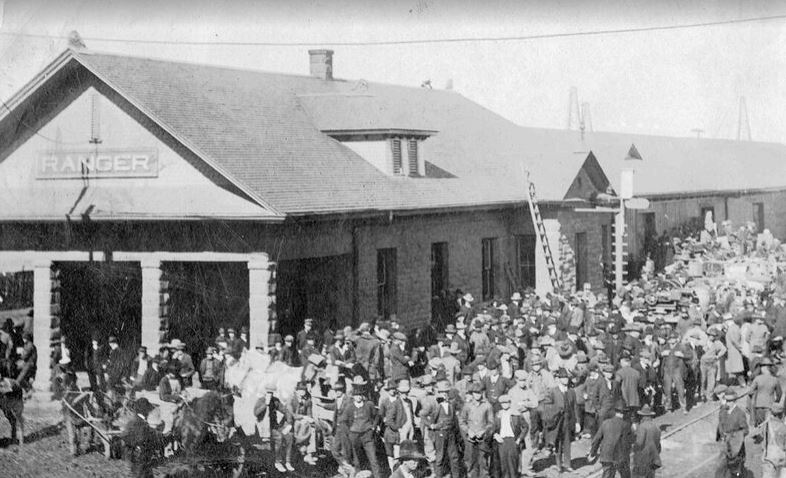
Following the October 1917 oilfield discovery, the Texas & Pacific Railroad played an important part in getting people, equipment and oil in and out of Ranger.
Pruett reports that Wednesday, October 18, is the celebration’s Education Day. “The schools are working with us and the students will be bused to and from the park and Roaring Ranger Museum.”
Saturday, October 21, from 10 a.m. to 5:30 p.m., will feature entertainment and special vendors and music by Texas Musicians, to get ready for a popular entertainer from Nashville, voice impressionist-comedian “Johnny Counterfit” and his show at 6 p.m., says Pruett. He recreates the singing voices of country music superstars, Hollywood legends, and comedians from the last 50 years.
“And when Johnny needs to take a break for a few, we’ll announce contest winners, for example the Beard Growing Contest winners,” she adds. For further information, contact by email: rhps@txol.net; phone: (254) 647-3340; or mail: RHPS, P. O. Box 320, Ranger, Texas 76470.
49th Annual West Virginia Oil and Gas Festival
In West Virginia, where oil production began at about the same time as the 1859 first American oil well (some say earlier), the Parkersburg News and Sentinel reported oil history events at a festival that has taken place nearby for almost half a century.
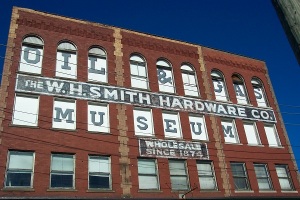
Parkersburg benefited from the prosperous oil and gas industries. The Oil and Gas Museum in downtown is housed in an historic building first built in 1874. Photo by Bruce Wells.
SISTERSVILLE (September 22, 2017) — Charlie Burd of Vienna said it was humbling to receive the honor of 2017 West Virginia Oil and Gas Man of the Year.
With this honor, Burd was parade marshal at last Saturday’s 49th annual Oil and Gas Festival parade in Sistersville. In the parade, Burd, executive director of the West Virginia Independent Oil & Gas Association, rode in a 1960 Chevrolet Corvette driven by its owner, Mike McCown of Mineral Wells, who was named W.Va. Oil and Gas Man of the Year in 2014.
Riding in the front seat of McCown’s Corvette was Burd’s son, Nathan, 19, a student at West Virginia University. The Burds handed out candy from the Corvette as it proceeded along the parade route crowded with spectators.
Charlie Burd said he had ridden in the Oil and Gas Festival parade before but never as parade marshal. “It was a fun time; it is such an honor,” he said. Burd was presented his award at a luncheon before the parade on Saturday. The Parkersburg South and Williamstown high school bands were among the bands participating in the Oil and Gas Festival parade.
Burd was selected by the Board of Directors of the West Virginia Oil and Gas Festival. Burd worked for Hope Gas for almost 29 years. Burd became executive director of the Independent Oil and Gas Association of West Virginia (IOGAWV) in 2002.
IOGAWV was founded in 1959. Article courtesy Parkersburg News and Sentinel.
Summer brings Community Oil History Celebrations
The annual Shrimp & Petroleum Festival began in 1936 in Morgan City, Louisiana.
Many petroleum museums participate in popular festivals, parades and oil shows hosted annually in the 33 producing states. Among the biggest oil-patch festivals is “Crude Fest,” a popular gathering of musicians outside of Midland, Texas.
Other summer oil history events include one south of Dallas — the Corsicana “annual ode to Texas’ first oil boom” with street dances, parades, and a charity fundraising event, the “Derrick Days Chili Cook-Off.”
It’s a good time to start planning to include an oil and gas festival as part of your vacation this summer. Join the fun in Midland and Corsicana – and the many other Community Oil & Gas Festivals.
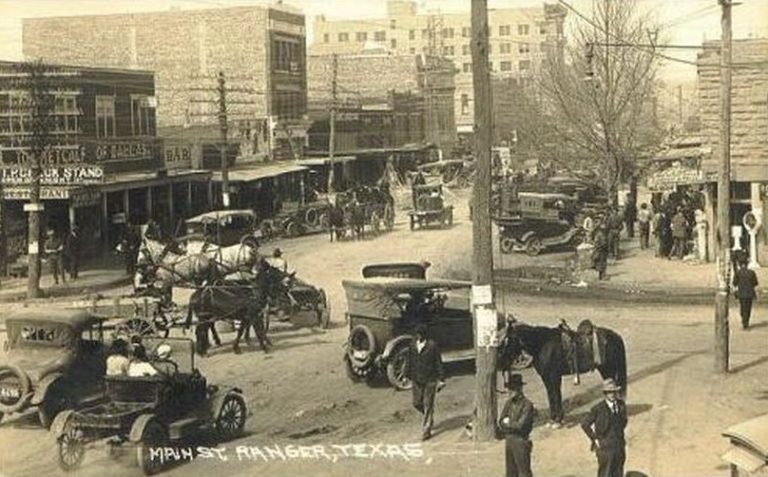
The J.H. McCleskey No. 1 discovery well of October 1917 created an mammoth oil boom at Ranger and across Eastland County, Texas.
Also mark you calendar for a Fall oil centennial – One hundred years ago this October, a Texas oilfield was discovered halfway between Abilene and Dallas. The October 17 “Roaring Ranger” well revealed a giant oilfield that helped win World War I. The town of Ranger is planning centennial oil history events, according to Jeane Pruett:
“Attention folks!! Make plans now, to join us in Ranger, Eastland County, Texas, as we celebrate not only our county, local and state history, but also national and international history! Beginning 2 p.m., Saturday, October 14, 2017, the big parade on Ranger’s loop 254 west will kick off an entire week of centennial celebration ending on Saturday, October 21, 2017.”
PHI Oil History Events
The Oil History Symposiums of the Petroleum History Institute include field trips and presentations for the institute’s annual journal, Oil-Field History.
The annual publication is devoted exclusively to the history of the international oil and natural gas industry, according to PHI President Jeff Spencer. Most articles come from PHI symposiums, which include oral and poster presentations of about 30 minutes each.
“Although we try to focus on the area where the meeting is being held, we do welcome papers on any related topic regardless of its geography,” Spencer explained. More information and details about submitting an abstract can be found on the PHI website.
PHI each year presents the Colonel Edwin L. Drake Legendary Oilman Award and the Samuel T. Pees Keeper of the Flame Award, which “honors and recognizes individuals who have provided great service in preserving and bringing before the public the heritage and history of the oil and gas industry.”
North Texas Museum’s New Oil Patch Exhibit includes Rare Spudders
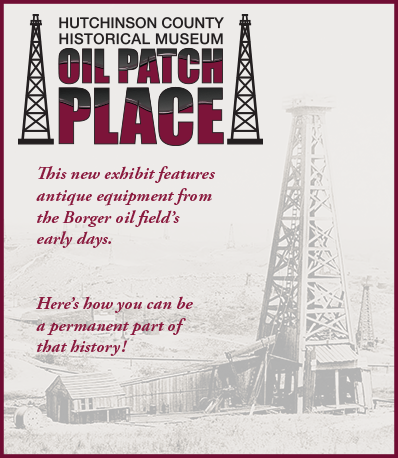 The Hutchinson County Historical Museum in Borger, Texas, is building a new outdoor petroleum exhibit that includes rare cable-tool “spudder” rigs from as early as the 1890s.
“The Oil Patch Place is coming together,” the museum website notes, adding that construction has been funded by Phillips 66 Company, Chevron Phillips Chemical (a producer of ethylene and polyethylene) and Rice Construction. The museum, which opened in 1977 about 40 miles northeast of Amarillo, preserves the heritage of Hutchinson County, with emphasis on the oilfield and boom town stories of the 1920-1930 era. Every March it hosts an “Oil Boom Heritage” festival.
Thousands rushed to the Texas Panhandle after a January 1926 oil discovery. A.P. “Ace” Borger of Tulsa, Oklahoma, who had purchased about 220 acres, and the Dixon Creek Oil and Refining Company’s Smith No. 1 well flowed at 10,000 barrels of oil a day. By September the Borger oilfield had more than 800 producing wells, yielding 165,000 barrels of oil a day.
Borger himself would lay out streets for the town, which grew to a city of 15,000 in just 90 days. The museum adds: “Think about how remote this place was when Thomas Bugbee established the first ranch in the county north of the Canadian River in 1873. How did John and Maggie Weatherly feel when they realized that Ace Borger had made himself a millionaire from his purchase of 220 acres of their ranch?”
Shale Gas Resources will soon make United States an Energy Exporter
Once heavily dependent on oil imports, the United States will become a net energy exporter in most cases projected by the U.S. Energy Information Administration’s Annual Energy Outlook 2017. The report, released January 5, 2017, in Washington, D.C., updates projections for energy markets. It predicts U.S. petroleum liquid imports will fall and natural gas exports rise.
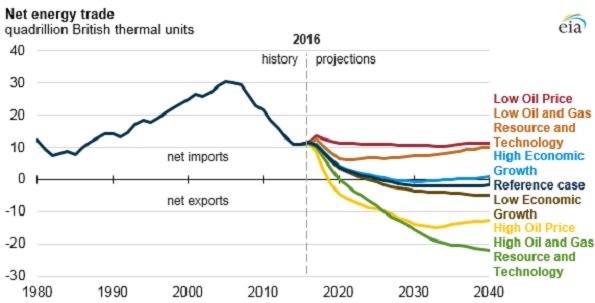 Growing U.S. shale gas resources produced with horizontal drilling and hydraulic fracturing technologies have dramatically changed America’s energy future, explained EIA Administrator Adam Sieminski, who revealed the report at Johns Hopkins School of Advanced International Studies. He noted that the petroleum industry’s technological developments have resulted in the production of oil and natural gas at lower costs.
Sieminski presented projections of U.S. energy supply, demand and prices. He also considered cases that addressed alternative assumptions regarding U.S. economic growth rates, domestic resources and technology, and world oil prices. He has led EIA since June 2012 after a 40-year career in the private sector, including serving as the chief energy economist for Deutsche Bank. He also was a past president of the U.S. Association for Energy Economics.
Penn-Brad Oil Museum hosts Fall 2016 Open House
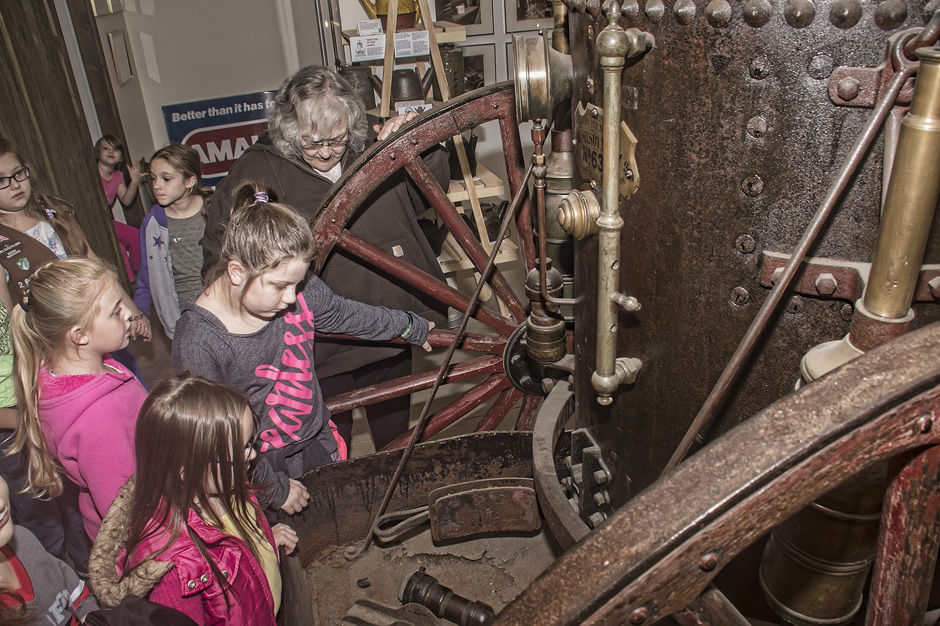
The 2016 open house at the Penn-Brad Oil Museum included Director Sherri Schulze describing oilfield technologies to troops of Girl Scouts. Photo courtesy Wade Aiken, Bradford Era.
The Penn-Brad Oil Museum (and Historical Oil Well Park) hosted its annual fall open house on October 23, 2016, in the historic oil regions of northwestern Pennsylvania in the Allegheny Forest. Long-time petroleum museum Director Sherri Schulze described for visiting Girl Scouts the nation’s “first billion dollar oilfield,” discovered near Bradford in 1871. Her open house featured hand-pressed cider and movies in the “Dog House Theater,” noted the Bradford Era.
In November 1899, the New York World featured the famous Bradford oilfield – and the nitroglycerine company run by a woman more than two decades before women won the right to vote. Mrs. Byron Alford, the “Only Woman in the World who Owns and Operates a Dynamite Factory,” was an astute businesswoman, as revealed in Mrs. Alford’s Nitro Factory.
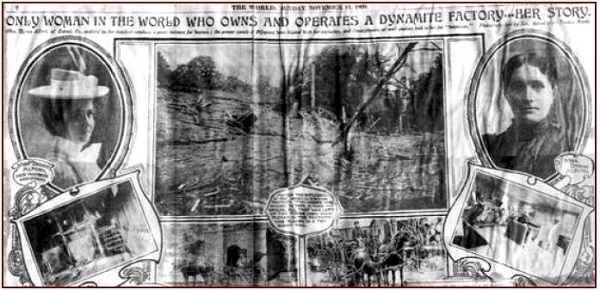
Among the exhibits at Penn-Brad Museum Historical Oil Well Park and Museum is a laminated (though wrinkled) newspaper page from 1899. “This was done by a student many years ago,” explains Director Sherri Schulze. “It was a school project done by one of Mrs. Alford’s descendants.”
Bradford also is home to the oldest operating refinery in the United States. Founded in 1881, the American Refining Group (ARC) facility originally refined just 10 barrels of oil a day. In 2013, its capacity was 11,000 barrels of oil a day. ARC reports that it introduced the first quart can nationally for motor oils in 1933; in 1960, its refinery was the first to introduce motorcycle racing oil. Bradford also home to the Zippo Manufacturing Company, established there in 1932.
In addition to Bradford’s oil museum (actually located in nearby Custer City), more petroleum history exhibits are on display at the Drake Well Museum in Titusville, about 70 miles west. The two museums are separated by the spectacular Allegheny National Forest. Near the state border, the Pioneer Oil Museum of New York at Bolivar is equally helpful for learning about America’s earliest oilfield exploration heritage.
Video tells Oil Story of Bartlesville, Oklahoma
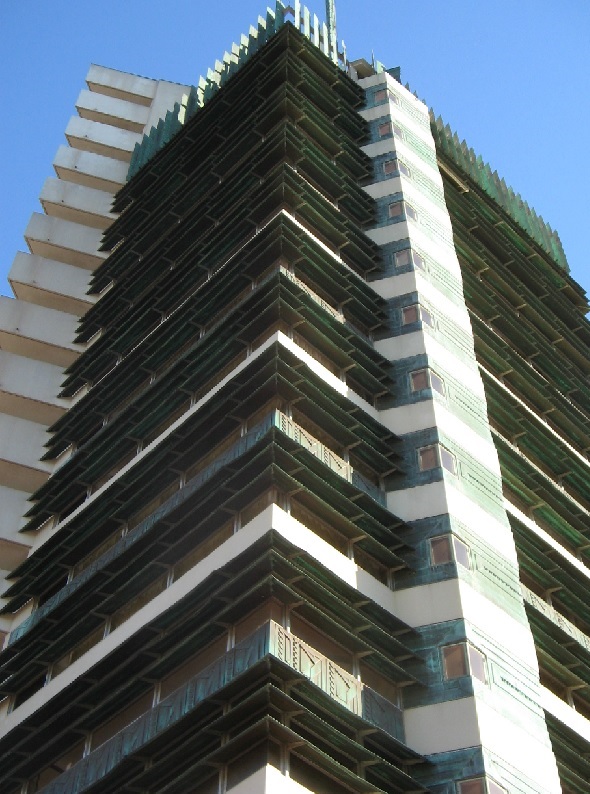
Frank Lloyd Wright was commissioned in 1956 to design the H.C. Price Company headquarters building, today a downtown Bartlesville inn and art center. Photo by Bruce Wells.
Oklahoma’s petroleum industry began in Bartlesville in 1892 with the Nellie Johnstone No. 1 gusher, explains “This is the City that Oil Built,” a June 2016 video at the Bartlesville Area History Museum.
Based on the heritage of Bartlesville and Washington County, the short video looks at the legacies of local industry giants, including Henry V. Foster, Frank and L.E. Phillips, Armais Arutunoff and Harry Sinclair. It features Harold C. Price, who developed an electric welding technique for pipelines.
The Bartlesville legacy of these petroleum titans also includes the Phillips Petrolem Company Museum, which opened in 2007, and Price Tower, the only skyscraper designed by architect Frank Lloyd Wright. South of Bartlesville is the 3,700-acre Woolaroc Museum & Wildlife Preserve, established in 1925 as the ranch retreat of Frank Phillips.
“We’ve reaped the benefits of what these guys left,” concludes Woolaroc CEO Bob Fraser in the 12-minute video, which was produced by local production company PioneerDream Inc. and can be viewed on YouTube. Among the exhibits at the Bartlesville Area History Museum is the original casing head of the historic Nellie Johnstone No. 1 discovery well.
Humble Museum Anniversary
The future giant Exxon, Humble Oil Company, was founded in Humble in 1911.
The Humble Museum in Humble, Texas, celebrated it’s 40th anniversary with an open house on July 30, 2016. The museum on Main Street preserves the history of the area, including the key roles of oil in the everyday life in small town. It was organized as a Bicentennial Project in 1976.
In the museum’s early days, local residents donated so many artifacts that the museum outgrew the original building. In 1985 community support made it possible move the museum to downtown Humble at 1219 Main Street. Remodeling, restoring and furnishing the building was completed and the new home of the Humble Museum was dedicated September 25, 1988.
“There is no charge to enter the museum and enjoy learning about our city’s history. Funds for operation of the museum are provided by the City of Humble, members of the Humble Museum Society, donations from visitors, and the sale of museum gift shop items,” notes the website.
A Treasure of Oklahoma Oil History in Bartlesville
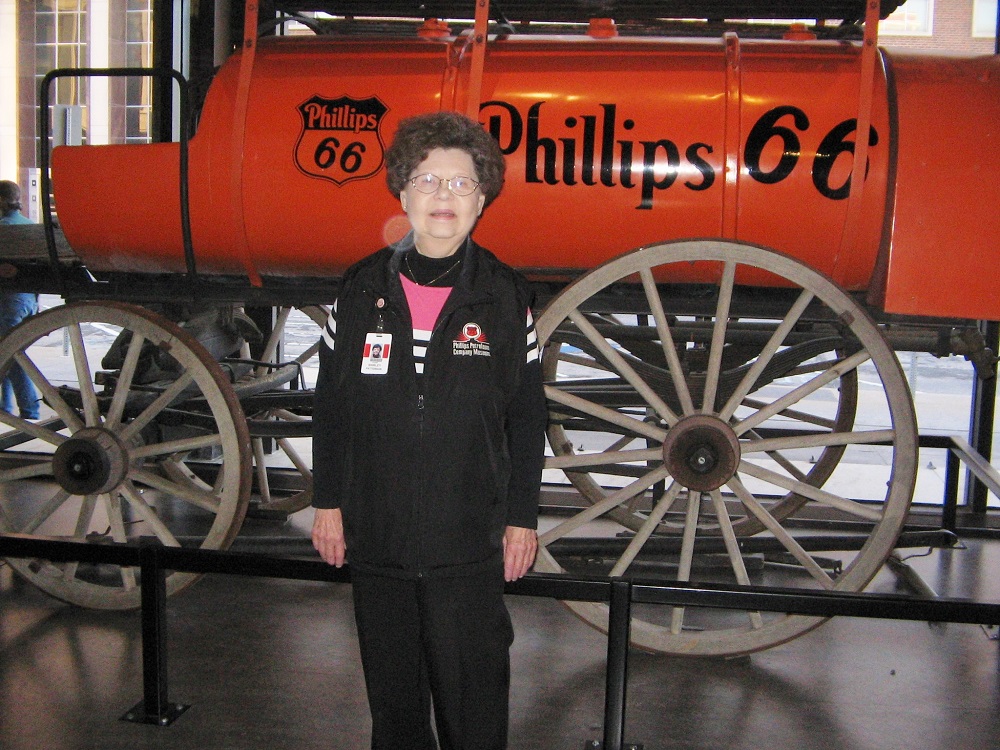
Museum Associate Shirley Patterson, who joined Phillips in 1952, today welcomes visitors to the Phillips Petroleum Company Museum. Photo by Bruce Wells.
Summer visitors may underestimate Shirley Patterson’s petroleum history knowledge when she welcomes them to the Phillips Petroleum Company Museum in Bartlesville, Oklahoma. This quickly changes when the diminutive museum associate offers her first-person accounts of the people and events she witnessed after joining the company in 1952. Patterson, who began at Phillips as a secretary and later worked in accounting, knew every company president except the first, Frank Phillips.
Oklahoma Historical Society Annual Meeting
“Music and Folklore from the Oklahoma Oil Patch” is among the planned sessions when members of the Oklahoma Historical Society gather April 18-20, 2012, in Miami, Oklahoma.
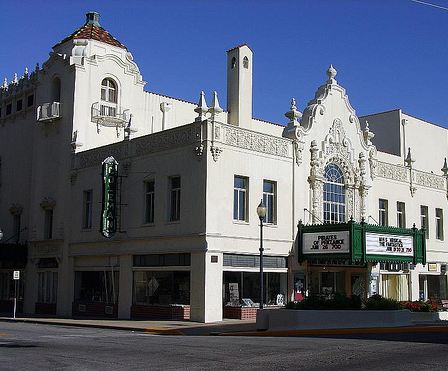
Opened in 1929 as a vaudeville theatre and movie palace, the “Coleman Theatre Beautiful” of Miami, Oklahoma, has never been “dark” since. It will host Oklahoma Historical Society members in April.
Educational sessions and evening events will take place at the elegant Coleman Theatre, according to Annual Meeting Committee Chair Leonard Logan.
“The theme of the annual meeting this year is Crossroads of Creativity: The Impact of Oklahoma on Popular Culture,” Logan explains. “Festivities will begin Wednesday evening with a Coffeehouse Concert at the Coleman Theatre featuring Mason Williams and a host of outstanding musicians who were prominent in the folk music scene as experienced in coffeehouses in Oklahoma and throughout the nation in the 1950s.”
Program sessions feature presentations on topics such as “The Image of American Indians in Movies and Popular Culture, Images of Oklahoma in Popular Culture, The Coffeehouse Era in Oklahoma, Impact of Oklahomans on Images of the American West, Music Festivals and Circuses in Rural Oklahoma, Oklahoma’s Contributions to Jazz and Blues, Oklahoma Authors and Cartoonists – and Music and Folklore from the Oklahoma Oil Patch.
The annual membership luncheon on April 19 will feature Mason Williams as the keynote speaker. Thursday evening will feature “An Evening of Elegance at the Coleman Theatre,” while the Annual Awards Luncheon will take place on Friday. Anyone wishing to receive a registration form via email may do so by emailing their request to Paul Lambert at plambert@okhistory.org
Originally a vaudeville theatre and movie palace, the “Coleman Theatre Beautiful” opened to a full house of 1,600, at $1 a seat, on April 18, 1929. Built by George L. Coleman Sr., a local mining magnate, the opulent structure with Louis XV interior design dazzled the audiences of the day. From that day forward the Coleman has never been “dark.”
April Fools Shoot in Enid
In celebration of its first anniversary, the Cherokee Strip Regional Heritage Center plans a special event for March 31, 2012. The Enid, Oklahoma, center is hosting its first “April Fools Shoot.” The fund-raising competition will take place at the range of the Grand National Quail Hunt Gun Club. Dressed in 19th century hunting costumes, museum staff will explain historic firearms, techniques, and equipment.
PHI 2012 Symposium and Oil History Events
The Petroleum History Institute is hosting its annual Oil History Symposium March 8-10, 2012, in Houston. Symposium headquarters will be in the Four Seasons Hotel, according to Jeff Spenser who is organizing oil history events, which will include a March 10 field trip to the Ocean Star Offshore Drilling Rig and Museum in Galveston.
Oral presentations and posters will be presented on March 9; submitted papers will be included in the next edition of the Oil City, Pennsylvania-based institute’s Oil-History Journal, edited by William Bruce, author of Myth, Legend, Reality – Edwin Laurentine Drake and the Early Oil Industry. To lean more and register, visit the institute’s website.
Petroleum Museum exhibits Oil Stock Certificates
An exhibit of oil company stock certificates is on loan from the Western Heritage Museum at New Mexico Junior College in Hobbs, according to the Petroleum Museum’s third-quarter 2011 “Bits & Bytes” newsletter. The collection includes stock certificates from as early as 1902 to the 1950s.
Companies such as El Paso Natural Gas, Humble, Stanolind and Seaboard as well as Texon, are on exhibit. “Anyone interested in learning the value of old stock certificate can try several places,” the museum notes. “Online search engines can help determine if the company is still in existence.”
The Petroleum Museum also suggests contacting the state that incorporated the company. “The state’s corporation commission should be able to determine if the company still exists or if it merged and changed names.” Other recommendations include (for a growing number of collectors) scripophily.com, and the discussion forum at the historical society: Stock Certificate Q&A.
Founded in 1975 by George T. Abell, this Permian Basin petroleum museum includes a 40,000-square-foot facility housing photographic wall murals depicting early life in the oilfields, a West Texas boomtown, and a marine diorama of 230 million years ago.
43rd Annual West Virginia Oil & Gas Festival

On the Ohio River near Parkersburg, West Virginia, Sistersville citizens annually celebrate an 1891 oil discovery. At right, Kelsey Waybright, the 2010 Oil and Gas Festival Queen, crowns the 2011 Queen Marlee Sexton of Parkersburg. Photo courtesy of TylerStarNews.com
An annual community event since 1969, the 2011 West Virginia Oil & Gas Festival takes place September 15-17 in the historic community of Sistersville and celebrates the little-known story of the Appalachian petroleum industry. Call (304) 652-2939.
An August 11, 1891, discovery well made this small Ohio River community the world’s leading oil producer. The well was restored as a tourist attraction in 1911 by Quaker State Refining Corporation.
76th Annual Shrimp and Petroleum Festival
South Louisiana has a rich history when it comes to festivals, notes an article in Lafourche Parish, Louisiana’s Dailycometcom. That’s what makes the 76th annual Louisiana Shrimp and Petroleum Festival special, organizers say.
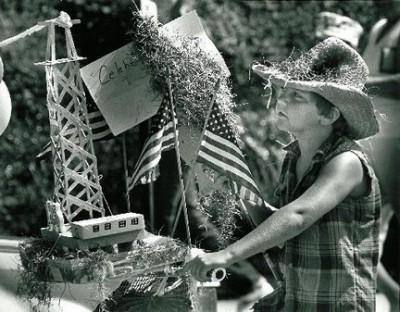
Although in 1985 the oil and natural gas industry and shrimp production were severely depressed, Morgan City still celebrated its two vital industries at the 50th anniversary of the Louisiana Shrimp and Petroleum Festival. Photo from the New Orleans Times-Picayune archive.
“We are a complete, family-oriented festival,” festival director Lee Delaune says about the oldest chartered harvest festival in Louisiana. “There’s not many like us out there. We have a little of something for everyone, whether it’s the kids, adults or those who enjoy the more traditional things our festival has to offer.”
The festival, scheduled to begin at 5 p.m. September 1 and continue through September 5, will feature more than 100 artists, crafters, carnival rides and food vendors, almost all of which will be sheltered in the shade beneath the U.S. 90 overpass in Morgan City.
Morgan City’s largest event of the year typically draws 150,000 people. Most of the festival’s attendees come from south Louisiana, particularly the area between Houma and New Iberia, but the event also entertains international visitors, including foreign workers stopping in at the port city.
A shrimp festival became the Louisiana Shrimp and Petroleum Festival in 1967.
The Shrimp and Petroleum Festival began in 1936 when the port of Morgan City and Berwick received its first boatload of jumbo shrimp. The festival became the Louisiana Shrimp and Petroleum Festival in 1967 — as the oil industry became a vital part of the local economy. Organizers say the festival recognizes the working men and women of both the seafood and petroleum industries, which are the economic lifeblood of the area.
The festival has been picked as a Top 100 American Bus Association event and a Top 20 Southeast Tourism event. To learn about other oil history events, visit shrimp-petrofest.org. Morgan City also is home to the offshore rig Mr. Charlie, the International Petroleum Museum and Exposition.
Also see Museum News
Misc. Archived Oil History Events from 2011
Festivals in Pennsylvania Oil Region
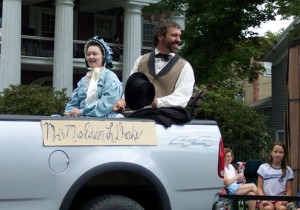
America’s oldest annual oil festival includes a parade in Titusville, Pennsylvania. Photo by Bruce Wells.
Titusville, Pennsylvania, hosts its 152nd Annual Oil Festival on August 12-13, 2011. This year’s oil history events include:
August 12 –Free public education program at Drake Well Museum — “The Early History of Refining” will be conducted by Neil McElwee. The workshop is sponsored by the Oil Region Alliance. A YMCA 5K Walk/Run Race takes place at the Ed Myr Complex.
An “All Class Reunion” at the high school cafeteria is sponsored by the Titusville Alumni Association. The 12th Annual Titusville Health & Aging Auction occurs at the Titusville Community Center.
The Farmers National Bank will be presenting Matt Gavula: Erie’s Piano Man in a Kick-Off Concert. The Blue Canoe Brewery offers outdoor entertainment: Joe’s Sunroom. The day includes the first of a planned annual Wine Rush will be at Angeli Winery. On August 13 –Crafters and vendors selling their wares in downtown Titusville sponsored by Titusville Leisure Services. The annual parade down Main Street will start at 11 a.m. It is sponsored by the Titusville Area Chamber of Commerce.
Other activities will include tours of the First Presbyterian Church and the historic childhood home of Ida Tarbell on Main Street. The Oil Region Alliance will conduct the free tours. An Art Show and Chalk Walk at the Main Street School is sponsored by the Titusville Council on Arts. A Farmers Market is sponsored by Titusville Renaissance, Inc., and the Drake’s Folly 3rd Annual Brew Fest at the Blue Canoe Brewery will be popular along with the antique and new tractor display on West Spring Street. Fireworks are scheduled for 10 p.m.
On July 31, 2011, in nearby Oil City, the 33rd Annual Oil Heritage Festival included a craft show, parade, evening concerts in Justus Park, fireworks display along the Allegheny River, softball tournament, ice cream social, bicycle rodeo, children’s mini-carnivals — and great food.
California Oil Museum Cruises into Summer Oil History Events
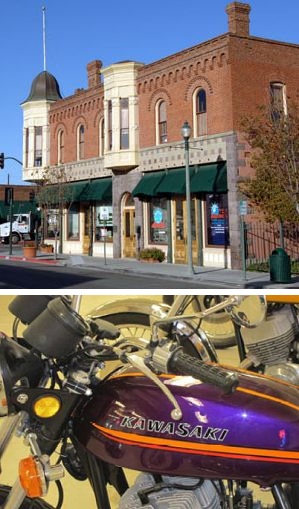
Summer is the perfect time to visit the California Oil Museum in Santa Paula for its annual summer motorcycle exhibit, which will be open through September 18, 2011. The museum is the historic 1890s Union Oil Company headquarters building.
“The bikes are coming! Summer is the perfect time to get out your motorcycle and come down to the California Oil Museum for our annual summer motorcycle exhibit,” says museum Director Jeanne Orcutt about her Santa Paula museum.
The July 1 opening reception coincided with Santa Paula’s “Cruise Night,” which brought visitors to the museum while on the way to see the classic cars cruising Main Street. The exhibit will be open through September 18, 2011.
“This year the museum will be featuring a fantastic collection of Kawasaki’s beginning with a 1969 Blue Streak/H-1/Mach III…a bike with serious attitude that changed the world of motorcycling forever,” Jeanne says in her Summer 2011 E-Newsletter. The 1970s Motorcycles are from the collection of Daniel Schoenewald of Ventura County.
“Their evolving style and specs provide a wonderful history of how Kawasaki developed over the years and will remind you of why you couldn’t wait to buy your first motorcycle! Kawasaki emerged out of the ashes of World War II to become one of the big players from Japan,” Joanne says. “In the late ’60s and early ’70s, Kawasaki built a reputation for some of the most powerful engines on two wheels.”
Other exhibits at the California Oil Museum — in addition to its permanent Petroleum Galleries — include the 13th Annual Santa Paula High School Student Art Show, May 22 to July 24, 2011, and the History of the Santa Paula Police Department, May 21 to September 25, 2011.
Petroleum History Institute Symposium — June 23 to 25, 2011, in Ohio
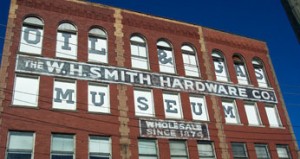
Twenty minutes south of Marietta and across the Ohio River, the Oil and Gas Museum in Parkersburg, West Virginia, includes four floors of petroleum exhibits.
The Petroleum History Institute and its co-sponsors are seeking papers, both oral and poster presentations, for the Symposium and Field Trip meeting to be held at Marietta, Ohio, June 23-25, 2011. Deadline for submitting papers is May 1, according to Jeff Spencer.
“The Symposium will be held on Friday, June 24, and authors can request either the morning or afternoon sessions,” Spencer notes. “Unless otherwise requested, the oral presentations will be limited to 30 minutes, including a short Q & A. Poster presentations will be mounted on Thursday afternoon and will stay available to the participants until Friday afternoon.”
The Oil and Gas Museum in Parkersburg, West Virginia, is across the Ohio River and about 15 miles south from the 2011 symposium site in Marietta. PHI especially welcomes papers about the history of the industry in the Ohio-West Virginia regions — but also welcomes papers on any subject related to the industry.
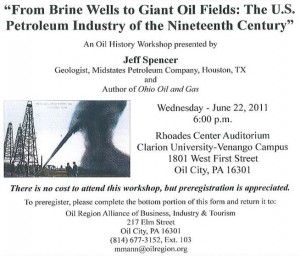
Based in Oil City, Pennsylvania, the Oil Region Alliance of Business, Industry and Tourism, hosts many oil history events. The region was designated as the 25th U.S. National Heritage Area in 2004.
Authors of accepted papers are strongly encouraged to submit their manuscripts for inclusion in the 2011 issue of Oil-Industry History, the only peer-reviewed professional journal devoted exclusively to the history of the international oil and gas industry.
For more information, contact: wbrice@pitt.edu. Please submit abstracts (600 words or fewer) to: W. R. Brice, Editor, Oil-Industry History, 116 Luna Lane, Johnstown, PA 15904.
Roughneck Daddy
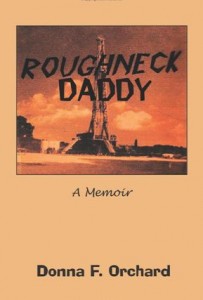
The East Texas Oil Museum hosted a book signing event for author Donna Orchard.
The East Texas Oil Museum hosts a June 11, 2011, book signing by retired educator and author Donna F. Orchard, of Mississippi. The 10 a.m. to noon signing of her new book, Roughneck Daddy, takes place at the museum, located on the campus of Kilgore College. The book is the story of how Orchard grew up as the daughter of a roughneck in the oilfield. A book signing is also scheduled that same afternoon from 1 p.m. to 3 p.m. at the Gaston Museum, 6558 Hwy. 64 West, in Joinerville.
Spring 2011 Oil History Events
Electra, Texas, Celebrates Oil Centennial with Oil History Events
An oil discovery centennial party is coming to Electra, Texas! On April 1, 1911, just south of the Red River border with Oklahoma, the Clayco Oil & Pipe Line Company’s Clayco No. 1 well launched an oil boom, notes the Pump Jack Capital Association.
Many activities are planned for the April 1, 2011, Clayco No. 1 centennial celebration in Electra, Texas — including a parade and rededication ceremony of the well’s historic marker.
The gusher on cattleman William T. Waggoner’s lease produced about 650 barrels per day from 1,628 feet. Hundreds of producing wells would follow, reaching the oilfield’s peak production of more than eight million barrels in 1913. The Wichita County town is named after Waggoner’s daughter.
Thanks to the initiative of resident historians, the Texas legislature designated Electra as the “Pump Jack Capital” of Texas in 2001. A host of activities are planned for the April celebration of the Clayco No. 1 well, including a keynote address by Alex Mills, president of the Texas Alliance of Energy Producers, during a re-dedication ceremony of the well’s historic marker.
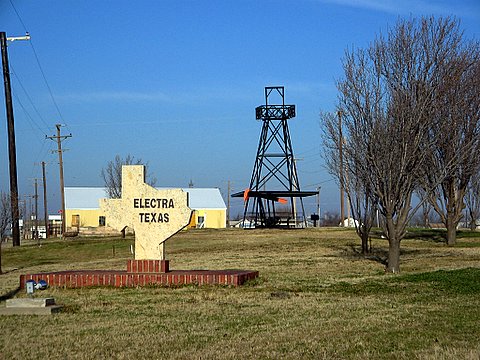
Texas designated Electra the “Pump Jack Capital” in 2001. Photo by Bruce Wells.
Among the April 1-2 oil history events highlights are a pictorial display of petroleum history inside Electra’s Grand Theatre; a walking tour of antique oil equipment, including the Clayco well’s boiler; a special Chuck Wagon Gang Lunch and chili cook-off; oil history events for young people; and plenty of live entertainment.
Good Oil Days in Humble, Texas
On April 10, 2011, marked the 31st anniversary of the Humble, Texas, celebration — Good Oil Days— which has annually celebrated a 1904 oil drilling boom and later discoveries. The community’s rich petroleum heritage includes the 1911 founding of Humble Oil and Refining Company (now ExxonMobil) by Ross Sterling, who once operated a feed store there.
Derrick Days & Chili Cook-Off in Corsicana
Also in the Lone Star State, the 2011 celebration of Corsicana’s rich oil heritage will take place April 29 and 30 — Corsicana Derrick Days will include the annual Chili & BBQ Cook-off.
In 1976, Corsicana leaders decided that annual oil history events should be established commemorating Corsicana’s petroleum exploration history and its significant impact on the community’s development. Derrick Days has become the premier festival event in Navarro County.
 The first Derrick Days was held that year and every spring thereafter, growing in size with the addition of new activities each year. It’s a great time, especially when you add an annual craw-fish boil, this year combined with a golf tournament, scheduled for April 1 and 2 — just four weeks ahead of the big weekend.
Editor’s Note —Although nothing official is planned for April 15 in Bartlesville, Oklahoma, some oil patch historians no doubt will inform visitors at the replica derrick in Johnstone Park that at 3 p.m. in 1897, Jennie Cass dropped an explosive charge down a well — and brought in the state’s first commercially successful oil well, the Nellie Johnstone Number One. When in Bartlesville, also visit the Phillips Petroleum Company Museum.
2011 Natural Gas Workshop
The Oil Regional Alliance of Oil City, Pennsylvania, sponsors a March 26, 2011, workshop, “Hidden Highway: Natural Gas Pipelines & Distribution Past, Present & Future,” presented in the Oil City Library by David Waples, manager of corporate communications for National Fuel Gas Company, Erie. David is author of the Natural Gas Industry in Appalachia.
Borger, Texas, Birthday
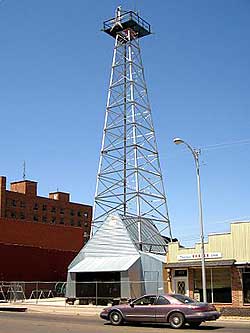
The Hutchinson County Historical Museum in Borger, Txeas. Photo by Bruce Wells.
In Texas, the Hutchinson County Historical Museum (once the “Boom Town” museum) celebrates the city of Borger’s 85th birthday on March 12, 2011. Oil History events feature a program by author and storyteller Dr. Bobby Weaver called “Oilfield Trash” which explores the lighter side of the western experience.
“Built on the contents of both his 2010 books — Hotter’n Pecos and Oilfield Trash— the presentation provides a glimpse into the lifestyles of oilfield workers and other characters who made boomtown boom. Theirs is a story often humorous, sometimes serious, but always entertaining.”
For news about other notable historical society events — contact AOGHS and ask about its Energy Education Conference & Field Trip and other special oil history events featured in earlier Petroleum Age newsletters.
__________________________________
The American Oil & Gas Historical Society (AOGHS) preserves U.S. petroleum history. Please become an AOGHS supporter and help maintain this energy education website and expand historical research. For more information, contact bawells@aoghs.org. © 2025 Bruce A. Wells.