December 22, 1875 – Grant paves Pennsylvania Avenue with Asphalt –
President Ulysses S. Grant convinced Congress to repave Pennsylvania Avenue’s badly deteriorated plank boards with asphalt. Grant delivered to Congress a “Report of the Commissioners Created by the Act Authorizing the Repavement of Pennsylvania Avenue.”
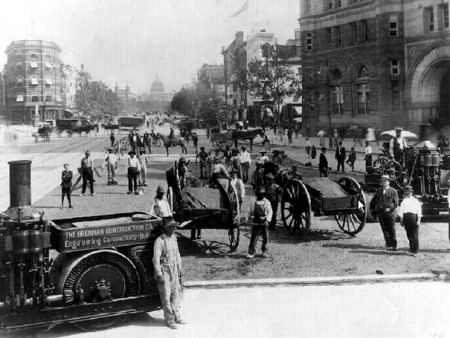
Pennsylvania Avenue was first paved with Trinidad bitumen in 1876. Above, asphalt distilled from petroleum in 1907 repaved the road to the Capitol.
The project would cover 54,000 square yards. “Brooms, lutes, squeegees, and tampers were used in what was a highly labor-intensive process.” With work completed in the spring of 1877, the asphalt — obtained from a naturally occurring bitumen lake found on the island of Trinidad — would last more than 10 years.
In 1907, the road to the Capitol was repaved again with a superior asphalt made with petroleum from U.S. oilfields. By 2005, the Federal Highway Administration reported that more than 2.6 million miles of America’s roads were paved.
Learn more in Asphalt Paves the Way.
December 22, 1903 – Carl Baker patents Cable-Tool Bit
Reuben Carlton “Carl” Baker of Coalinga, California, patented an innovative cable-tool drill bit in 1903 after founding the Coalinga Oil Company.
“While drilling around Coalinga, Baker encountered hard rock layers that made it difficult to get casing down a freshly drilled hole,” noted a Baker-Hughes historian in 2007. “To solve the problem, he developed an offset bit for cable-tool drilling that enabled him to drill a hole larger than the casing.”
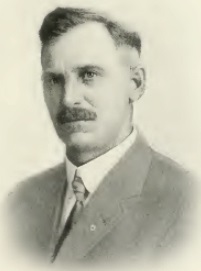
Oilfield technology pioneer and Baker Tools Company founder R.C. “Carl” Baker in 1919.
Coalinga would become a petroleum boom town thanks to Baker’s leadership, according to the town’s museum. He helped establish several oil companies, a bank, and the local power company. After drilling wells in the Kern River oilfield, he added another innovation in 1907 by patenting the Baker Casing Shoe, a device ensuring uninterrupted flow of oil through the well.
By 1913 Baker organized the Baker Casing Shoe Company (renamed Baker Tools two years later). He opened his first manufacturing plant in Coalinga in a building — today home to the R.C. Baker Museum. Baker never advanced beyond the third grade but “possessed an incredible understanding of mechanical and hydraulic systems.”
Learn more in Carl Baker and Howard Hughes.
December 22, 1975 – Strategic Petroleum Reserve established
President Gerald R. Ford established the U.S. Strategic Petroleum Reserve by signing the Energy Policy and Conservation Act of 1975. With a capacity of 713.5 million barrels of oil in 2018, the Strategic Petroleum Reserve was the largest stockpile of government-owned emergency oil in the world. SPR storage sites include five salt domes on the Gulf Coast. In addition to SPR, the Department of Energy maintains a Northeast Home Heating Oil Reserve of one million barrels and a one million barrel supply of gasoline.
December 23, 1919 – Home Gas Heating System
When most American homeowners were stocking up on wood and coal to heat their homes, Alice H. Parker patented a gas furnace system with adjustable ducts. The 1910 graduate of Howard University described her patent (no. 1,325,905) as a reliable gas-heating furnace, with “individual hot air ducts leading to different parts of the building, so that heating of the various rooms or floors can be regulated as required.”
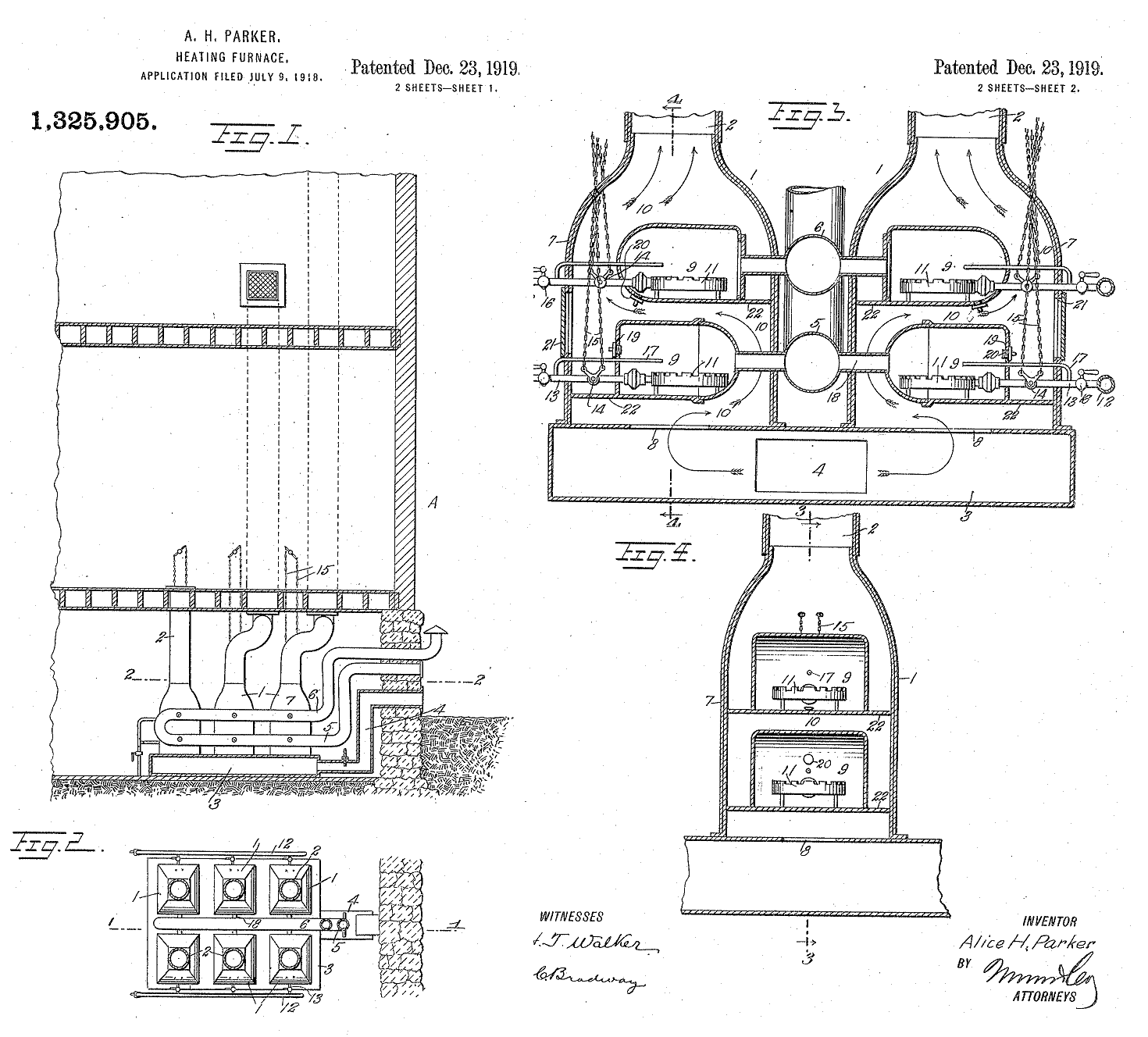
Howard University graduate Alice Parker in 1919 patented her design for a reliable gas furnace with adjustable hot air ducts for each room.
Although Parker’s patent was not the first for a gas furnace design, according to Heat Treat Today, “It was unique in that it incorporated a multiple yet individually controlled burner system.” By 1927, more than 250,000 U.S. homeowners were heating with natural gas.
December 23, 1943 – Oilfield discovered in Mississippi
Gulf Oil Company discovered a new Mississippi oilfield at Heidelberg in Jasper County. The company’s surveyors had recognized the geological potential of the area southeast of Jackson as early as 1929, and Gulf Oil used newly developed seismography methods and core drilling technologies to look for oil-bearing formations.
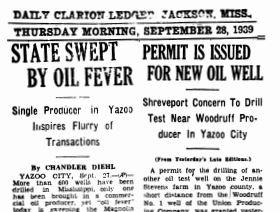
Mississippi’s petroleum industry begins with a 1939 oilfield discovery in Yazoo County when a “Single Producer in Yazoo Inspires Flurry of Transactions.”
The 1943 discovery well revealed one of the state’s largest oilfields since the Tinsley oil-producing formation in 1939. The first major Mississippi oil well was drilled following a geological survey by a young geologist — who had sought a suitable Yazoo County clay to mold cereal bowls for children. “It all began quite independently of any search for oil,” a historian later explained.
Learn more in the First Mississippi Oil Wells.
December 24, 1997 – Petroleum Products in a Holiday Classic
The TNT network began airing “24 Hours of A Christmas Story,” an annual marathon of an independent film made in 1983. The movie’s popularity — and merchandise sales — led to more marathons on TBS. In addition to the plastic leg lamp with black nylon polymer stocking, another petroleum product was featured: a paraffin-based novelty candy.

“A Christmas Story” featured Ralphie, his 4th-grade classmates, and an unusual petroleum product. Photos courtesy MGM Home Entertainment.
Paraffin makes its appearance when Ralphie Parker and his fourth-grade classmates smuggle Wax Fangs into class. An older generation may recall the peculiar disintegrating flavor of Wax Lips, Wax Moustaches, and Wax Bottles. Few realize the candy started in the U.S. oil patch — as did another oilfield paraffin product, Crayola Crayons.
Learn more in the Oleaginous History of Wax Lips.
December 26, 1905 – Nellie Bly’s Ironclad 55-Gallon Metal Barrel
Inventor Henry Wehrhahn of Brooklyn, New York, received two patents that would lead to the modern 55-gallon steel drum. He assigned both to his employer, the famous journalist Nellie Bly, who was president of the Iron Clad Manufacturing Company.
“My invention has for its object to provide a metal barrel, which shall be simple and strong in construction and effective and durable in operation,” noted Wehrhahn about his design, which featured rolled hoops strength. After receiving a second patent for detaching and securing a lid, he assigned both to Elizabeth Cochrane Seaman (Nellie Bly), widow of the company’s founder, Robert Seaman.
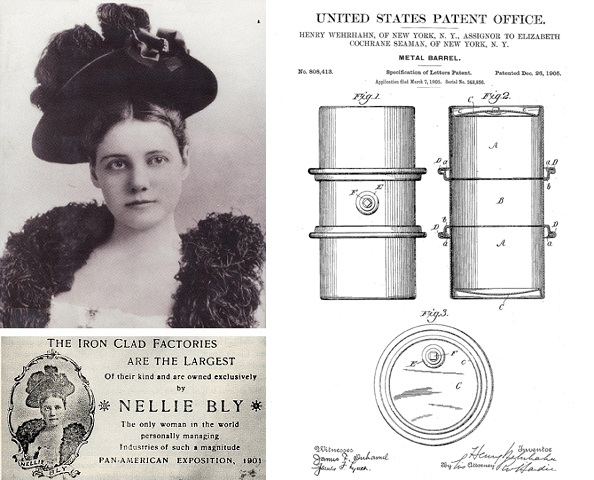
Elizabeth Cochrane Seaman (Nellie Bly) was assigned a 1905 “Metal Barrel” patent by inventor Henry Wehrhahn, who worked at her Iron Clad Manufacturing Company.
Well-known as a reporter for the New York World, Bly manufactured early versions of the “Metal Barrel” that evolved into the modern 55-gallon steel drum. For a time, Nellie Bly was one of the leading women industrialists in the United States. Wehrhahn moved to Milwaukee, Wisconsin, to become superintendent of the Pressed Steel Tank Company.
Learn more in the Remarkable Nellie Bly’s Oil Drum.

December 28, 2017 – Smithsonian features Oilfield Nitro Factory
“The True Story of Mrs. Alford’s Nitroglycerin Factory,” proclaimed an article in Smithsonian magazine about the early oil industry. “Mary Alford remains the only woman known to own a dynamite and nitroglycerin factory,” the magazine added about the 19th-century nitroglycerin factory owner. With the Bradford, Pennsylvania, oilfield in 1881 accounting for 83 percent of all U.S. oil production, Mrs. Alford was reported to be “an astute businesswoman in the midst of America’s first billion-dollar oilfield.”
Learn more in Mrs. Alford’s Nitro Factory.
December 28, 1930 – Well reveals extent of East Texas Oilfield
Three days after Christmas, a major oil discovery on the farm of the widow Lou Della Crim of Kilgore revealed the extent of the giant East Texas oilfield. Her son, J. Malcolm Crim, had ignored advice from most geologists and explored about 10 miles north of the field’s discovery well, drilled in October by Columbus “Dad” Joiner on the farm of another widow, Daisy Bradford.
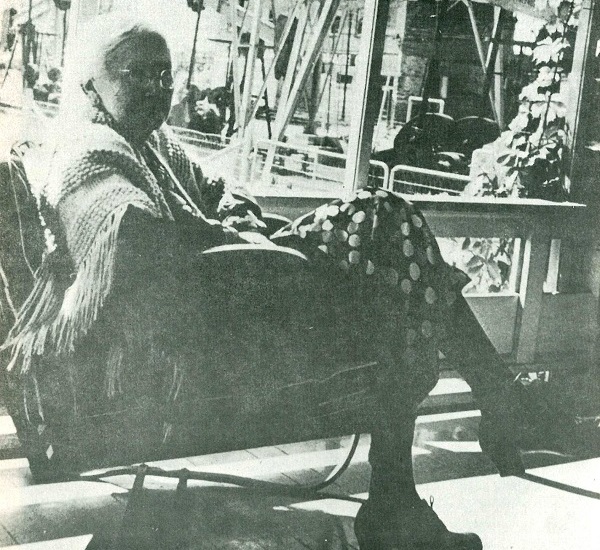
“Mrs. Lou Della Crim sits on the porch of her house and contemplates the three producing wells in her front yard,” notes the caption of this undated photo courtesy Neal Campbell, Words and Pictures.
The Lou Della Crim No. 1 well erupted oil on a Sunday morning while “Mamma” Crim was attending church. The well initially produced 20,000 barrels of oil a day.
One month later and 15 miles farther north, a third wildcat well drilled by Fort Worth wildcatter W.A. “Monty” Moncrief confirmed the true size of the largest oilfield in the continental United States. The East Texas field would encompass more than 480 square miles.
Learn more in Lou Della Crim Revealed.
_______________________
Recommended Reading: Down the Asphalt Path: The Automobile and the American City



_______________________
The American Oil & Gas Historical Society (AOGHS) preserves U.S. petroleum history. Please become an AOGHS annual supporter and help maintain this energy education website and expand historical research. For more information, contact bawells@aoghs.org. Copyright © 2025 Bruce A. Wells. All rights reserved.