

August 10, 1909 – Hughes patents Two-Cone Drill Bit –
“Fishtail” drill bits became obsolete after Howard Hughes Sr. of Houston, Texas, patented the dual-cone roller bit with two rotating cones. By pulverizing hard rock, his bit led to faster and deeper rotary drilling. A few months before receiving the 1909 drill patent, Hughes and Walter Sharp established the manufacturing company Sharp-Hughes Tool (see Carl Baker and Howard Hughes).
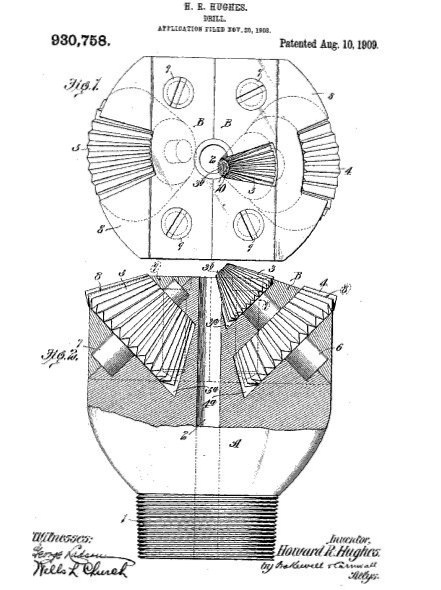
Howard Hughes Sr. of Houston, Texas, received a 1909 patent for “roller drills such as are used for drilling holes in earth and rock.”
“Instead of scraping the rock, as does the fishtail bit, the Hughes bit, with its two conical cutters, took a different engineering approach,” reported the American Society of Mechanical Engineers (ASME). “By chipping, crushing, and powdering hard rock formations, the Hughes Two-Cone Drill Bit could reach vast amounts of oil in reservoirs thousands of feet below the surface. This new drilling technology would revolutionize the industry.”
In 1933, Hughes engineers invented the modern tri-cone bit; Frank and George Christensen developed the earliest diamond bit in 1941; and tungsten-carbide bits arrived in the early 1950s. By the 1970s, synthetic diamonds had evolved into the polycrystalline diamond compact bit. ASME in 2009 designated the Hughes two-cone drill bit a Historic Mechanical Engineering Landmark (no. 246).
Learn more in Making Hole – Drilling Technology.
August 11, 1891 – Pole Cat Well brings Prosperity to Sistersville
The discovery well of the Sistersville oilfield brought great wealth to a small West Virginian town on the Ohio River north of Parkersburg and Burning Springs (see Confederates attack Oilfield). “The bringing in of the ‘Pole Cat’ well, which pumped water for a year before it pumped oil, brought in a sudden influx of oil men, drillers, leasers, speculators, followers, floaters, wildcatters, and hangers-on,” a local historian noted.
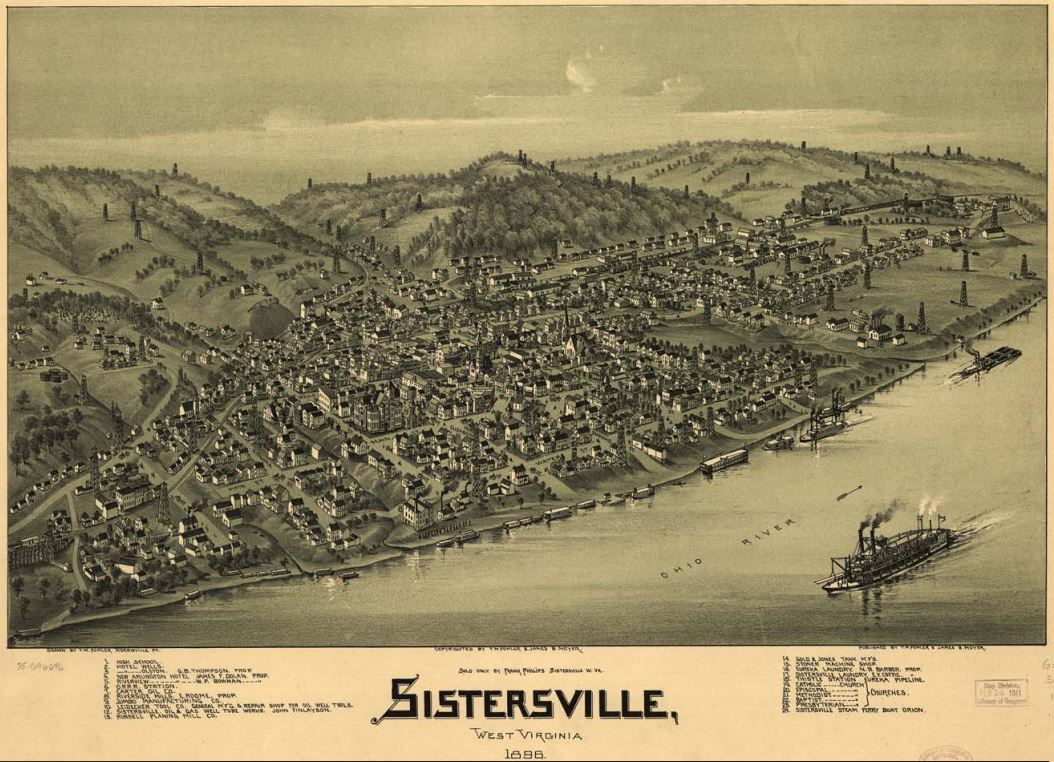
Bird’s-eye-view artist Thaddeus M. Fowler created maps of prospering towns and cities during the Industrial Revolution, including many oil boom towns like his 1896 lithograph of Sistersville, West Virginia. Map courtesy Library of Congress.
The petroleum wealth changed Sistersville from a rural village of 300 people “to a rip-roaring” metropolis of 15,000 people almost overnight. At the height of its petroleum prosperity, cartographic artist Thaddeus M. Fowler of Massachusetts illustrated Sistersville in one of his popular “bird’s eye” maps (see Oil Town “Aero Views”).

Crowned the 2026 West Virginia Oil & Gas Queen on July 11 in the Tyler Consolidated High School Auditorium, Brooklynn Markley will host Sistersville’s 58th annual festival. Detail of photo courtesy Tyler Star News.
Sistersville residents annually celebrate their 1891 Pole Cat well — later renamed the Sistersville well. Events at the 58th West Virginia Oil and Gas Festival on September 11-19 will include the Gib Morgan Wrench Throwing Contest and a parade hosted by 2026 Festival Queen Brooklynn Markley.
August 11, 1998 – Amoco announces BP merger
Amoco announced plans to merge with London-based British Petroleum Company in a stock swap valued at about $48 billion — then the world’s largest industrial merger. Amoco began in 1889 as John D. Rockefeller’s Standard Oil Company of Indiana. The company officially changed its name to Amoco in 1985.
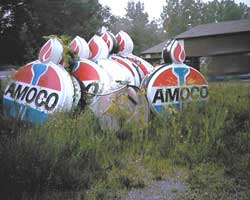
BP closed all of its Amoco stations in 2001.
Finalized on December 31, the combined company, BP Amoco PLC, became 60 percent owned by BP shareholders, marking the transaction as the largest foreign takeover of an American company. Originally named the Anglo-Persian Oil Company in 1935, British Petroleum in 2000 rebranded as BP and announced the closure of its Amoco stations.
August 12, 1888 – World’s First Auto Road Trip
Thirty-nine-year-old Bertha Benz made history when she became the first person to make a long-distance trip by automobile. Her adventure also included “the first road repairs, the first automotive marketing stunt, the first case of a wife borrowing her husband’s car without asking, and the first violation of intercity highway laws in a motor vehicle,” proclaimed a 2018 article in Wired.
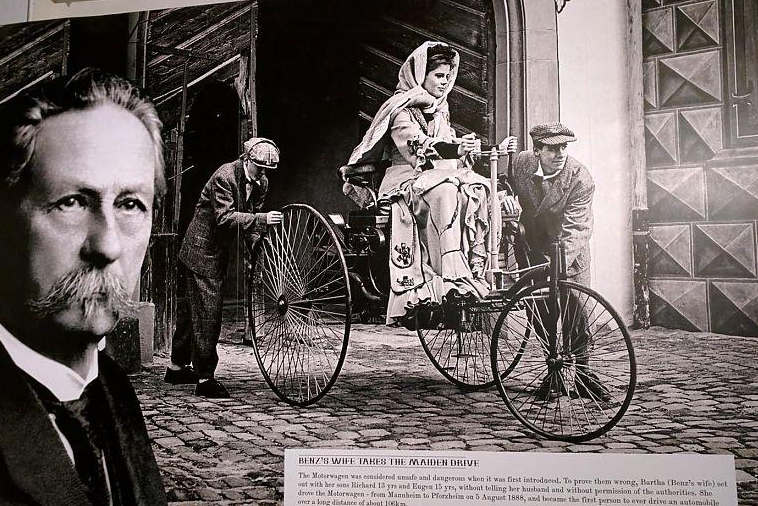
The world’s first female automotive pioneer, Bertha Benz, took an 1888 road trip that popularized Karl Benz’s latest invention — and saved him from financial ruin. Image courtesy Mercedes-Benz Museum.
Bertha drove away in the “Patent Motorwagen” (after leaving a note to her husband) and took their two sons, Eugen, 15, and Richard, 13, to visit her mother in Pforzheim, according to Wired. The trip from Mannheim covered about 60 miles. “She knew she’d need help, because the 0.88-horsepower engine was a little underpowered, to say the least, and would need to be pushed up some of the steeper hills.”
The 15-hour drive — today the Bertha Benz Memorial Route — helped popularize Karl Benz’s invention. By the end of the century, Mercedes-Benz was the largest car company in the world. The Automotive Hall of Fame inducted Bertha as the first female automotive pioneer in 2016.
Learn more in First Car, First Road Trip.


August 12, 1930 – Kentucky Oil and Gas Producers unite
Eastern Kentucky independent producers joined the Western Kentucky Oil Men’s Association to create a statewide organization in Frankfort — the Kentucky Oil and Gas Association (KOGA). A 1919 oil discovery in Hancock County had launched the petroleum industry in western Kentucky, where commercial amounts of oil had been found as early as 1829 near Burkesville while drilling for brine with a spring-pole (also see Kentucky’s Great American Well).
August 13, 1962 – Norman Rockwell illustrates Oil and Gas Journal
The Oil and Gas Journal promoted itself with an illustration from artist Norman Rockwell in an ad captioned, “Where Oil Men Invest Their Valuable Reading Time.” Rockwell’s renditions of American life brought him popularity through magazines like the Saturday Evening Post, Boy’s Life, and Leslie’s Illustrated Weekly.
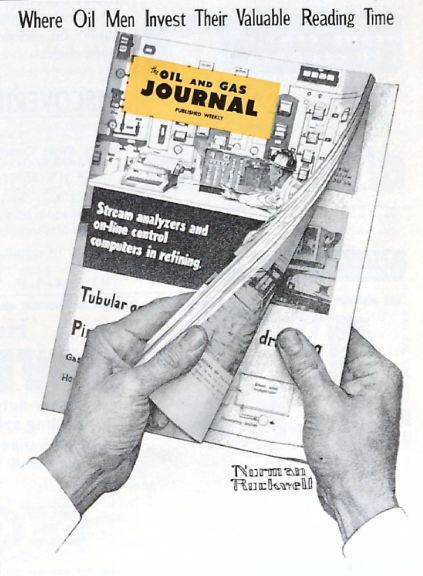
A Norman Rockwell illustration advertised the Oil and Gas Journal, a weekly trade magazine, “Where Oil Men Invest Their Valuable Reading Time.”
In addition to the illustrations for the Oil and Gas Journal, Rockwell provided artwork to the American Petroleum Institute (API), which in 1959 sponsored a U.S. Postal Service “first day of issue” commemorating the centennial of the birth of the U.S. oil industry (see Centennial Oil Stamp Issue).
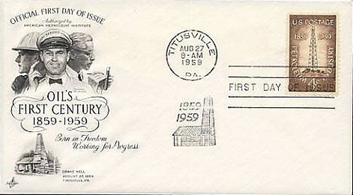
Norman Rockwell’s art commemorated the 1959 centennial of the birth of the American petroleum industry.
The illustration included the slogan “Oil’s First Century 1859-1959, Born in Freedom Working for Progress,” and depicted a scientist, an oilfield worker, and a service station attendant.
August 14, 1986 – Union Oil Company Building listed as Historic
The National Register of Historic Places added the 1890 headquarters building of the Union Oil Company in Santa Paula, California, where a Union Oil Museum opened in 1950 — and reopened as the California Oil Museum in 1990 after the building was restored to its original appearance. Needing maintenance and repairs by 2021, the building was closed by the California Oil Museum Foundation.
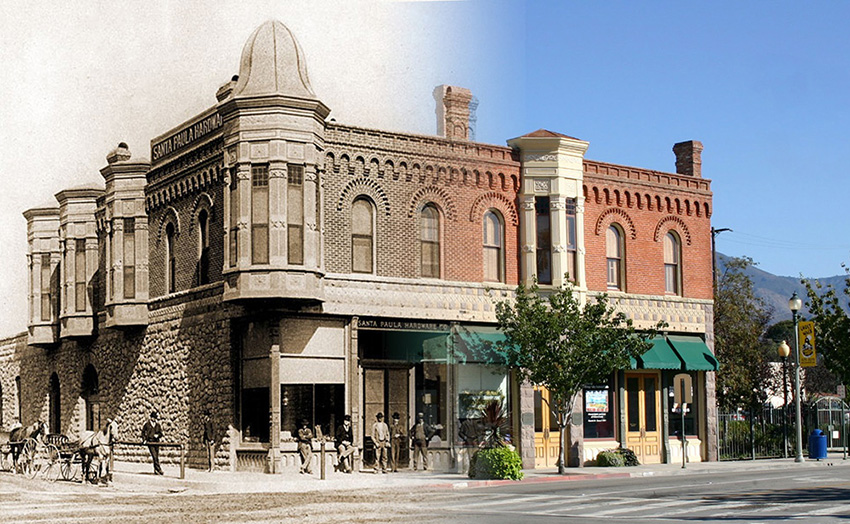
The 1890 Union Oil Company of California headquarters building, restored in 1990 as the California Oil Museum, was donated to the city of Santa Paula in 2023 by Chevron with a $2 million preservation grant. Photo courtesy Ventura County Museums.
In 2023, the Santa Paula City Council agreed to take over the Chevron-owned property, accepting a $2 million grant to preserve the building and Union Oil Company artifacts, according to the Ventura County Star.

August 15, 1945 – End of World War II Gas Rationing
One day after President Harry Truman announced World War II was over, gasoline rationing ended in America. Food rationing had begun in early 1942, with rubber and gasoline added in December by the Office of Price Administration. Most civilian drivers received a windshield sticker with ration coupons for gasoline, limiting purchases to four gallons a week. A ration book “B” sticker allowed business owners up to eight gallons a week.

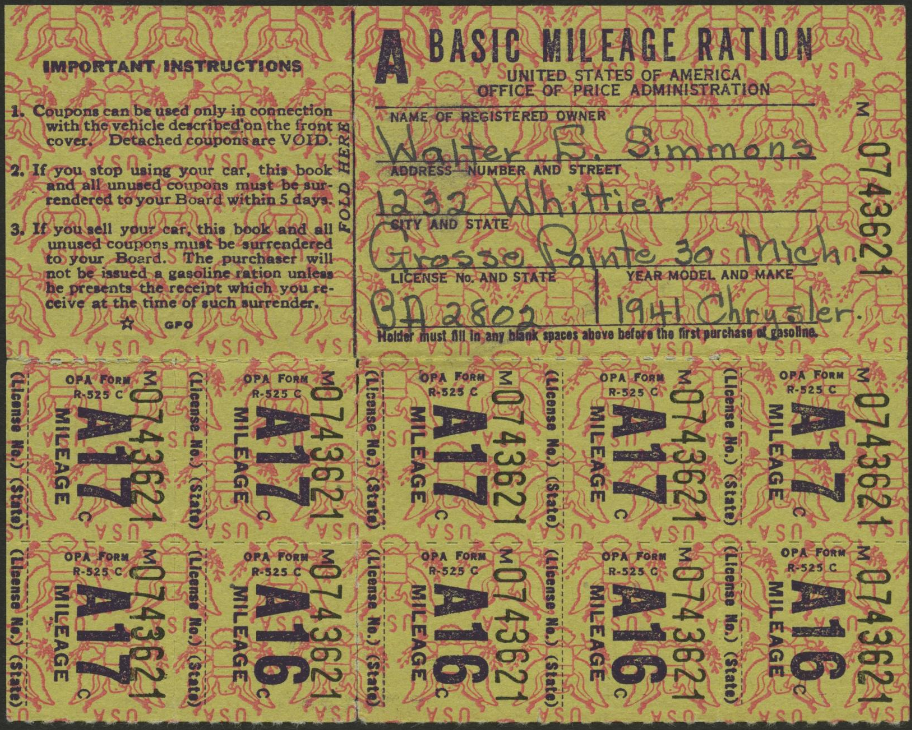
World War II gasoline ration stamps and mileage card, Grosse Pointe, Michigan, courtesy Henry Ford Museum.
According to the National World War Two Museum, a “C” sticker was for people with professional occupations, an “M” sticker for motorcycles, and a “T” sticker for truck drivers. A 35 mph speed limit was established for the duration of the war. By the end of 1945, sugar remained the only commodity still being rationed.
August 16, 1861 – World’s Oldest Producing Well
What would become the oldest continuously producing oil well was completed near Oil Creek at Oil City, Pennsylvania. The McClintock No. 1 well initially produced 50 barrels of oil a day from a depth of 620 feet. The well, completed 14 miles from the first U.S. oil discovery two years earlier, continues to produce oil from its original depth, according to the Oil Region Alliance.
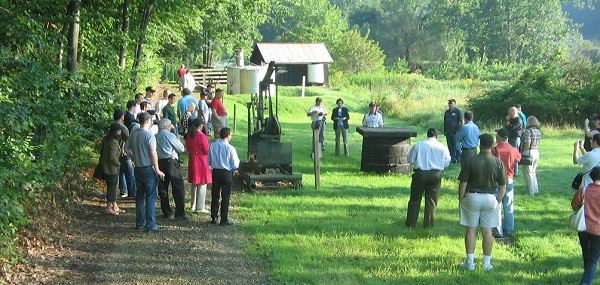
A “Rock Oil Tour” of energy economists from Washington D.C, in 2009 included a stop at the 1861 McClintock well, today pumped a few times a year to supply souvenir bottles sold at the Drake Well Museum in Titusville, Pennsylvania. Photo by Bruce Wells.
Donated by Quaker State in 1995 after the company announced the move of its headquarters from Oil City to Dallas, the McClintock well has been regularly pumped to produce up to 10 barrels of oil. Souvenir bottles of the oil are sold in the Titusville gift shop of the Drake Well Museum.
A historic marker on Route 8 south of Rouseville identifies the record-setting McClintock well, but thousands pass by each year without knowing it’s there. Across a nearby railroad, another historic marker commemorates an early oilfield tragedy — the Rouseville 1861 oil well fire.

August 16, 1927 – High-Octane Gas powers Air Race to Hawaii
With a crowd of 50,000 cheering them on, eight monoplanes took off from an airfield in Oakland, California, in an air race over the Pacific. Dole Pineapple Company offered a $25,000 prize to the first plane to reach Honolulu, 2,400 miles away. Three months earlier, Charles Lindbergh had made the first solo trans-Atlantic flight of 1,500 miles.
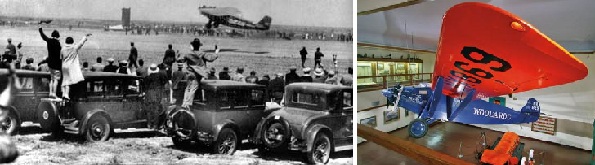
Several competitors disappeared over the Pacific during the 1927 Dole air race. The winning aircraft today is on display at the Woolaroc Ranch near Bartlesville, Oklahoma.
A new aviation fuel developed by Phillips Petroleum — Nu-Aviation Gasoline — powered the winning “Woolaroc” monoplane for the deadly air race (two of the fuel-heavy planes crashed on takeoff, others were lost in flight). Woolaroc was named for Frank Phillips’ Bartlesville ranch and nature preserve.
Learn more in Flight of the Woolaroc.
_______________________
Recommended Reading: Drilling Technology in Nontechnical Language


_______________________
The American Oil & Gas Historical Society (AOGHS) preserves U.S. petroleum history. Please support this website, subscribe to the monthly email newsletter, This Week in Oil and Gas History News, and help expand our historical research. Contact bawells@aoghs.org. Copyright © 2026 Bruce A. Wells. All rights reserved.